


OpenAI Wants Coders to Approve AI Work From Anywhere
OpenAI wants coders to approve AI work from anywhere, adding a Codex preview to the ChatGPT mobile app so developers can review outputs and authorise actions on the go.

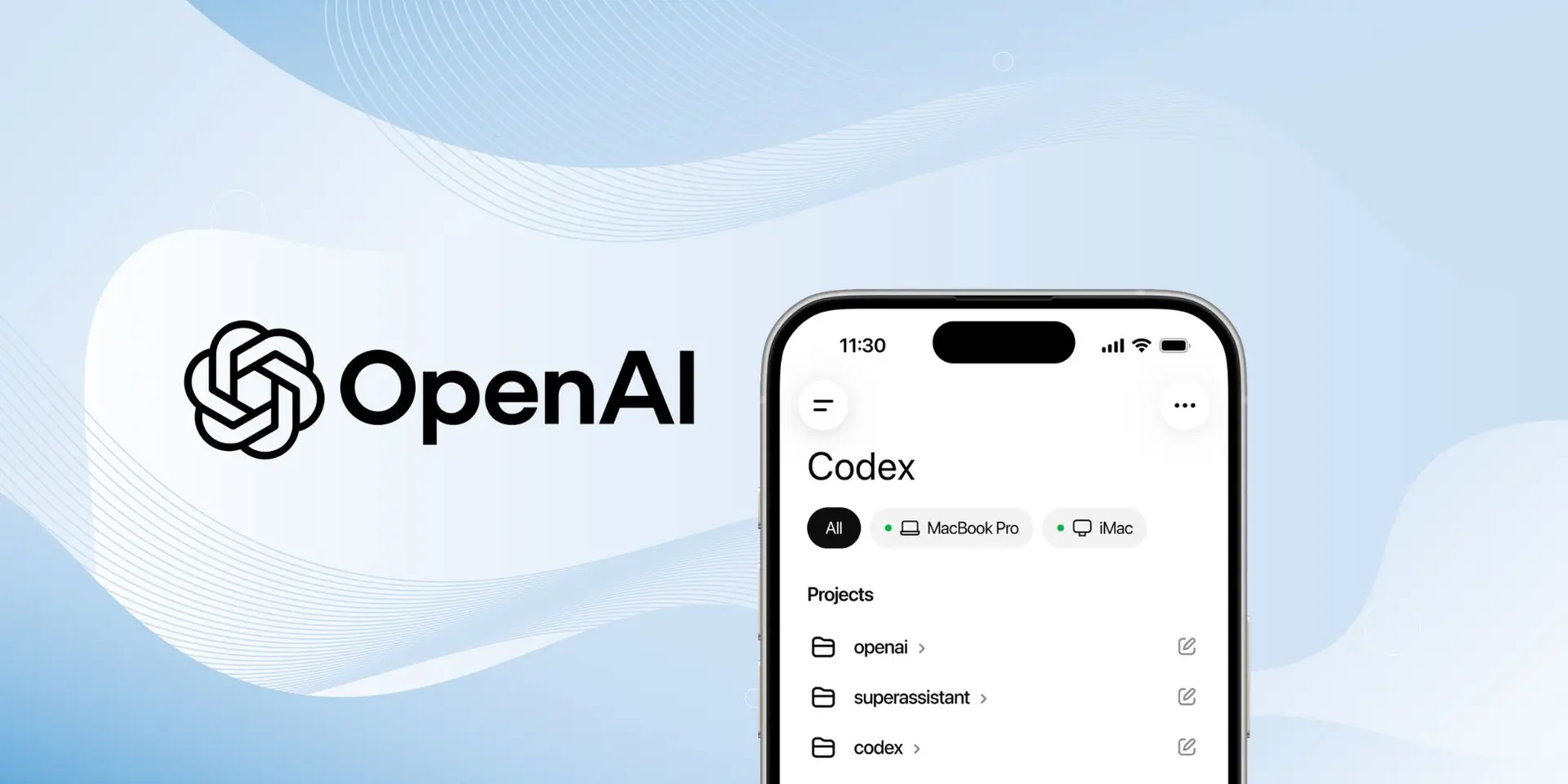

OpenAI is pushing AI coding assistants closer to becoming always-on engineering collaborators, even when developers are away from their desks.
On 14 May 2026, the AI firm introduced mobile supervision for its Codex coding agent inside the ChatGPT app, allowing developers to review AI-generated work and approve actions directly from their phones while the agent continues running on connected systems. The feature is now available in preview on iOS and Android.
Codex moves onto mobile
According to OpenAI, the mobile rollout allows users to start or continue Codex sessions from the ChatGPT app while monitoring work happening on linked environments such as Macs, remote development machines, or managed workspaces.
Developers can inspect logs, review code changes, switch models, and approve or deny sensitive commands without returning to a desktop interface. The mobile experience mirrors activity happening on the connected machine so that long-running tasks can continue without interruption.
The company says the goal is to reduce delays during agent-driven coding workflows, particularly when AI systems pause for approval requests tied to higher-risk operations.
Why mobile approvals matter
Agentic coding systems increasingly automate tasks such as editing files, installing packages, running tests, and modifying environments. But many of those actions still require human judgment before execution.
OpenAI’s update attempts to solve one of the biggest bottlenecks in AI-assisted development: waiting for approvals.
Developers can now clear routine actions during meetings, commutes, or while away from their laptops, helping teams avoid idle time while agents remain active in the background. For distributed engineering teams, particularly across time zones, the feature could reduce workflow interruptions and improve turnaround time on long-running development tasks.
Inside OpenAI’s approval system
OpenAI says Codex operates within a sandboxed environment designed to limit risk while allowing the agent to perform practical software tasks.
The company explained that approval policies determine when the AI must pause for human confirmation, especially for actions involving protected files, network access, or operations outside defined sandbox boundaries.
On mobile, users can:
- Review recent logs and planned actions
- Approve or deny individual commands
- Approve a class of actions for a session
- Continue or resume active coding threads
- Monitor connected development environments
The company added that organisations can enable auto-review for lower-risk tasks while reserving explicit approvals for more sensitive operations. Every decision, including approvals, prompts, and tool results, is captured in agent-aware telemetry designed for compliance and audit systems.
A larger shift in developer workflows
The update arrives during a period of rapid expansion for applied AI products across industries. Just a day earlier, Isomorphic Labs announced a $2.1 billion funding round to advance AI-designed medicines into clinical trials, highlighting how companies are increasingly prioritising measurable AI outcomes over experimental deployments.
OpenAI’s latest Codex update echoes a similar pattern inside software development: reducing operational friction while making AI systems practical enough for production workflows. Industry trackers have noted a sharp increase in features involving memory, cross-device continuity, approval systems, and longer-running AI tasks across the developer tooling ecosystem.

AI coding is becoming ambient
The larger idea behind the update is not necessarily coding on a smartphone. It is the idea that AI development agents may soon operate continuously across devices, environments, and workflows.
Developers increasingly supervise, approve, and direct AI systems rather than manually executing every step themselves. Mobile oversight tools make those workflows harder to interrupt and easier to scale across distributed teams.
If the preview rollout proves reliable, analysts expect OpenAI to expand policy templates, identity integrations, and host support over the coming months. As competition intensifies across AI coding platforms, features that combine automation with strong governance may become a defining battleground in developer tooling.