



OpenAI enters AI hardware with Codex Micro
OpenAI enters AI hardware with Codex Micro, a programmable macropad built with Work Louder that adds agent keys, a dial and a joystick for Codex users.

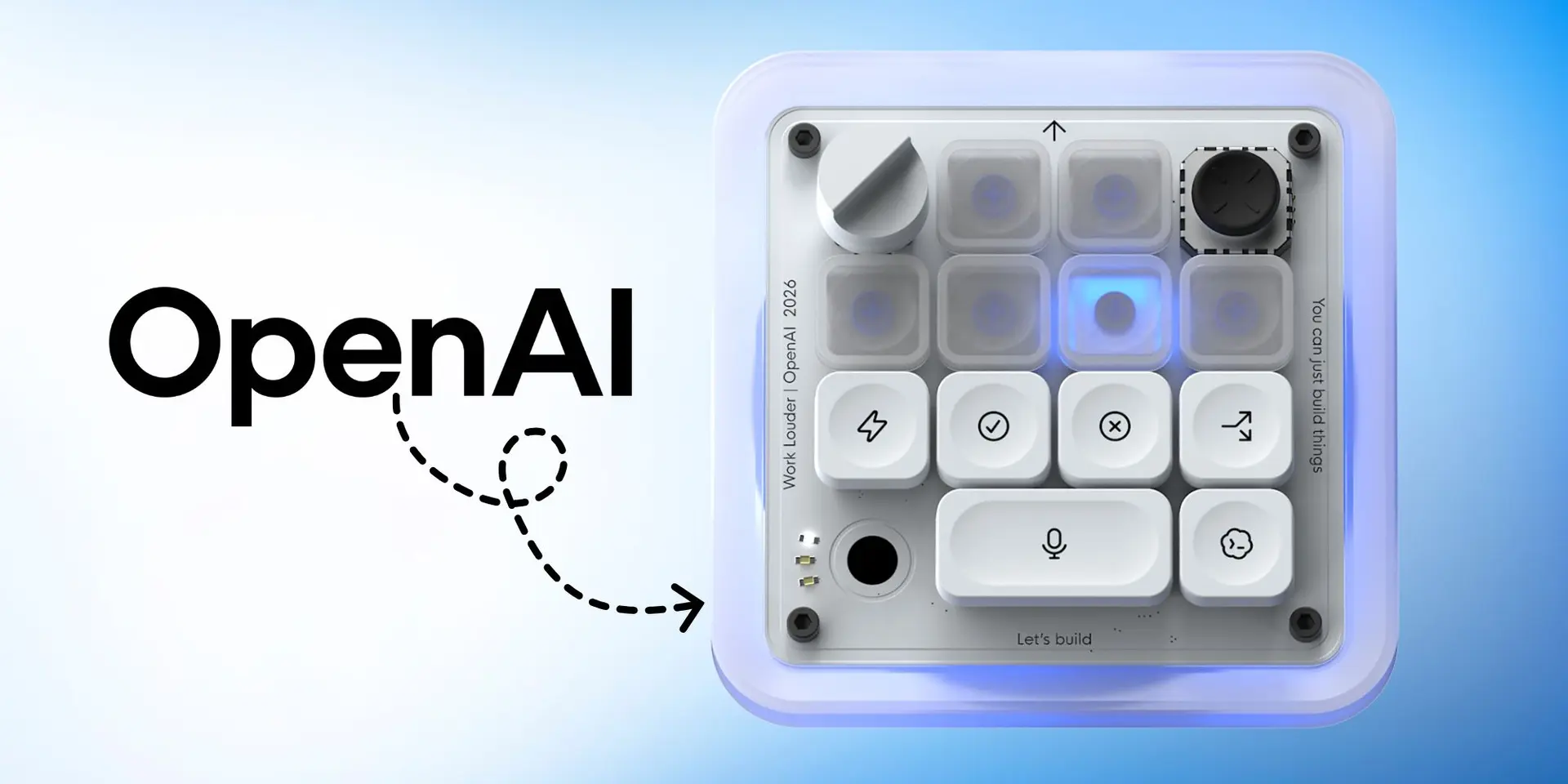

OpenAI has taken its first step into branded AI hardware. The company has unveiled Codex Micro, a compact programmable keypad designed to make interacting with its Codex AI coding assistant faster and more intuitive.
Developed in collaboration with hardware company Work Louder, the $230 device is aimed at developers who regularly use AI to write, review and manage code. Instead of navigating menus or switching between windows, Codex Micro brings frequently used AI actions to dedicated physical controls.
A compact device built around AI workflows
At first glance, Codex Micro looks like a small custom keyboard. However, it is designed specifically for AI-powered coding and productivity tasks. The device features programmable keys, a joystick and a rotary dial, allowing developers to launch AI commands with a single touch.
Its standout feature is a row of six dedicated Agent Keys that display the status of AI tasks in real time. White indicates the AI is idle, blue shows it is processing a request, green confirms a task has been completed and red signals an error.
Users can press a key once to select an AI agent or double-press it to bring the agent into focus. An edge light also illuminates whenever Codex is actively listening, making microphone activity clearly visible.
Designed for customisation
OpenAI has built Codex Micro with flexibility in mind. Every key can be programmed to perform different actions depending on a user's workflow.
The thumb joystick can be assigned to tasks such as reviewing pull requests or refactoring code, while the rotary dial lets users adjust the AI model's reasoning level without opening software settings. Developers can also remap these controls to suit their own preferences.
Work Louder includes 32 additional keycaps with different icons, and buyers can choose between silent or clicky mechanical switches. The device supports both USB-C and Bluetooth connectivity, making it compatible with a wide range of desktop setups.
More than just another keyboard
Unlike the much-discussed AI hardware project involving former Apple designer Jony Ive, Codex Micro is a specialised tool created for developers already using OpenAI's Codex platform, which the company says is approaching nine million users.
By giving users physical controls for common AI tasks, the device aims to reduce friction and speed up everyday coding workflows.

A glimpse of AI's hardware future
Codex Micro is more than a niche accessory. It shows OpenAI's growing interest in combining AI software with dedicated hardware designed around specific use cases. If developers embrace the device, it could pave the way for a new generation of AI-focused peripherals that make interacting with intelligent assistants as natural as pressing a button or turning a dial.