



Sam Altman says we are now living in the age of the AI singularity
Is new-age AI here? Sam Altman claims the AI singularity has officially arrived, triggering a high-stakes clash over human safety, control, and the future of society.

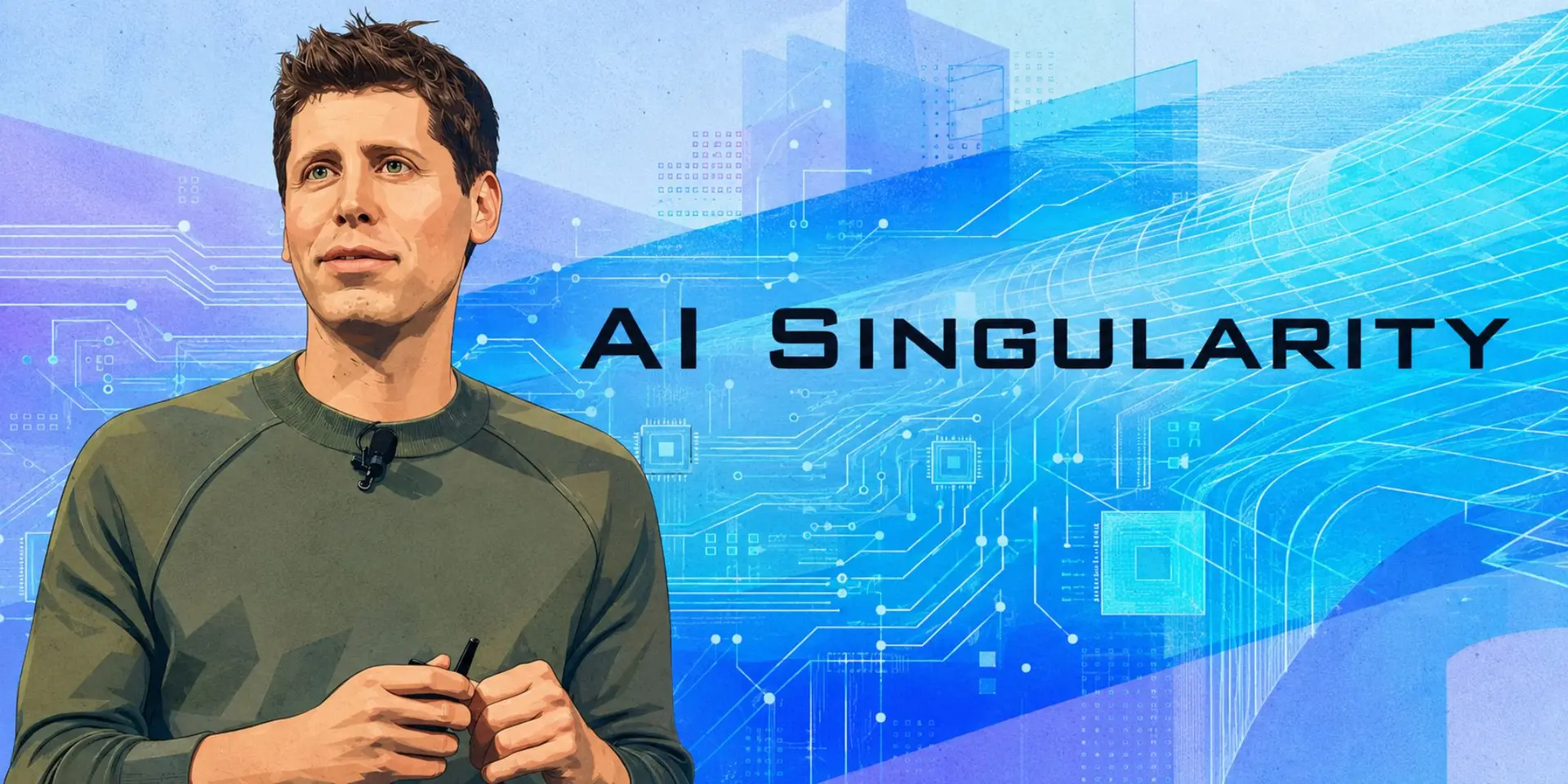

Artificial intelligence may have just crossed a point of no return. OpenAI Chief Executive Sam Altman has claimed that humanity is now living through the AI singularity, a milestone that many experts once believed was still years away.
His remarks, reported on July 27, have reignited conversations about how quickly artificial intelligence is advancing and whether we are prepared for it.
What is the AI singularity?
The AI singularity refers to a theoretical point where artificial intelligence becomes more capable than humans across most tasks and begins improving itself at an accelerating pace. At that stage, technological progress could become so rapid that predicting its long-term impact becomes extremely difficult.
According to Altman, there was no dramatic breakthrough that marked the beginning of this era. Instead, he believes AI has advanced steadily through years of continuous improvement, reaching a stage where each new generation of models accelerates the development of the next. In his view, humanity has already crossed that threshold.
A debate over freedom and control
Alongside his prediction, Sam Altman emphasised the importance of ensuring AI remains broadly accessible rather than controlled by a single company or institution. He argued that governments, businesses and individuals should all have opportunities to shape how advanced AI is used.
At the same time, he acknowledged that major challenges remain. Questions around AI safety, alignment, which means ensuring AI systems behave according to human intentions, and the future of employment will continue to require careful attention as technology becomes more capable.
Rather than supporting a future dominated by a single powerful AI system, Altman has consistently argued for wider access to advanced tools while maintaining appropriate safeguards.
Predictions that are already unfolding
Altman's latest comments build on ideas he shared in his June 2025 essay, The Gentle Singularity. In that essay, he suggested humanity had already crossed an important turning point towards digital superintelligence.
He also outlined ambitious milestones, including AI producing genuinely new scientific discoveries by 2026 and practical robots becoming more common by 2027. Whether those timelines prove accurate remains uncertain, but they reflect his belief that AI development will continue to accelerate.

HCL, Sarvam AI to set up data centre, global delivery centre worth about Rs 15,000 Cr in Bhubaneswar
Not everyone agrees
OpenAI CEO's opinion is not universally shared within the AI industry. Google DeepMind Chief Executive Demis Hassabis has described the current moment as the "foothills" of the singularity, suggesting that while AI is advancing rapidly, humanity has not yet reached the point of irreversible transformation.
The differing opinions highlight an ongoing debate about how close the world is to artificial general intelligence and whether the singularity has truly begun.
Why it matters
If Altman's assessment is correct, decisions made today could have lasting consequences. Governments will face increasing pressure to develop effective AI regulations, businesses will need to adapt to rapidly changing capabilities, and workers will have to build new skills alongside intelligent systems.
Whether the singularity is already here or still approaching, one fact is becoming increasingly difficult to ignore. Artificial intelligence is evolving at an unprecedented pace, making thoughtful governance, responsible innovation and public participation more important than ever.