



AI is not yet ready for decisions where there is no right answer: DeepMind CEO
Demis Hassabis said coding, math and games are more tractable for AI because outputs are verifiable. In contrast, policy and public decision-making are subjective and difficult to evaluate consistently.

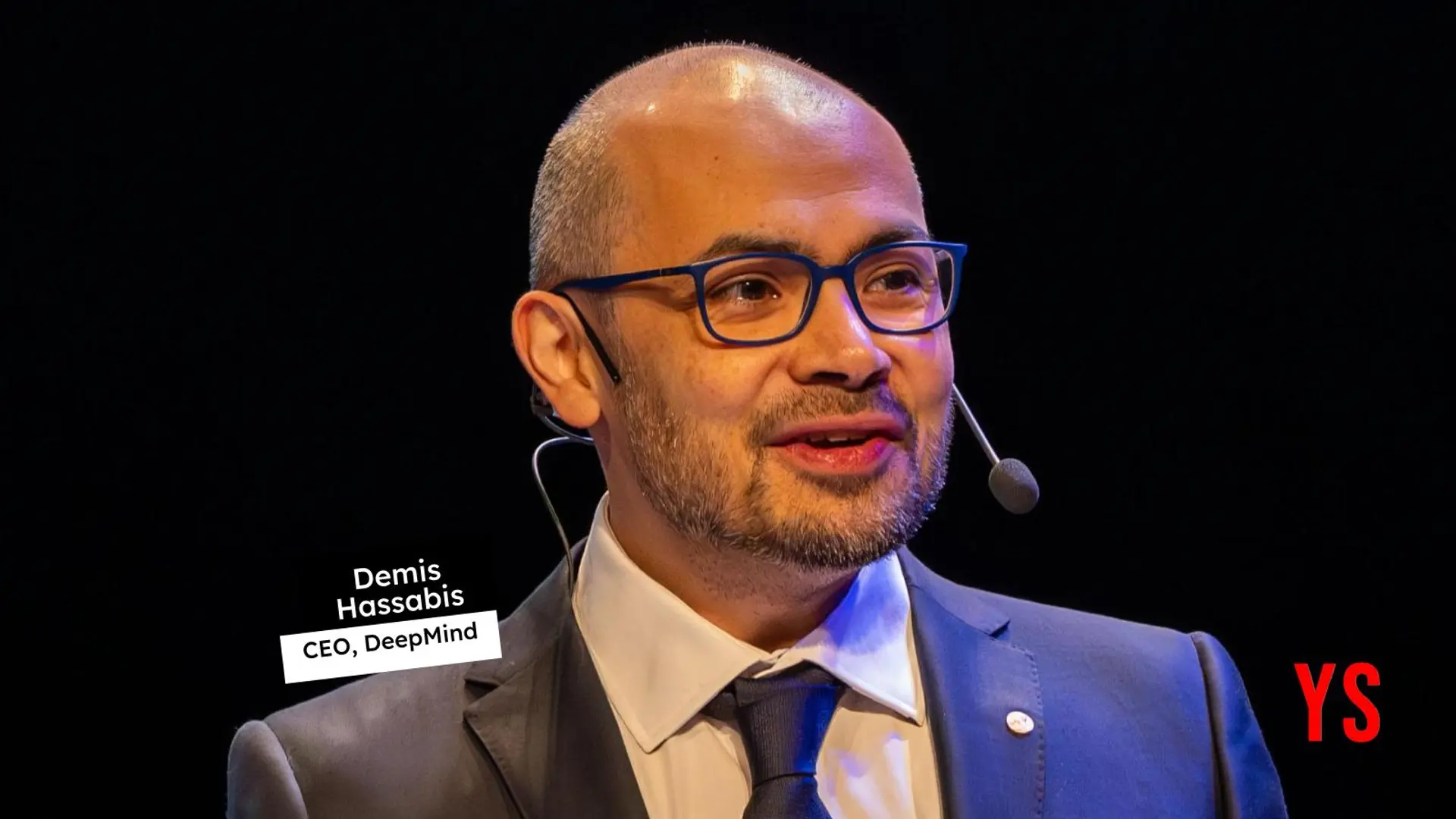

Artificial intelligence systems perform best in fields where answers can be definitively checked, DeepMind chief Demis Hassabis said arguing that more subjective domains such as public policy will prove harder for machines to master.
“I think things like science, but especially if you take coding and maths, are more amenable to the current systems we have today,” Hassabis said at at the India AI Impact Summit in New Delhi. “Mostly because, especially coding and mathematics, but also things like games like chess, they are verifiable. So the answer that the AI system outputs can be checked for correctness.”
Hassabis, who co-founded DeepMind in 2010 and now leads its operations within Google, drew a distinction between disciplines built on clear right-or-wrong answers and those shaped by interpretation and judgment. Engineers can test whether a block of code compiles or whether a mathematical proof holds. Chess engines can validate moves against fixed rules. That feedback loop enables rapid iteration and measurable progress.
“When you're training these systems, you can have databases of questions and check to see 100% if it's right or not right,” he said.
Such built-in verification has helped fuel recent advances in large language models and reinforcement learning systems, which increasingly solve competition-level math problems and assist with software development. Developers can benchmark performance against standardized datasets and refine models based on clear metrics.
Hassabis contrasted that structure with areas such as the humanities and public governance, where outcomes resist clean measurement.
“I think, of course, when you get into the arts and the humanities, things like decision making, policy, I'm not sure what you necessarily had in mind, but they're much more subjective,” he said. “It's hard to run the same experiment twice. So it's difficult to get data about what is a good decision in those cases. So I think those areas will be a lot harder for AI to model.”
Hassabis framed the distinction as a practical limitation rather than a permanent barrier. He has previously argued that artificial general intelligence — systems capable of exhibiting the full range of human cognitive abilities — could emerge within the next decade. But he has also emphasized that today’s systems remain uneven, or “jagged,” in their capabilities.
For now, he suggested, AI will continue to advance fastest in domains where verification is straightforward and feedback is immediate. In arenas defined by ambiguity and contested judgment, progress is likely to be slower and human oversight more central.