



Samsung’s Galaxy Glasses Could Be Its Most Important Hardware Move Yet
Samsung Galaxy Glasses leak suggests screen-free AI smart glasses powered by Android XR and Gemini, competing with Ray-Ban Meta.

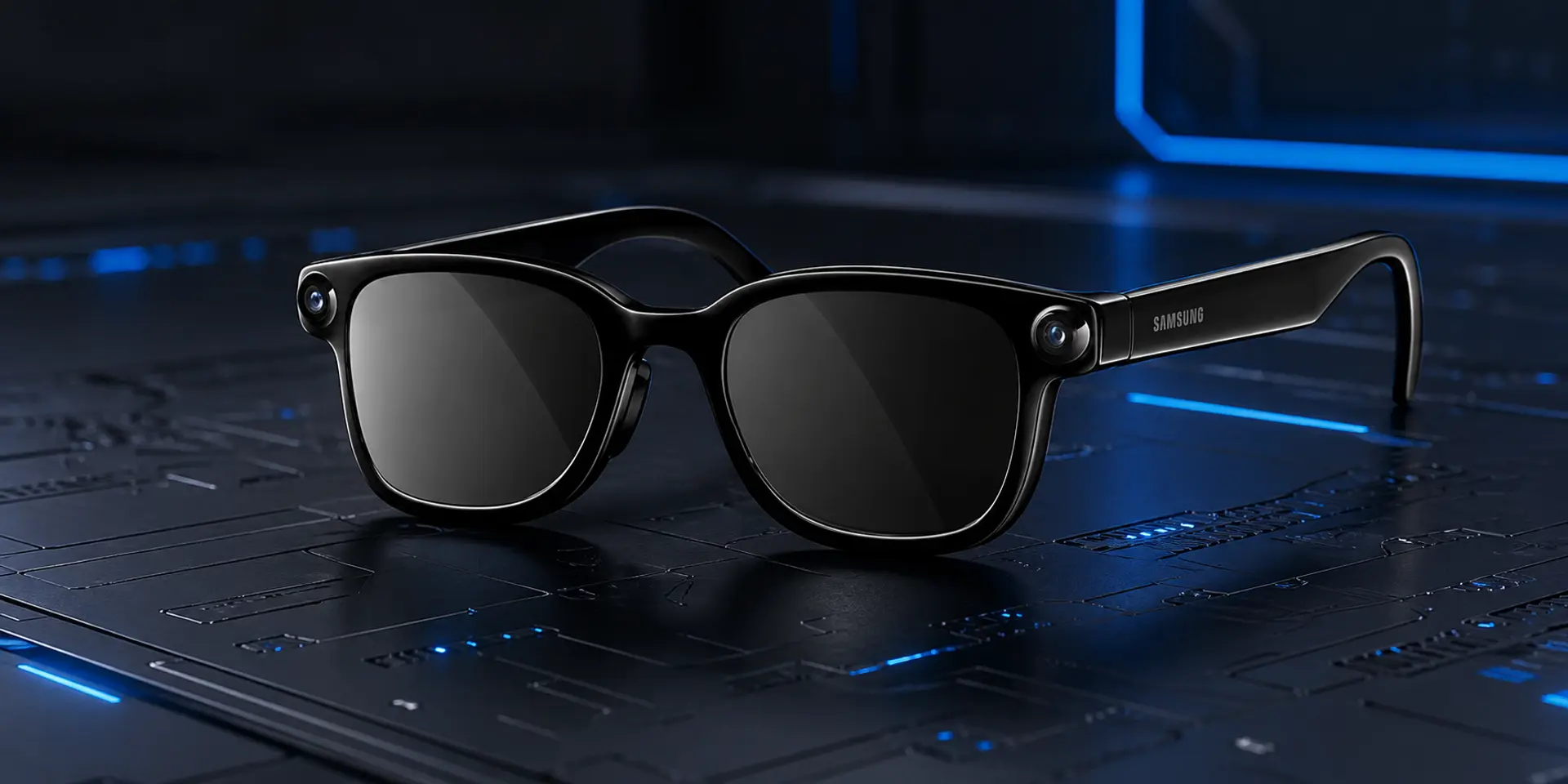

Smart glasses are back in focus. This time, the competition is shifting to software. Leaked renders of Samsung’s upcoming Galaxy Glasses suggest a screen-free design that looks strikingly similar to Ray-Ban Meta smart glasses.
The real difference appears to lie in what runs inside, with reports pointing to Android XR and Gemini powering the experience. Here's everything you need to know about this AI device!
A design that plays it safe
The leaked images show a classic spectacle frame. Camera modules sit subtly at the outer edges, keeping the overall look close to everyday eyewear. This approach mirrors the current market trend, where comfort and familiarity take priority over futuristic design.
Samsung seems to be following a proven formula. Keeping the hardware simple may help with adoption, especially for users who want wearable tech that blends into daily life.
Software could be the real differentiator
Where Samsung may stand apart is in software. The glasses are expected to run on Android XR, with Gemini acting as the primary assistant. This opens the door to deeper integration with Google services.
Users could access navigation through Maps, real-time translation and voice-driven search without reaching for their phones. For Android users, this continuity matters. It reduces friction by extending existing habits to a new device.
The key advantage over competitors
The biggest edge lies in ecosystem integration. While hardware differences between smart glasses are narrowing, software ecosystems remain a major factor. Samsung’s alignment with Google could make these glasses more useful for everyday tasks.
Navigation prompts, translations and quick information retrieval could become seamless. For many users, this kind of utility may outweigh incremental hardware upgrades.
A two-step product strategy
Reports suggest Samsung is planning two versions. The first, codenamed Jinju, is expected to be a lightweight, screen-free model focused on AI assistance and capture. A second version, often referred to as Haean, may include an in-lens display and arrive later.
This staggered approach reflects how the category is evolving. Companies are starting with simpler devices and gradually adding more advanced features as technology improves.

Expected features from the leak
The initial model is expected to focus on practicality. It may include voice-based assistance powered by Gemini, directional speakers for audio and calls, and dual cameras for hands-free photo and video capture.
Integration with Galaxy smartphones is likely, along with compatibility across the broader Android ecosystem. Samsung has also explored partnerships with fashion brands to offer a range of frame designs, aiming to make the product more appealing to consumers beyond tech enthusiasts.
Pricing and launch timeline
The leaked details suggest a price range of $379 to $499 for the first model. This translates to roughly Rs 32,000 to Rs 42,000, placing it directly against non-display variants from Meta in India.
A teaser could arrive during Samsung’s mid-year product cycle, with availability expected by the end of 2026. The display-equipped version is likely to follow in 2027 at a higher price point. Samsung has not officially confirmed these details.
The competitive landscape
Smart glasses are entering a more defined phase. Meta has set the tone with camera-first wearables that prioritise ease of use and quick capture. Samsung appears to be aligning with this hardware strategy while relying on Google’s software ecosystem to differentiate.
This sets up a familiar dynamic. Android versus Meta, with ecosystem strength playing a central role.
Leadership signals point to AI-first wearables
Samsung’s direction aligns with its broader AI push. TM Roh has consistently highlighted AI as the connective layer across Galaxy devices. On the other side, Mark Zuckerberg continues to position wearable AI as a key part of Meta’s long-term strategy.
Both companies are investing in making AI more accessible through everyday devices. Smart glasses are becoming a natural extension of that effort.
A familiar form, a shifting experience
The Galaxy Glasses leak does not introduce a radically new design. Instead, it builds on what is already working in the market. The shift is happening in software. If Samsung can deliver a smooth, reliable AI experience powered by Gemini and Android XR, the product could appeal to a wider audience. The next phase of smart glasses could be defined by how useful they feel in daily life.