



Satya Nadella's AI warning: Stop paying twice and losing your edge
Satya Nadella explains why you're paying for AI twice, outlining a 5-point fix and a trust boundary to keep enterprise knowledge from leaking to AI labs.

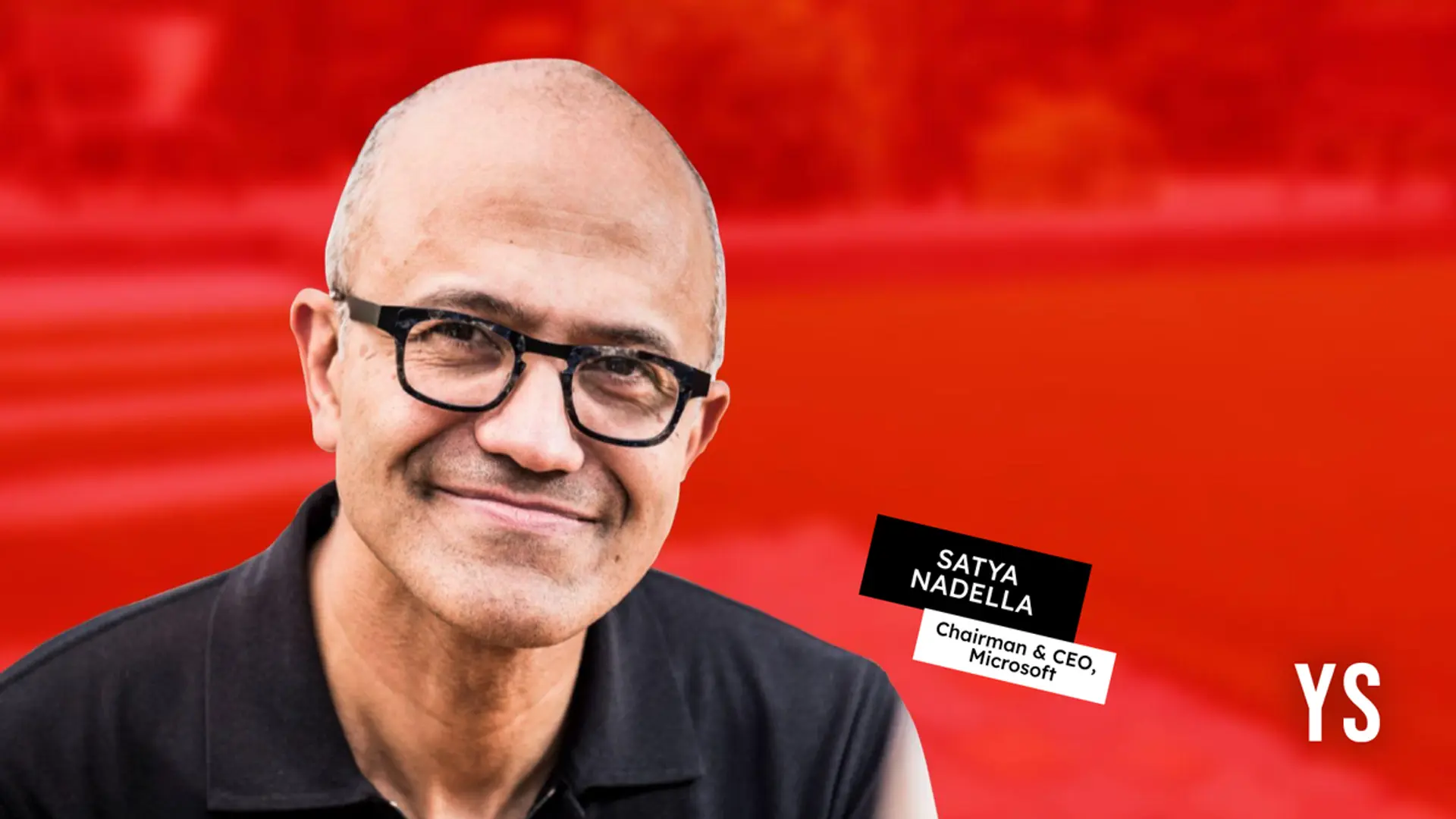

Pay once in cash, pay again with your know‑how. That is the trap Microsoft CEO Satya Nadella says many organisations are falling into as they adopt powerful AI tools. He argues that the valuable business knowledge users feed into AI systems through prompts, documents, corrections and workflows.
As companies rapidly expand AI adoption, Nadella believes protecting proprietary knowledge should become just as important as choosing the right AI model. Here's what entrepreneurs need to know!
What does 'paying for AI twice' mean?
Nadella describes the issue as the "Reverse Information Paradox", a concept inspired by economist Kenneth Arrow's Information Paradox. In simple terms, businesses often have to share valuable information to get useful AI responses.
Every prompt, document upload or correction helps the AI perform better. While organisations benefit from the AI's capabilities, the model provider may also gain from the knowledge generated through everyday usage.
Nadella argues that this creates an imbalance where buyers contribute valuable intelligence while platform owners capture much of the long-term value.
How does your business knowledge become AI's advantage
Modern AI systems rely heavily on real-world interactions. Businesses frequently upload internal documents, refine outputs and create specialised workflows that reflect years of expertise. Nadella refers to these digital footprints as "intelligence exhaust".
This includes prompts, evaluations, feedback and other learning signals that can improve AI systems over time. His concern is that if this learning only benefits AI providers, organisations may gradually lose part of the competitive advantage that makes them unique.
Nadella's five-step approach
To address the issue, Nadella recommends giving organisations greater control over how AI is deployed. He suggests companies should establish clear data retention policies, conduct their own model evaluations and build private learning environments wherever possible.
Businesses should also avoid relying on a single AI provider, allowing them to choose different models based on performance, cost and security requirements.
A key recommendation is creating a strong trust boundary around sensitive assets, including business data, prompts, evaluations, model memory and adapted AI behaviour. These should only leave the organisation with clear permission and oversight.

Airtel bets on financial services, data centres, cloud; Rs 3.3 lakh Cr invested in past decade: Mittal
What should business leaders do next?
As AI assistants and autonomous agents become part of everyday work, governance is becoming just as important as capability. Leaders should begin by auditing where AI prompts, documents and outputs are stored, who can access them and whether sensitive information is leaving organisational boundaries.
They should also evaluate different AI models for different workloads rather than adopting a one-size-fits-all approach. Nadella's warning is ultimately about long-term value. AI can significantly improve productivity, but organisations also need to protect the knowledge that gives them a competitive edge.