



NVIDIA expands its AI ecosystem with quantum-focused Ising models
NVIDIA’s new Ising models target quantum error correction and calibration, extending its AI stack into emerging quantum systems.

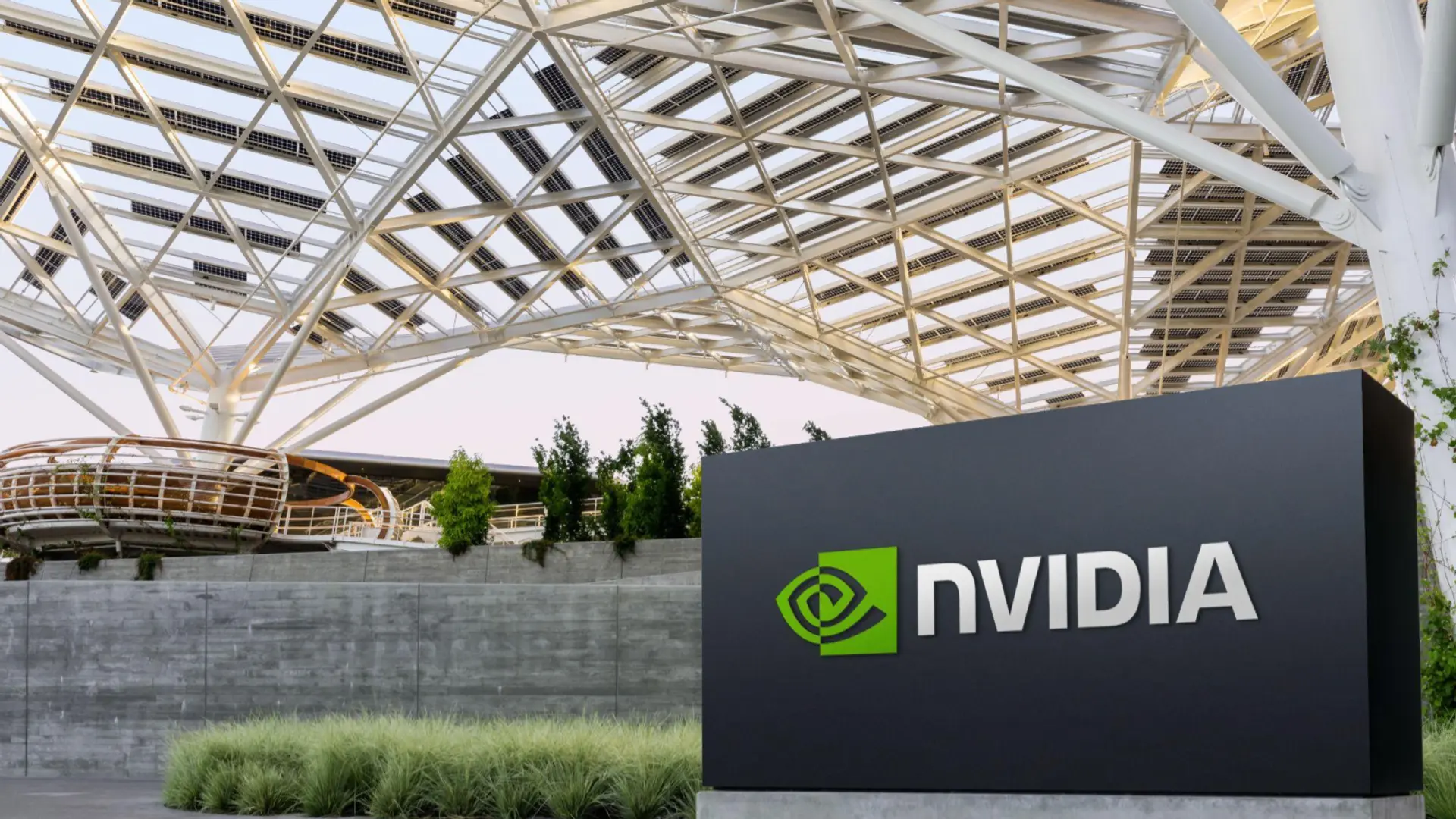

Tech giant NVIDIA has launched Ising, a set of open AI models designed for quantum computing research.
Ising focuses on two tasks: calibration and decoding. Calibration helps tune quantum hardware so that it behaves correctly, while decoding is linked to error correction, which is essential because quantum systems are highly unstable and prone to noise.
Unlike large language models such as ChatGPT, Ising is not meant for conversation or general reasoning. It is a specialised model trained to understand and improve quantum systems.
The launch is part of NVIDIA’s broader push into domain-specific AI models. Within NVIDIA’s ecosystem, Ising joins a growing catalogue of open models such as Nemotron for agent-based AI, Isaac GR00T for robotics and BioNeMo for life sciences.
These models are distributed through platforms like GitHub and Hugging Face and are typically paired with NVIDIA’s deployment tools such as NIM microservices, which are packaged AI services that developers can run locally or in the cloud.
Ising extends NVIDIA’s influence into quantum computing without building quantum hardware itself. Companies like IonQ or IQM focus on building quantum machines, but NVIDIA is positioning itself as the software and control layer on top.
This mirrors NVIDIA’s earlier strategy in AI. Rather than competing directly with every application developer, it built the underlying platform through GPUs and software frameworks such as CUDA. With Ising, it is applying the same approach to quantum computing, which is still an emerging field.
Most quantum firms focus on physics and hardware. Big tech firms like Google and IBM work across hardware and software, but NVIDIA is leaning heavily into AI-driven optimisation of quantum systems. This gives it a role even if it never builds a quantum computer.
“AI is essential to making quantum computing practical,” said Jensen Huang, founder and CEO of NVIDIA. “With Ising, AI becomes the control plane—the operating system of quantum machines—transforming fragile qubits to scalable and reliable quantum-GPU systems.”
AI infrastructure
NVIDIA’s broader strategy is to build AI infrastructure. This includes chips such as Blackwell GPUs, high-speed interconnects like NVLink, networking systems such as Spectrum-X, and software layers that manage training and inference.
The company is also building cloud-based access through DGX Cloud and orchestration tools that help manage large AI workloads across data centres. Ising fits into this stack through CUDA-Q, a framework for hybrid quantum and classical computing.
Partnerships are central to this effort. NVIDIA works closely with cloud providers including Amazon Web Services, Microsoft Azure and Google Cloud. It also collaborates with companies such as Meta, OpenAI, Anthropic on large-scale AI deployments, and with hardware and networking firms like Dell, HPE and Cisco. In the quantum space, it partners with research groups and hardware makers.
NVIDIA has committed tens of billions of dollars in partnerships and ecosystem investments, including large infrastructure agreements with companies like OpenAI and Anthropic. These are not pure capital expenditures but show long-term commitments to build and deploy AI systems.
The tech giant is building integrated systems often described as AI factories. These are large-scale computing environments where data is processed, models are trained and outputs are generated continuously. They combine hardware, software and networking into a single operational unit.
Ising adds a new layer to this by extending the same model to quantum computing workflows. It allows researchers to run AI models locally on sensitive data, which is important in scientific and industrial settings.
NVIDIA uses its models across multiple domains, including robotics, autonomous vehicles, healthcare, and now quantum computing. The common thread is that these models are tightly integrated with the company’s hardware and software, reinforcing its ecosystem.
Rather than focusing only on chips, NVIDIA is building an end-to-end platform that includes models, tools, and deployment systems. Ising shows that this strategy extends beyond conventional AI into adjacent fields like quantum computing.
The quantum computing market is expected to surpass $11 billion in 2030, according to analyst firm Resonance.
Edited by Megha Reddy