


How Raymond Group’s survival instinct kicked in during COVID-19
The Raymond Group focused on cost-cutting measures to cope with the impact of the first COVID-19 wave.

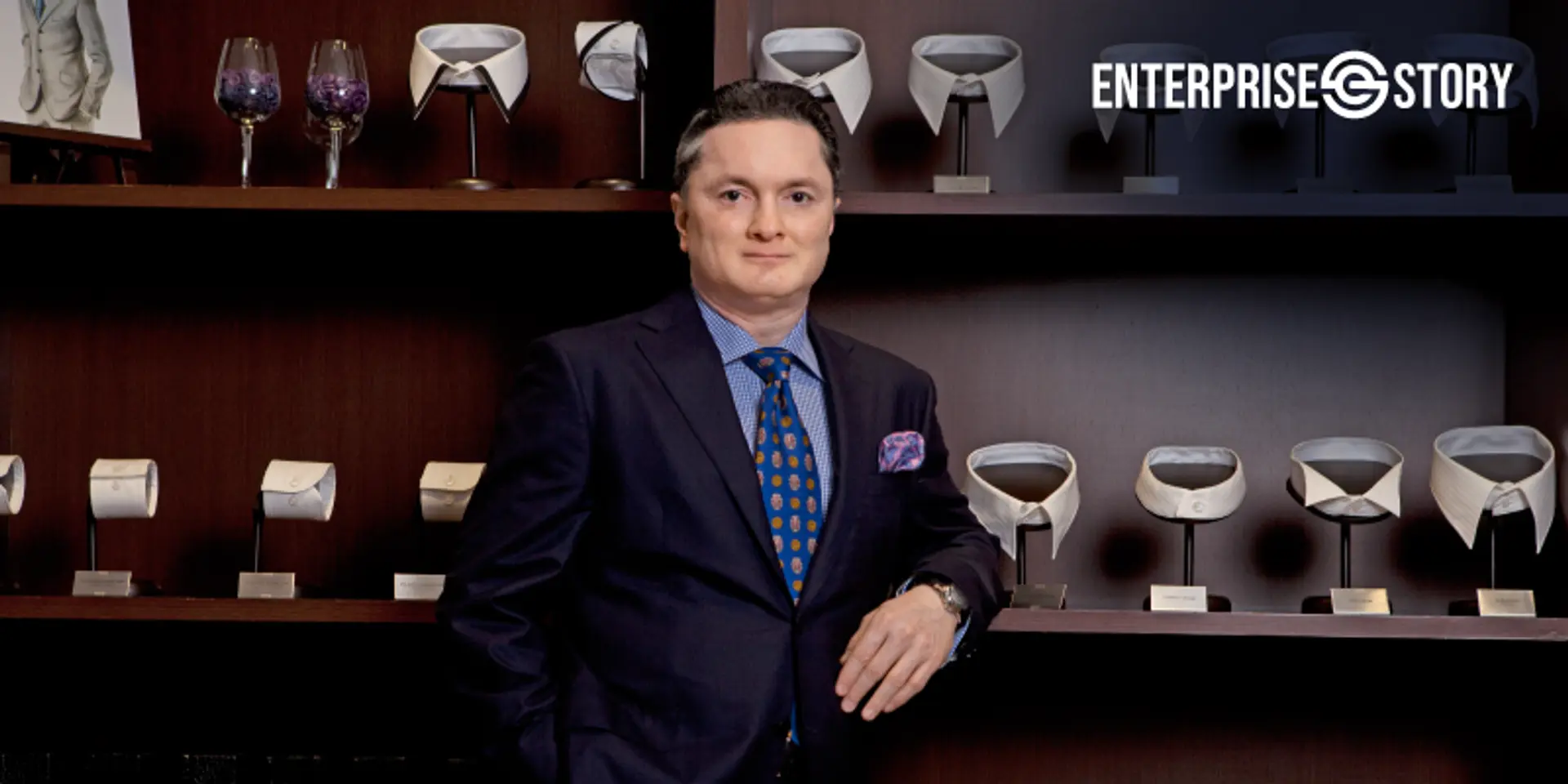

“If you have to survive, there's a survival instinct that kicks in,” Gautam Hari Singhania, Chairman and Managing Director of Raymond Group, tells EnterpriseStory, reflecting on the past year.
[EMBED VIDEO]
The Raymond Group is in the midst of probably the toughest period of its 96-year history. Its businesses span branded textiles and apparel, high value cotton shirting, and garmenting that contribute around 90 percent of its Rs 3,446-crore revenue.
Its income shrunk by 47 percent in the fiscal year ended March 31, 2021, mostly because of the lockdowns induced by the COVID-19 pandemic.
At first, Raymond Group’s garmenting business channelised its energies to make personal protective equipment (PPE) masks that were sold from its 1,114 The Raymond Stores (TRS) and 405 exclusive brand outlets (EBO), even as walk-ins would drop by 70 percent. “We also have an FMCG company with the ability to make hand-sanitisers, floor cleaners and so on. So, we quickly adapted to that,” he recalls.
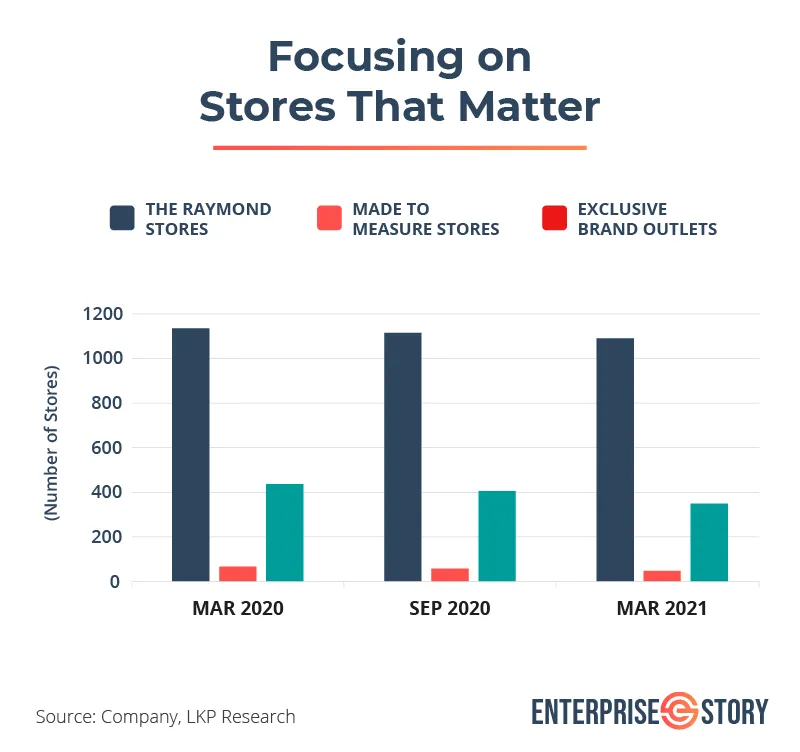
Image: Winona Laisram
But the pandemic innately heightened Raymond’s survival instinct, as the company aimed to reduce its operating expenses by up to 33 percent. It closed the financial year with 40 percent reduction. “There were very hard and very painful decisions that had to be taken,” Singhania says.
It entailed closing 45 The Raymond Stores and 87 EBO, and a 23 percent reduction in employee cost in the fourth quarter FY21 over the corresponding quarter in the previous fiscal.
For a company with such a large exposure to the brick-and-mortar world, Singhania believes the long-term panacea is the vaccination.
“The most important thing is: vaccinate, vaccinate, vaccinate! The faster you vaccinate, the faster India’s dreams will get fulfilled. You just have to vaccinate, vaccinate and vaccinate.”
The cost of vaccinating 80 percent of India’s population, Singhania says, will be far less than the economy’s opportunity cost. “If you look at a basic number, we have 1.3 billion people. You need 2.6 billion vaccines. Even if it's ten dollars a vaccine, that is $26 billion. But for $26 billion, if you vaccinate, you open up a $3.5 trillion economy,” he explains.
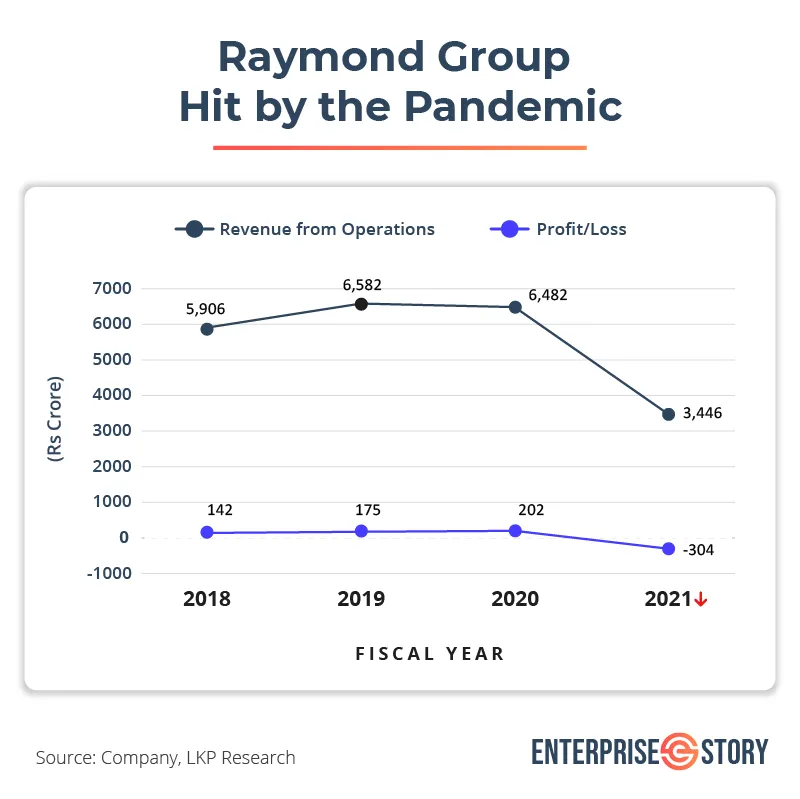
Image: Winona Laisram
Physical experience in a digital world
In the 2020 annual report, the Raymond Group reiterated its commitment to digitise its physical stores—to go ‘phygital’ or omni-shopping. It runs contrary to the Direct To Consumers (D2C) wave in India, where more than 600 internet-first brands are capitalising on the e-commerce and digital payments ecosystem to serve customers in categories like fashion, beauty and personal care, food and beverages, and home and furnishings.
However, Singhania points to the experience of a textiles and apparel customer, and why a trusted brand needs to still serve its buyers in the brick-and-mortar world. “In our business, shopping is an experience. Going to a Raymond shop is an experience. Going there with your wife. It's an outing. All in all, I'm very optimistic that the shopping that we see per se will continue.”
[QUOTE CARD]
Raymond will continue to grow itself the omni-channel way. “Our product category is such that there's a lot of touch and feel to it. People want to touch the fabric, feel the fabric, drape the fabric, come with their family member. Typically, we have three people coming as a group to buy a fabric because the Indian consumer still needs a reassurance from his wife, daughter or son,” Singhania says. “It's unlike buying a soap or deodorant on the Internet, where you know which brand you use. That's a commodity.”
That hasn’t stopped Raymond Group from taking the brand digital in other ways. Raymond participates in digital trade shows, which eliminate any disruptions in trade channel bookings and ensures seamless supply chain processes. It is leveraging e-commerce and omni-channel for effective inventory management that is well integrated at the back-end and at the store level.
Two years ago, Raymond Realty aspired to get into real estate. The fourth quarter of FY21 saw one of the highest booking in a three-month period (214), compared to 179 bookings in the December quarter.
So far, it has almost 60 percent (1,387 units) of the total units opened for booking (2,350 units), as Raymond Realty has launched eight towers out of 10 in Thane, Maharashtra. “We expect the company to complete its entire project well within the stipulated timeline,” stated equity research advisory LKP Securities in its report dated May 13, 2021.
“Fast pace construction also leads to higher bookings from the customers which can be seen from the current quarter booking numbers,” it added. Apart from this, Raymond Realty is counting on tailwinds like reduction in the stamp duty rates and home loan rates along with aggressive marketing campaigns.
Most of Singhania’s time is spent with Raymond’s stakeholders. “It's really communicating with them, telling them what you're doing. This week alone, I would have reached out to more than 5,000 people in the trade. I've been to 10 cities myself in the last one month and met customers, explained to them what we're doing, and why we are doing it,” he explains.
“Eventually, it's a partnership between your trade and yourself, your stakeholders and yourself. And they must believe in what you're doing.”