



How Lowe’s India GCC is driving AI innovation for global impact
Home improvement retailer Lowe’s is now increasingly looking towards its India GCC in Bengaluru to drive the innovation agenda for the company through technology.


Lowe’s, the US headquartered home improvement retailer with over 1,700 stores, has been leveraging technology to help customers make informed decisions with purchases, while also assisting its employees to deliver this service.
In today’s evolving retail landscape, where shopping is not just about buying at a store but also buying things online, the role of technology has become more important than ever.
In this environment, Lowe’s Global Capability Centre (GCC) in Bengaluru, India, is playing a key role in delivering this omnichannel experience for both customers and employees. By integrating online and offline platforms, the GCC is ensuring a seamless experience of buying.
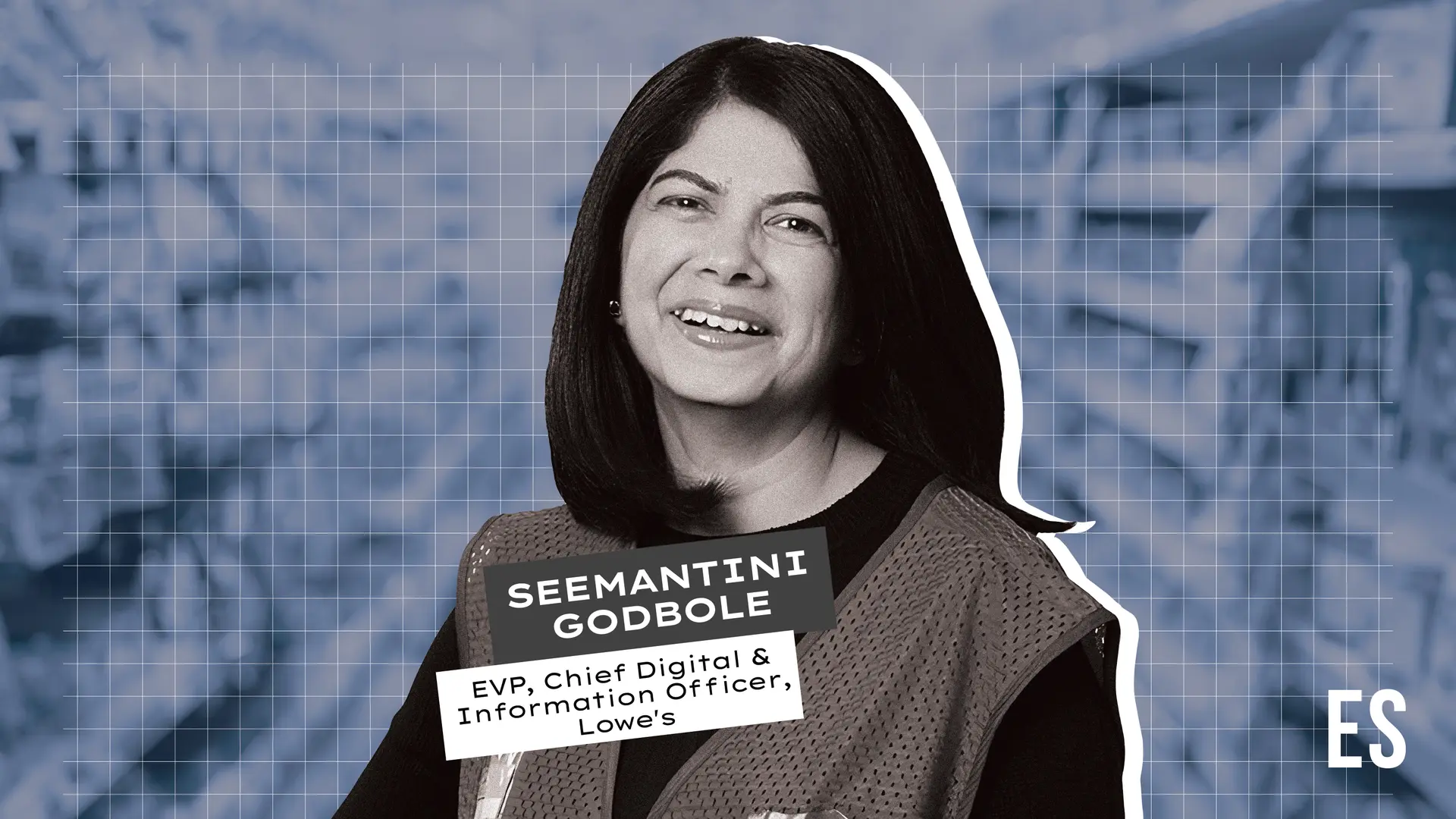
In an interaction with Enterprise Story, Seemantini Godbole, EVP, Chief Digital and Information Officer at Lowe’s, described the Bengaluru GCC as a powerful capability centre, which is at the forefront of all things technology. “There is a lot of leadership and ownership with the entire GCC centre here,” she said.
Edited excerpts from the interview:
Enterprise Story (ES): How do you see the engagement of the retail industry with technology, given the present fast paced changes?
Seemantini Godbole (SG): We have been closely watching the retail trends for a long time now. When I joined Lowe’s six years ago, the first thing we took on was to modernise ecommerce to create a seamless experience. However, unlike mass retailers, we have a fairly complex product as one is not buying a $50 t-shirt, but a $1,000 washing machine. Be it installing the floors or the kitchen countertops, these purchases are complex and meaningful for our customers. Given this background, the most important trend for us has been the shift toward an omnichannel experience.
There are multiple touchpoints on how customers reach our products, which might start first on their phones or iPad before they come to the store. There are customers who prefer to do most of the things on the phone or email where everything—starting from the design, style, type of product, price, and installation is decided through this channel. That’s the omnichannel journey we are designing.
We have a number of digital tools that are connected to these systems so that there is true omnichannel experience. There will always be customers who prefer to go to the stores and we will continue to cater to them. We are students of our consumers and we are keenly watching them.
ES: What is the role of AI in enabling the seamlessness for Lowe’s?
SG: We have been closely watching and tracking AI. While we always had AI in terms of machine learning and data sciences, with 50 plus production grade models serving millions of consumers, the really big contribution of Open AI is it made AI very accessible. My initial observation was that the technology is great and very easy to create prototypes with it, but tough to create a production grade experience. I was always insistent that we create experiences that are meaningful and actually bring value to our consumers.
We have created an AI framework in three different categories—how we shop, how we sell, and how we work. How we shop is all about consumers facing AI, how we sell is for our 300,000 associates who are actually in our stores and selling every day, and how do we make sure AI is helping them. In how we work, it is about how we inject productivity.
In our 1,752 stores, our associates have a Zebra device that has a chatbot to answer questions related to home improvement. We are also piloting AI-enabled store cameras in around 10 locations that can identify if customers are searching for something or if they require assistance. A notification goes out on the Zebra device and our associates help them. We make sure that this technology does not capture any facial details or any other identification. So, I feel like we have done meaningful AI to empower our associates where they are confident of helping customers. We have also implemented computer vision technology at counters to detect if customers forget to scan something.
On our website we have something called Mylow, where you can get all the advice online and ask questions. This has been developed on top of combinations of models such as Open AI, Llama, and Mistral.
In Lowe’s India, we have spent a lot of time and effort in developing this foundational AI network called AI foundry. It is like a plug and play infrastructure with AI models where we direct the query to the best tuned model to get an answer.
ES: How is Lowe’s India GCC playing its role for the company?
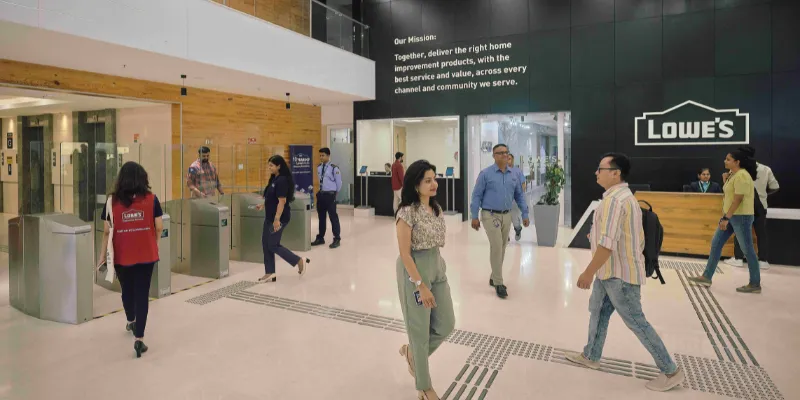
SG: When Lowe’s India was established, it was focused on expense leverage. When Marvin Ellison, our CEO, joined, he completely changed the game for Lowe’s. He wanted to make sure that every associate across the globe is empowered to do a great job for Lowe’s. And so, since then, we have taken a very different look at Lowe's India. This is a very powerful capability hub and the AI foundry was created over here.
The other thing is that we have business and technology teams housed out of here, so they are not necessarily waiting for the US to wake up to take permission and act. These are examples of our AI strategy where the India centre has made changes in the supply chain segment. What used to take weeks earlier to do simulations now takes just an hour.
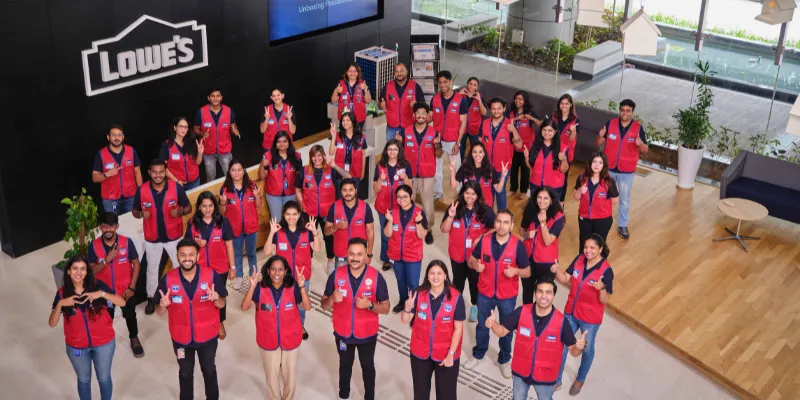
Lowe’s India is not just thinking about what we can do in technology. but also in marketing, merchandising, looking at our entire business process, etc.
ES: What do you feel is the uniqueness of India GCC of Lowe’s?
SG: Firstly, we do a lot of innovative work for our customers and associates out of this center. Secondly, our India hub has teams across business, technology, data analytics, and innovation. Third, it is the culture of empowerment at Lowe’s. We are a $83 billion company, but I feel like we operate like a startup in terms of making decisions, taking action, moving fast, innovating for the customers, etc.
ES: How is Lowe’s engaging with the startup community in India?
SG: There is a team here which is constantly scanning the marketplace in terms of startups in the home improvement retail space, how can we engage with these startups, and how can we work with them. This engagement has given us more agility, more business domain knowledge, and made our teams more effective.
ES: What is the likely future roadmap for Lowe’s India?
SG: I feel there is a need for more software. The demand is totally outstripping the supply. I feel GenAI tools will give us productivity, both in software engineering, consumption, and for our business teams to become more productive. I feel India GCC is in a unique position to embrace this trend and bring all those advantages to Lowe’s, whether it’s engineering productivity or productivity for our business teams and productivity for our selling associates. It also includes completely different imagined experiences for our customers. Lowe’s GCC in India would embrace all those trends in terms of AI, creativity, producing more software, producing more experiences. And I feel like that trend will only accelerate.
There is a lot of leadership and ownership with the entire GCC centre here. There is also a lot of accountability and pride.
Edited by Megha Reddy