



Novo Nordisk’s India GCC steadily moves up the value chain
The global capability centre of Novo Nordisk in India is now closely engaged with the entire value chain of this global pharmaceutical company.


Novo Nordisk, the Denmark-based global pharmaceutical company, has long operated in India not just as a market but also by leveraging the talent in the country for its healthcare and technology advancements.
The company first set up its global capability centre (GCC) in Bengaluru in 2007, which has since evolved as a key pillar for its worldwide operations. The India centre is now part of almost every function of Novo Nordisk be it R&D, technology development or backend support.
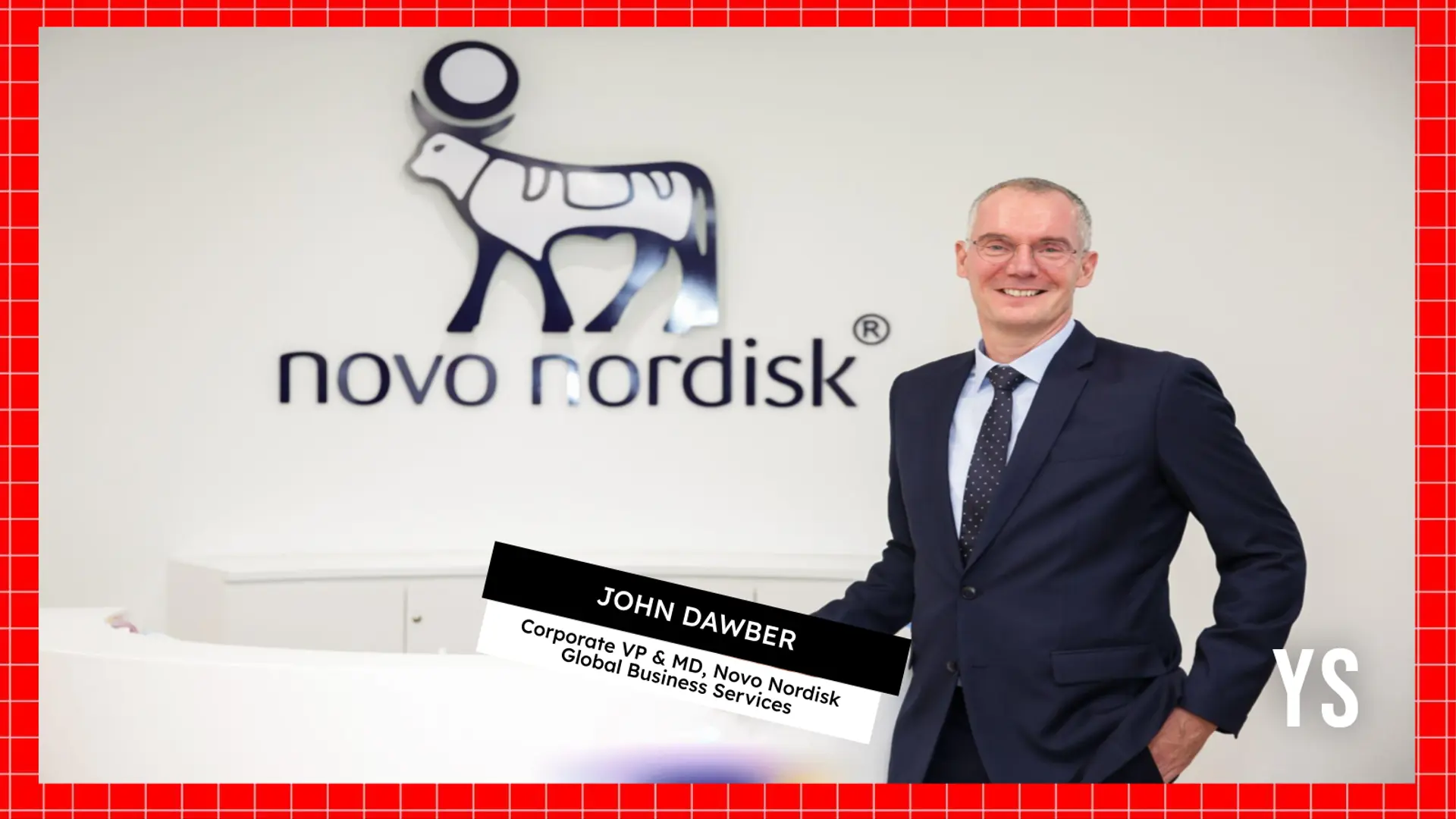
In an e-mail interview with Enterprise Story, John Dawber, Corporate Vice President and Managing Director, Novo Nordisk Global Business Services, said the India GCC supports the global processes and operations through the entire value chain of Novo Nordisk and the centre is only going to become more valuable in the future.
Edited excerpts:
Enterprise Story (ES): Could you please provide an overview of Novo Nordisk's India GCC?
John Dawber: Headquartered in Bengaluru, Novo Nordisk’s Global Business Services (NN GBS) started in India in 2007 as a transactional support centre focused on finance, data management, and patents. Today we have 4,500 employees, supporting global processes across the entire value chain from early research and development, right through to supply chain planning and hence contributing to bottom line improvement and operational efficiency.
The centre acts as an innovation and transformation hub, driving process optimisation, digital advancement, and strategic initiatives to support other global teams. We have a strong talent base including doctors, pharmacists, statisticians, analysts, and IT professionals.
ES: What are the key focus areas of Novo Nordisk India GCC?
JD: Novo Nordisk GBS plays a critical role in advancing the global success of our organisation. We strategically represent 17 key functions, including IT, commercial, marketing, supply chain, quality, HR, and R&D.
With India as an emerging focus market for diabetes and obesity, our centre provides vital data insights and digital innovation to ensure product readiness, enabling us to deliver medicines to patients more quickly and effectively. And we do so by harnessing India’s exceptional talent and technological advancements.
Our departments, including clinical data management and global patient safety, work collaboratively with global development teams to manage our entire product and pipeline portfolios.
By adopting AI and machine learning, we are streamlining processes in quality assurance and medical writing, allowing our skilled professionals to focus on strategic initiatives. We are also automating routine tasks in finance and procurement, which enhances efficiency and enables our teams to concentrate on business growth. These advancements will accelerate our ability to deliver medicines to patients effectively.
ES: How has been the experience of Novo Nordisk with India GCC?
JD: Novo Nordisk GBS plays a crucial role in the global success of Novo Nordisk. Beyond the traditional role of a Global Capability Center that mirrors HQ functions, we also play a crucial part in directly supporting Novo Nordisk's operations in over 100 countries.
One of the key advantages of our structure is the ability to manage drug development, global medical affairs, regulatory affairs, and analytics all in one place, while collaborating closely with the affiliate commercial function.
Our extensive clinical expertise and robust data insights can be rapidly deployed and adapted to align with the affiliate's commercial vision. This support framework encompasses our complete product pipeline, including both established and upcoming launches.
ES: How is Novo Nordisk India GCC attracting and retaining talent?
JD: At Novo Nordisk GBS, we have a diverse team that includes engineers, doctors, PhDs, data scientists, statisticians, and finance professionals. This diversity enables us to effectively support various functions across R&D, clinical development, biostatistics, regulatory affairs, finance, and digital transformation.
We also embrace individuals from cultures around the globe, as we believe that fostering a diverse and inclusive environment is crucial to our success. We are proud to have a gender diversity ratio of close to 50/50, representing almost all the states in the country.
To bolster talent acquisition, we have established partnerships with leading academic institutions in India, such as BITS, IIIT Bangalore, and the Manipal Academy of Higher Education. These collaborations promote research and upskilling initiatives and provide access to fresh top talent.
In alignment with our global company values, we emphasise employee experience, health, well-being, culture, communication, and personal development through an array of programs, several of which are also extended to employees' families. This commitment, coupled with opportunities for employees to enhance their skills and advance their careers, has helped reduce our attrition rate to around 6%.
ES: What are Novo Nordisk India GCC's future plans?
JD: We are excited about the rapidly evolving pharma and biotech innovation ecosystem in India, fuelled by a robust talent pool, government support, and increased private investment. Over the next 5 to 10 years, we will focus on strengthening our existing capabilities in R&D, digital health, data analytics, and end-to-end support for clinical, regulatory, and commercial functions.
In alignment with the country's evolving GCC landscape, we aim to leverage India’s expanding digital infrastructure and skilled workforce to enhance our impact by integrating advanced technologies, supporting global operations, and delivering cost-efficient, high-quality solutions.
With India's increasing importance in global supply chains and healthcare innovation, we are all set to become an even more strategic pillar aiding Novo Nordisk's future growth, ultimately delivering value across the pharmaceutical lifecycle.
Edited by Affirunisa Kankudti