



At Hyderabad, ServiceNow India hopes to ride the AI wave and develop for the world
Global software company ServiceNow has rewired its India engineering centre in Hyderabad to drive new product innovations and expand its market in the country.

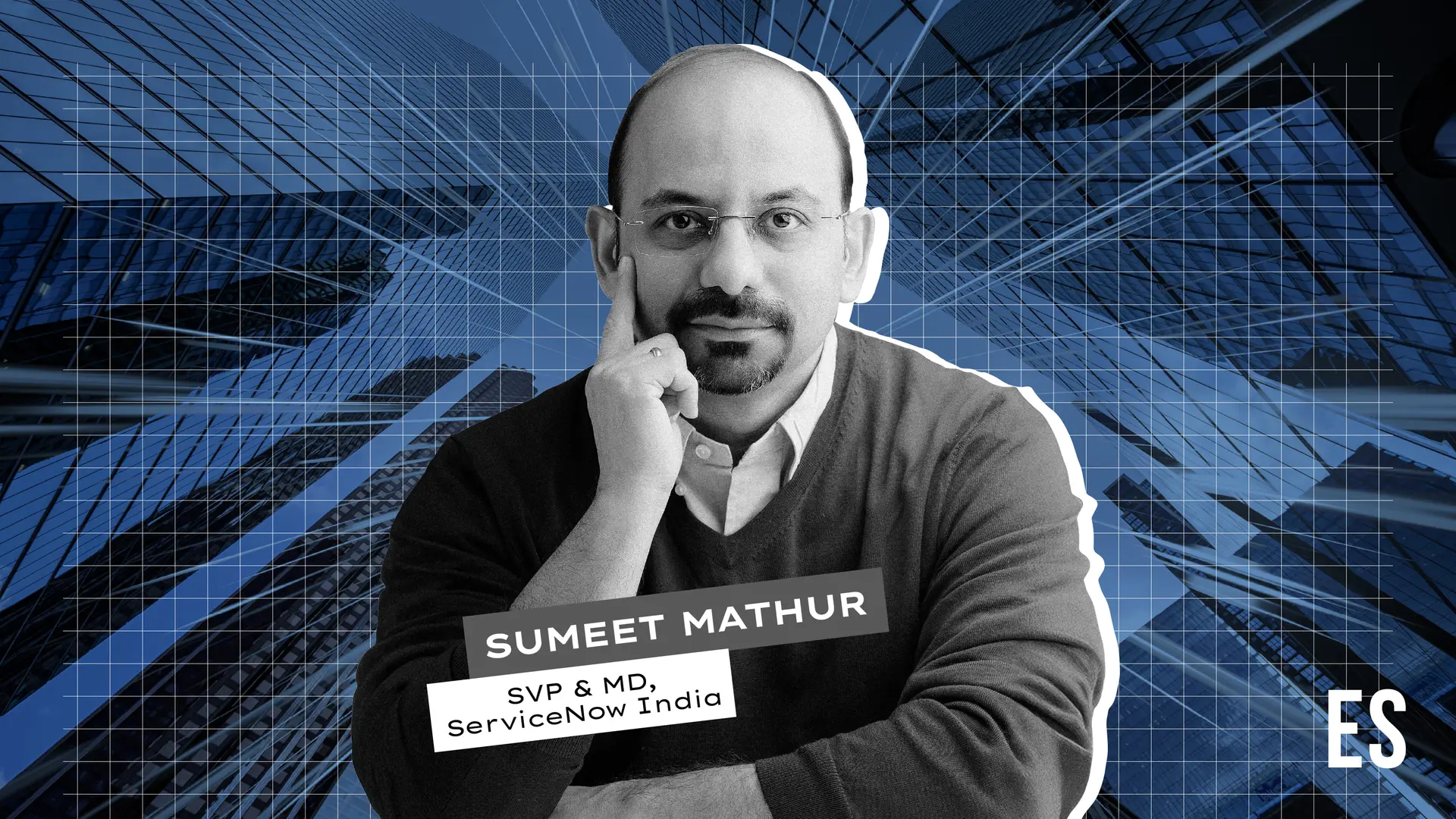

ServiceNow, the global software company specialising in artificial intelligence (AI) powered workplace management solutions, sees India both as a key engineering centre and a unit creating actual business impact.
ServiceNow established its India engineering centre in Hyderabad in 2014, and over the last 11 years, it has only grown in strides to become a key pillar of the company.
In a conversation with Enterprise Story, Sumeet Mathur, Senior Vice President and Managing Director, ServiceNow India, says, “We are very conscious in building all the skills and functions that make a software product come to life.”
He further notes that around 45% of ServiceNow’s global product engineering is now operated out of India, and 85% of the engineers directly engage with the products they develop as well as the customers they serve.

This has led to ServiceNow adding global roles based in India. In fact, Mathur is not only the site head but also manages one of the global product lines for the company.
Though ServiceNow might seem to be a bit late in establishing its presence in India, the company has learned from the experience of others to scale faster and create value that has a significant impact on the company.
For example, given the thrust on AI across the globe, ServiceNow’s AI control tower was seeded out of its Hyderabad centre. Mathur attributes this to the talent management strategy of the company, as they were able to pick the right talent and provide enormous opportunities to deliver the goods.
Today, AI is the topmost priority for enterprises regardless of their size, but ServiceNow has a different approach. It believes in solving real use cases through AI, and where its customers actually realise the value as well as the outcome.
“We support any LLMs, and the principles of our architecture are flexibility with the goal of allowing a plug-and-play of any model,” says Mathur.
ServiceNow has had AI as part of its workflow solutions and emphasised the element of trust so its customers could easily adopt as well as integrate these platforms. Mathur says, “Our tagline is to put AI to work for people.”
Given the strides that ServiceNow India has made in the area of AI technology, it has equally kept pace with the business aspect. The company works on the principle of testing internally before releasing any software solution or platform to the market.
As Mathur says, “If it is successful internally, then there is a fair chance of a product-market fit (PMF).”
With an ecosystem of builders, implementers, and users of the product, ServiceNow has been able to incubate new products. In addition, many new ideas have started to germinate from the India centre.
In addition, ServiceNow’s customers have their presence in India, which includes global capability centres (GCCs). This has actually helped the India centre to have a direct engagement with their customers, and this gives them a first-hand experience of the business challenges they are facing and how they can solve them.
Also, ServiceNow has long-standing partnerships with system integrators in India, especially the IT services companies.
Mathur says, “Our engineers are closer to a business problem, and they look at how to solve it through technology. This is an important attribute and helped us elevate our levels.”
ServiceNow India is investing in its go-to-market (GTM) efforts, where it wants to build deeper relationships in enterprises across sectors like BFSI, manufacturing, public sector, etc. Mathur says, “In India, we are not just selling our products but also creating awareness as well as educating them about it. We want to create better outcomes and build partnerships.”
Its product portfolio spans multiple functions of an enterprise, and Mathur claims that 90-95% of its sales are multi-products.
ServiceNow India is also very careful about the kind of talent it hires and provides them with abundant opportunities to incubate new ideas and implement them as software products. It estimates that the company has around 5,000 employees at its India centre.
“We focus on experiential learning along with access to customer markets, which creates a culture where people want to give their best,” remarks Mathur.
Edited by Kanishk Singh