



TCS to trim 2% of workforce as part of restructuring: Report
Move aimed at aligning skills with future demand; over 12,000 roles to be impacted through FY26

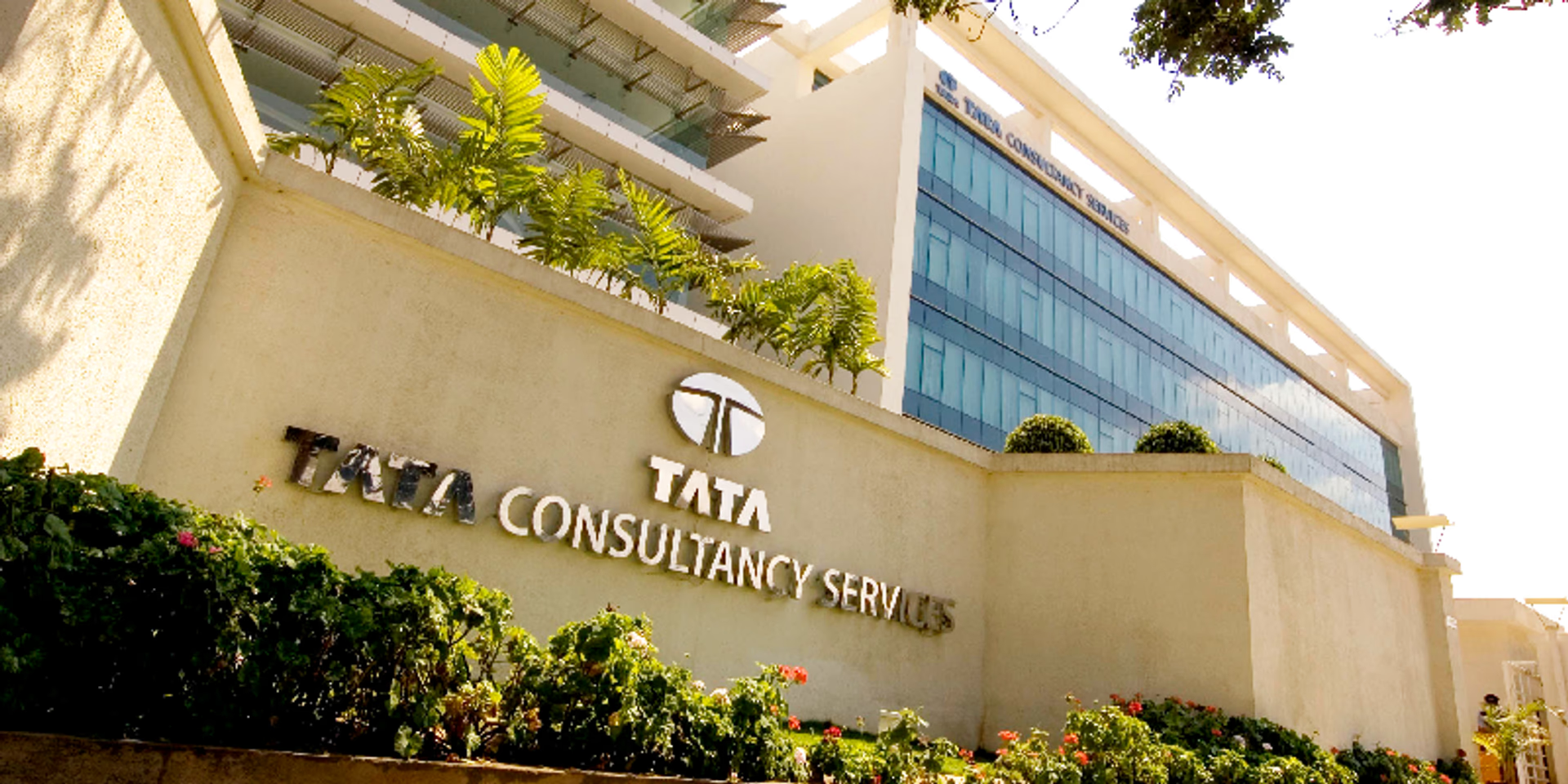

India’s largest software exporter, Tata Consultancy Services, will reduce its global workforce by around 2%, or roughly 12,000 roles, over fiscal year 2026, as it seeks to adapt to shifting client needs and invest more heavily in emerging technologies such as artificial intelligence, reported Moneycontrol.
The cuts, which will primarily affect middle and senior management, are part of a broader effort to streamline operations and realign skills in anticipation of future demand. The transition is expected to unfold gradually between April 2025 and March 2026 and will span geographies and business domains.
TCS Chief Executive K. Krithivasan said the decision followed an extensive review of internal capabilities and projected requirements in light of evolving delivery models and widespread AI deployment. “We need to be future-ready and agile,” he told Moneycontrol in an interview on Sunday. “Despite efforts to reskill and redeploy staff, there are areas where this has not been effective.”
The company said it is working to implement the transition in a “compassionate” manner, offering severance pay, extended insurance coverage, and outplacement support to affected employees. With a headcount of 613,000 as of June, the move marks one of the most significant workforce realignments at TCS in recent years.
Krithivasan emphasised that the move is not driven by AI-led job displacement but by a strategic shift to align workforce capabilities with the company’s future needs. “This is about feasibility in deployment, not because we need fewer people,” he said.
The restructuring comes alongside changes to TCS’s internal bench policy. In June, the company began enforcing a revised framework requiring employees to maintain at least 225 billable days annually and limiting time spent on the bench to 35 days. Failure to meet the revised benchmarks could lead to disciplinary action, including termination.
An employee impacted by the new policy said staff who remain unassigned for over two months are being asked to resign, with the option of a three-month severance package. Those unwilling to comply risk termination without severance, the person said on condition of anonymity.
Separately, Krithivasan acknowledged that client decision-making has been slower in recent quarters, leading to delays in project starts. Still, he maintained that these delays are temporary and not indicative of a demand collapse. “There were very few cancellations,” he said. “It was more delays or scope reduction.”
TCS is among the first major IT services companies to signal a restructuring of this scale.
The company has also reportedly delayed onboarding for several hundred lateral hires, with some offers expected to be rolled out later than initially planned.
India’s $280 billion IT services industry has been contending with tightened budgets from clients in the U.S. and Europe, cautious enterprise spending, and the transformative impact of generative AI.
TCS’s latest move suggests that the industry’s response to these shifts may increasingly include workforce recalibration, even as companies continue to invest in reskilling and digital transformation.