



India development centre to play key role AI development: Intuit Chief AI Officer
Intui's India centre has been leading from the front in building new AI capabilities for the company.

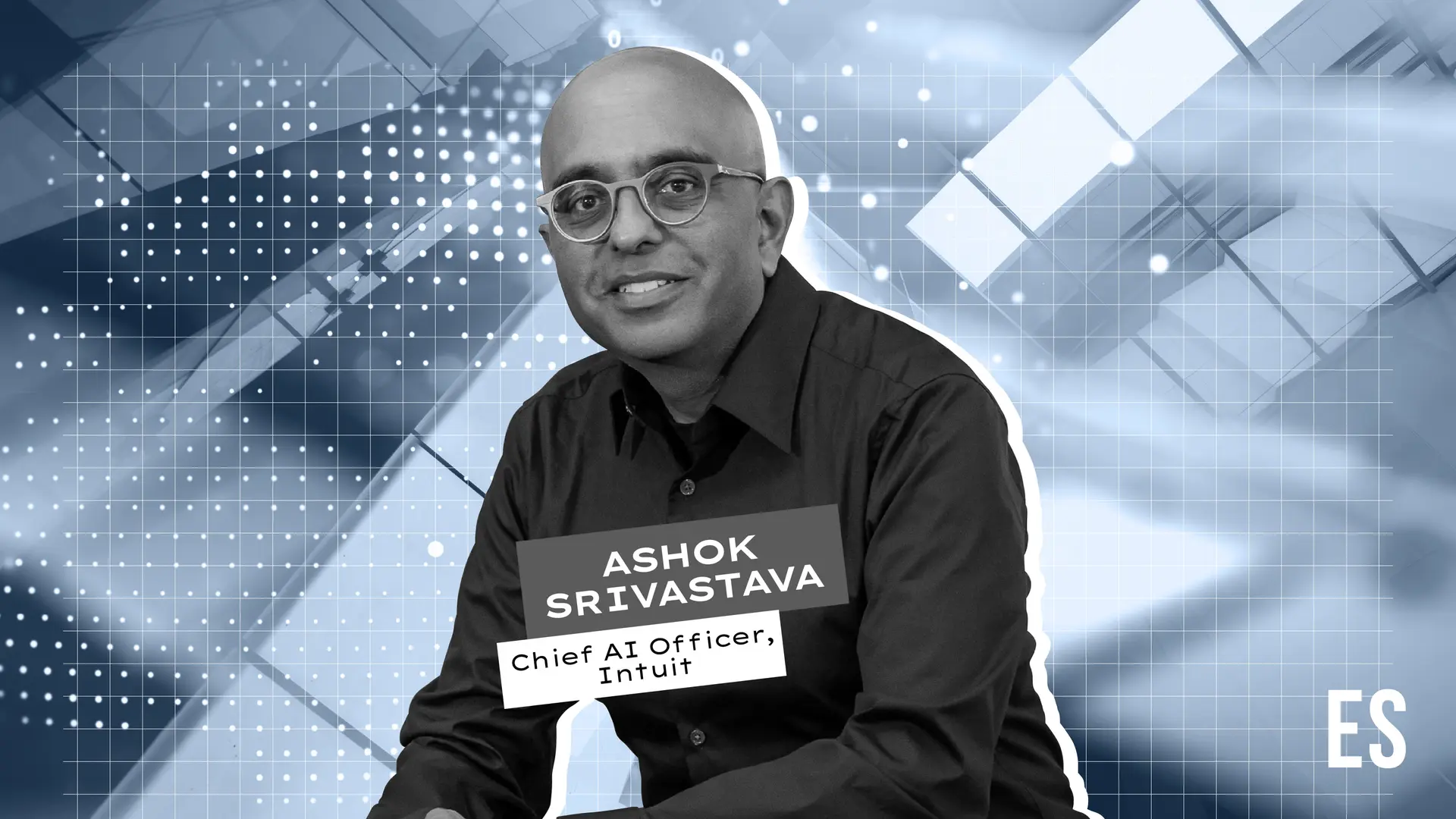

US-headquartered financial technology company Intuit has deep expertise in artificial intelligence (AI), having built its own GenOS or Generative AI Operating System.
Customers, according to the company, have already started seeing the benefits, with the integration of AI capabilities in several of its financial software products resulting in higher accuracy and faster disbursal of capital.
Intuit launched its operations in India in 2005, with Bengaluru hosting its development centre. The hub plays a key role in building the new AI capabilities and has led global teams in building several products. Around 2,000 of its 18,000-strong global workforce are located in the country.
In an interaction with EnterpriseStory, Intuit Chief AI Officer Ashok Srivastava, says, “India will play a key role in our technology development, platform development and also on the frontiers of AI.
EnterpriseStory (ES): What are the key trends you see in the world of AI today?
Ashok Srivastava (AS): Agentic reasoning is probably the most important because what we see as an industry, there is emphasis on building models that can do work for people. It allows AI to simply get work done for people, and agents are the way this is accomplished.
Agents today are being trained to reason more and more. An enormous amount of effort is going into building better reasoning systems, as it would enable better agents.
The second trend is, I would call it the reinvention of the Internet. So right now the internet is constructed around a few assets, which are a human user, a browser and the World Wide Web. These three components have been created with the worldview that the human is actually the consumer of those technologies, which until now is true. However, I think what we're seeing is a significant change in the industry to say that the user may actually still be a person combined with one of those agents. And that these two could simultaneously be traversing the web, gathering information, but it changes the basic paradigm by which you interact with the web.
The next trend that I see coming is that we're going to find that large language models can be made even more powerful by the inclusion of other AI technologies.
ES: What has been the experience of Intuit with agentic AI?
AS: It has turned out very well, and we have launched what we call “done for you” experiences. These are experiences that are accomplished by agents. We are seeing extremely high repeat engagement from our customers. It is north of 80% on the QuickBooks AI agents. People are getting paid five days faster on average. We are seeing two times faster speed for completing routine tasks with AI.
This is happening because we, as a company, invested significantly in building the data platform and the AI platform, which we call GenOS - Generative AI Operating System. We have thousands of developers using these capabilities. The data platform is very robust. It generates clean data and it can be directly accessed by GenOS. All agentic experiences at Intuit are built on GenOS. Interestingly, one of the core teams for GenOS is here in India. Even the developers are seeing tremendous productivity booms from AI. We are seeing 40% faster coding with AI assistance on average.
ES: What is the broad AI vision for Intuit?
AS: What we are seeing now is the investments that we made early on in building the data and AI platforms which we have scaled it up. The real question is in inventing the next generation of AI because that is what we believe is going to help power transformative experiences for our customers. Our Intuit Foresight team is building and testing new emerging technologies within AI or outside of AI.
ES: How are your customers benefiting from AI?
AS: For the accounting agent, which is an AI-powered reconciliation and anomaly detection system. It is saving people 12 hours per month on average with 90% accuracy rates. We are seeing 3 million monthly active users for these capabilities already. We're seeing that in the money area and what we Call Capital, $4 billion in financing has been accessed through QuickBooks Capital, which is 73% increase year over year.
For IES (Intuit Enterprise Suite) for mid-market customers which was designed here in India what the customers are seeing is that with the project management agent there is a 60% reduction in manual steps to set up a project. So these agents are really changing the game.
ES: How is Intuit combining AI and human efforts?
AS: Intuit has long said that the strategy of the company is to be an AI-driven expert platform. So it has AI and an expert. The experts are humans. These are people skilled in accounting, bookkeeping or tax-related areas. That has been our strategy well before the world of agents.
Intuit’s GenOS seamlessly allows for the transition from AI to human intelligence. We employ tens of thousands of experts that are humans who are augmented with artificial intelligence. An Intuit customer can go to QuickBooks and use the AI systems. And whenever they want can seamlessly transition to human intelligence and work with a human expert.
ES: What has been the role of the India Engineering Centre for Intuit in building AI platforms?
AS: The Intuit Enterprise Suite (IES) was driven out of India in collaboration with other centres and was launched in record time. In IES, our teams here in India created new capabilities within the large language model paradigm that help people understand their business better than ever before.
One of the core components of GenOS is how large language models are evaluated. Those capabilities are created here. The capabilities for understanding how to do system orchestration are done here in India. They are reinventing data engineering with artificial intelligence. India will play a very key role in our technology development, platform development, but then also on the frontiers of AI. We are going to continue to make significant investments in India because the talent here is very extraordinary. I want to build upon that and build these great systems of the future.
ES: What is the AI roadmap ahead for Intuit?
AS: We are making investments in building the next generation of reasoning systems because reasoning is something that is hard to accomplish using LLMs alone. They can work, but we want to build very robust reasoning systems. Another area is forecasting and scenario planning.
Another area that we are focusing on is building new large language models. These are called Financial Intuit Large Language Models. We have created new large language models that are higher accuracy, delivering lower cost and latencies. The reason we exist is to power prosperity for our customers.
Edited by Affirunisa Kankudti