



AI should free engineers from repetitive computer tasks, says Dassault Systemes' Manish Kumar
At the 3DEXPERIENCE World event, Manish Kumar, CEO of SOLIDWORKS and R&D executive at Dassault Systèmes, showed how we could soon generate 3D designs, simulations, and factory plans through simple descriptions, lowering barriers to advanced engineering, including for India’s manufacturing sector.

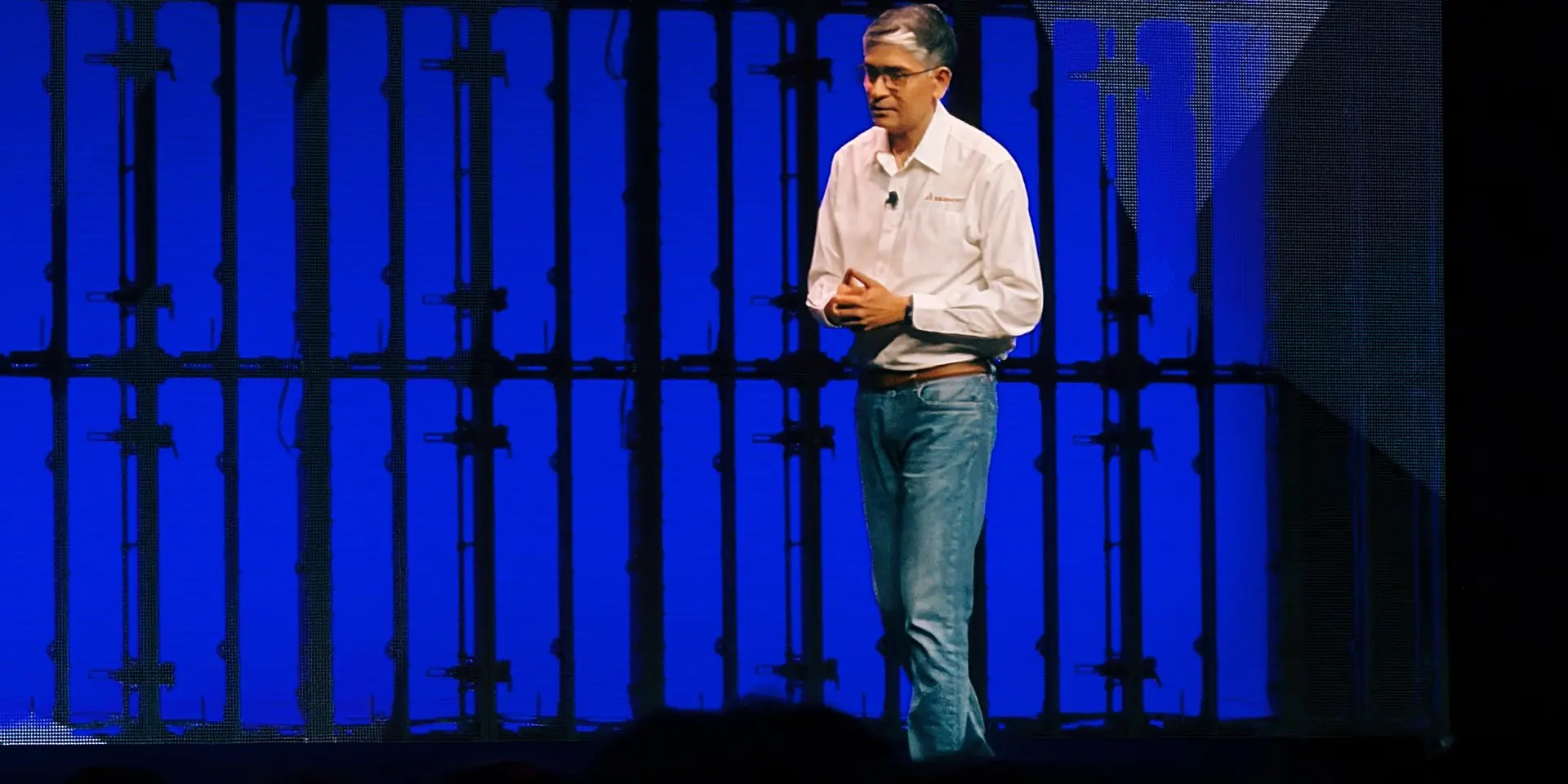

For decades, designing a product with engineering software meant learning commands, menus, and complex workflows. Manish Kumar, CEO of SOLIDWORKS and R&D executive at Dassault Systèmes, thinks that era is starting to fade.
In his address at Dassault Systèmes’ 3DEXPERIENCE World gathering, Kumar showed examples of engineers “talking” to software to create and modify designs, instead of manually drawing every line and feature. The aim, he said, is not to remove engineers, but to remove the repetitive digital labour around them.
“Today you need to know the interface. In the future, you just need to know what you want,” he told the audience, comparing it to how people generate images with AI tools without being graphic design experts.
From words to working models
In one demonstration, Kumar said, a user typed instructions to create mechanical parts—gears, flanges, and structural frames—and the system generated 3D models and assemblies. In another, an image was converted into a digital model that could then be used to design a part in the right physical context. Such capabilities are already available for users to try, emphasising how AI has transformed design over the past few years, he added.
He also showed how AI tools can spot problems in large digital assemblies, suggest ways to improve performance, and answer questions about a design, such as weight or number of components, through simple chat.
Instead of clicking through multiple screens, users could ask the system to change materials across parts or automatically create drawings in a required format, he said.
Beyond design, Kumar highlighted examples in simulation and regulated industries. Setting up complex tests, such as checking how a device behaves when dropped, often requires many technical inputs. The AI tools, he said, can handle much of that setup automatically, letting engineers focus on results rather than configuration.
In medical devices, where regulatory paperwork can outweigh design effort, he showed how requirements and compliance steps can be linked directly to the digital model. The goal is to reduce manual paperwork and make it easier to trace how a design meets standards, he said.
Like Dassault CEO Pascal Daloz, Kumar described a system of three AI “companions” with different roles, one for open-ended ideas, one grounded in practical engineering, and one focused on science and research. He argued that a single general AI is not enough in safety-critical fields; expertise needs to be specialised, just as in human teams.
Early AI models are trained on the company’s own or synthetic data, he said. When adapted for a customer, those models are trained on that client’s data alone and are not shared elsewhere, reflecting the sensitivity of industrial know-how.
Most of this computing, Kumar said, will run in the cloud rather than on local machines. Large data centres can provide the heavy processing needed, while ensuring smaller firms have access to the same capabilities as large manufacturers.
For countries like India, where many firms are moving up the manufacturing value chain but may lack deep pools of specialised engineers, tools that lower the skill barrier could be significant. By turning past designs and processes into reusable digital knowledge, Kumar’s pitch was that engineering software is shifting from being a set of tools to becoming what he called a “factory of knowledge and know-how”.
(The author is in Houston at the invitation of Dassault Systemes)
Edited by Megha Reddy