



How Fidelity International’s GCC in India evolved into a leadership centre
The global capability centre of Fidelity International has been at the forefront of driving innovation for the company and is now doing the same in the area of artificial intelligence.


Financial services firm Fidelity International has been engaged with India over the last 25 years in technology, finance, human resources, and legal expertise sectors. The company’s global capability centre (GCC) has now evolved into a strong leadership location as individual leaders, along with their teams have a seat at the decision-making table.
Fidelity International’s GCC in India is present at three locations—Gurugram, Bengaluru and Mumbai. The India centre accounts for 50% of the global employee strength of the company and is now creating new benchmarks in the area of artificial intelligence.
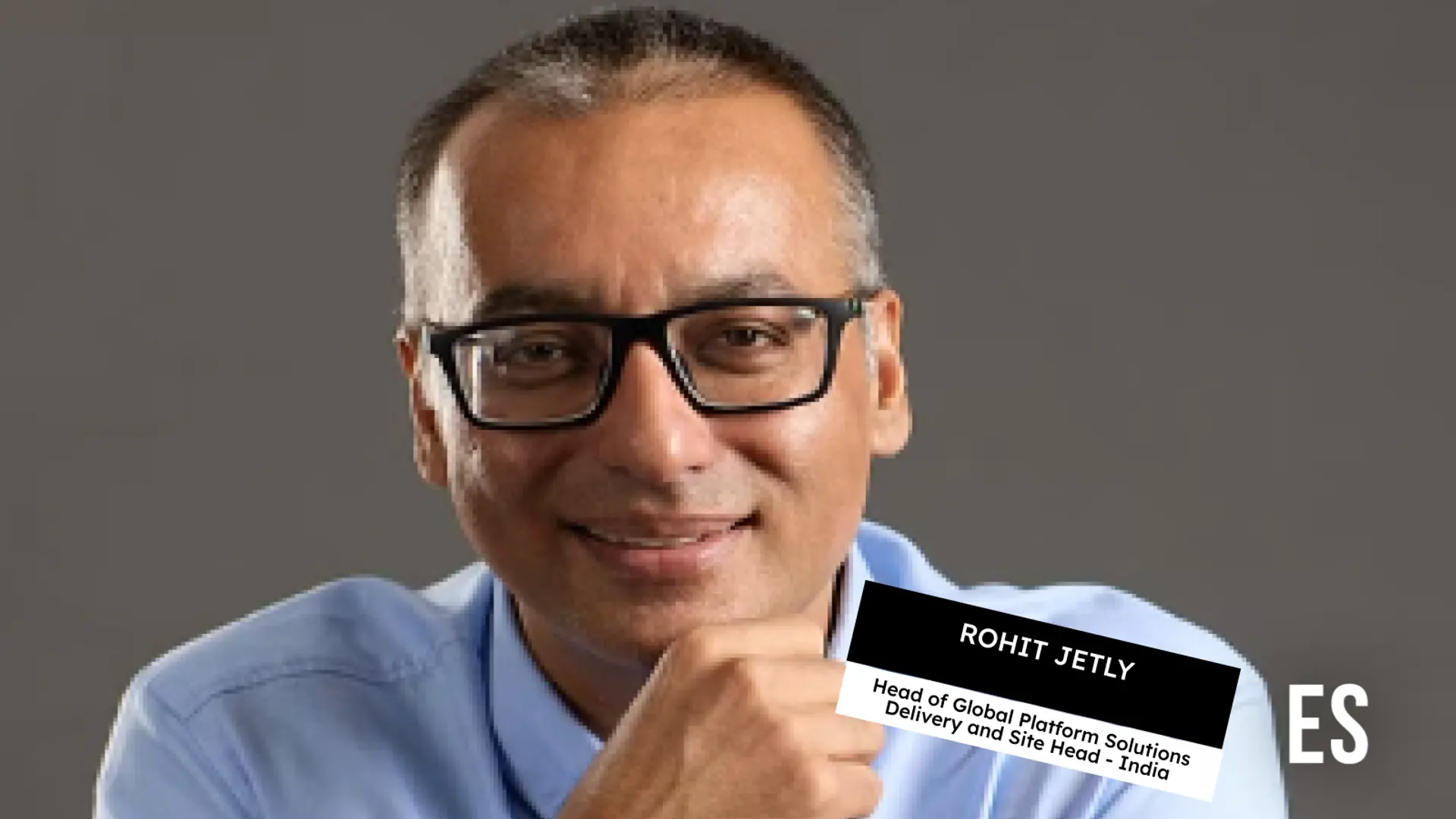
In an interview with EnterpriseStory, Rohit Jetly, Head of Global Platform Solutions Delivery and Site Head — India, explained the key role this GCC is playing for the company globally. “We bring the energy, fresh ideas and brilliant tech innovations,” he remarked.
Edited excerpts from the interview:
EnterpriseStory [ES]: How do you see the evolution of Fidelity International in India?
Rohit Jetly [RJ]: Fidelity never considered India as an offshore location, and even during those early days, it was an extension of the teams outside of the country into India. That's a very distinct thing. The other distinct feature is that we place global roles in India, and that has happened because we have allowed India not to be a separate office. For instance, even in my own teams, a portion sits in the UK, Gurugram and Bengaluru. It's the same team but with one common leader.
The good thing about Fidelity International is that India has demonstrated a lot of credibility. So a lot of these global roles are now based here, and there is a lot of global participation. So there are voices being heard.
Also, there are a lot of pervasive core technology changes which growing economies like India are seeing far more than others, and because of this, we pick these tech trends faster. A lot of our mobile application development happens in India because people here are more tech-savvy.
So India has become so integral to those kinds of things, including artificial intelligence (AI). The global roles sitting here are kind of almost making sure that their voices are heard in a meaningful fashion to a point where our future blueprint has been driven entirely by India. The conviction is so high that our people in India understand the customers, technology and how to run it operationally.
There are also functions of human resources, legal and finance done out of India. So over the last 25 years, this has turned into a conviction of a place of value where we can actually shape the future from here.
We are seen as people who can own, define, and deliver strategy for our global businesses, sitting in this location.
ES: How is Fidelity International India engaging with artificial intelligence (AI)?
RJ: One of the beliefs that we have now at Fidelity is that AI is pervasive and it is here to stay. It will change its form and impact, but it is not going away anywhere. Our approach at Fidelity International was that instead of bolting AI on top, we have said we'll do that on our existing operating model by redefining a new operating model, which is AI-driven and agentic AI-driven.
AI is enabling conversations for our businesses where there is a need to understand the intent of our customers and build a journey that is specific to those intentions. We are doing massive experiments there.
The second aspect, which is almost table stakes, is productivity gains or efficiency in whatever we do, be it running a meeting, writing a proposal or writing software code. A team here in India created something called a brain. An analyst can chat with a brain, and it can forward engineer code, where then a developer can just oversee it. And we are now looking to expand this brain concept in everything that we do.
The third thing is in alpha generation, where it can do stock picking, where we feel AI can play a very good role.
There are other important things like AI governance, where we always keep humans in the loop, which is an oversight of the AI environment on a continuous basis.
The last piece is on data, and getting this sorted is extremely important. All our data teams and data strategy teams are based here. We are driving that holistically across all our businesses, all our client types.
ES: What are some of the changes that Fidelity International has witnessed through AI?
RJ: Today, our conversations with customers are dynamic in nature, and it is no longer a static interaction with a website. So, we have already gone live with our first conversational AI agent called Freya, which can engage with our customers, answer their queries and understand their intent. We believe all of that can be done through interpretive AI agents now and that's the work that we have already started. Also, we have built agility in these agents so that they can be easily deployed in any geography.
Today, we have provided widespread access to AI enterprise platforms like Copilot and ChatGPT because we believe that until we expose our people to it, they'll not learn.
Today, we have the people and leadership in India who can understand, define and execute a strategy. It has taken time, but it has largely worked, and that conviction has grown. This has allowed us to put AI here, too.
ES: How is Fidelity International skilling its people in the area of AI?
RJ: It is a massive change and won't be easy. The good thing about being in India is that a lot of our workforce does a lot of learning outside of the office time as well. That's the power of India as a country, and when you give them a structured curriculum, it just accelerates, because people are reading about it and want to be skilled. I believe that around 30% of it will be theoretical training and 70% will be on the job.
We also have specific AI courses for people at a very senior level because we want this to come through top down as well.
ES: What is the future roadmap for Fidelity International India?
RJ: One of the first things that we want to see is what the future of Fidelity is, because we feel we play a very significant role in forming the future of Fidelity. The teams here can contribute to Fidelity being relevant globally, in the changing forces and the volatility of the world. That would be Fidelity vision. We have a strong belief that the Indian leadership, leaders from India, in these businesses, are driving that.
Edited by Jyoti Narayan