



India can be a top four quantum player, but we need deployment-ready workforce: IBM’s Amith Singhee
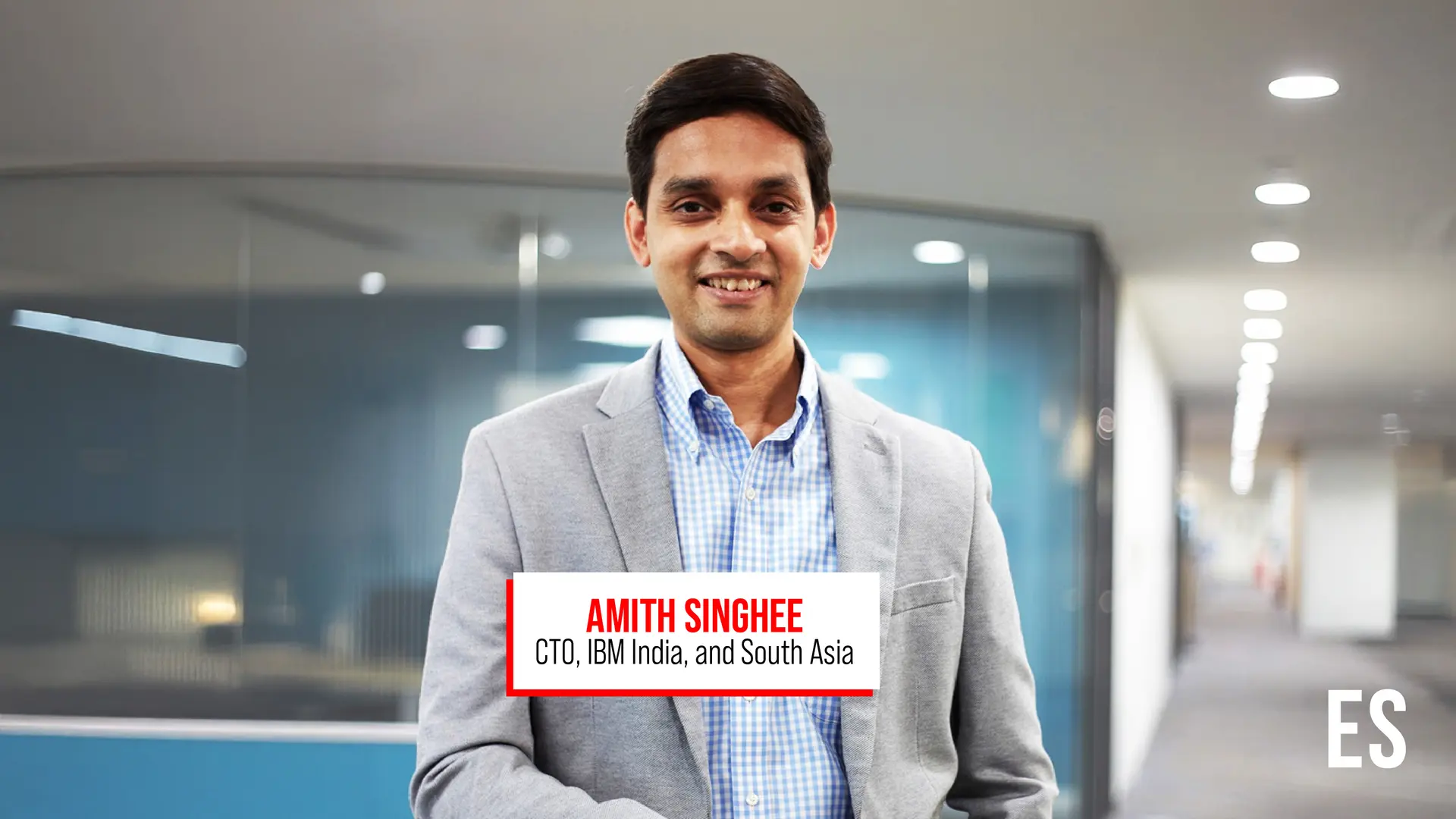
In a conversation with EnterpriseStory, Amith Singhee, Director of IBM Research India and CTO, IBM India and South Asia, said India has the potential to emerge as a global leader in quantum computing, but it will require more than policy momentum and research.


Quantum computing is seen as the next frontier in technology, with the potential to expand how computers process information and enable entirely new applications across industries. Global technology company IBM has been at the forefront of advancing this field, driving both research and real-world use cases in the area of quantum computing.
In India, the team at IBM Research has been part of the company’s global effort on quantum computing while also collaborating with other stakeholders such as the governments, startups, research institutes, and students to deepen the reach of this technology.
In an interaction with EnterpriseStory, Amith Singhee, Director of IBM Research India and Chief Technology Officer (CTO) for IBM India and South Asia, said the country has the potential to emerge as one of the top four quantum computing players globally. However, he noted that building a strong talent pipeline with deep expertise in the field will be critical to achieving that ambition.
Edited excerpts:
EnterpriseStory [ES]: How do you see the landscape of quantum computing in India?
Amith Singhee [AS]: In the last four to five years, we’ve been working to bring all the stakeholders together for discussions, research collaborations, etc. We also have the National Quantum Mission (NQM), which has catalysed an ecosystem wide conversation around the themes of hardware, computing, communication, sensors, and materials.
Now, we are focusing on the algorithms programme that can super charge the next phase of innovation and will develop the software side. However, there is one gap, which is the linkage between quantum computing and what impact it can have in the real world. Its application in sectors like logistics, finance, green energy, and fertiliser efficiency are not very well understood beyond a few experts.
If we can catalyse a programme around algorithms that will bring together industry stakeholders, then it will bridge the gap between the application layer and the quantum world. However, there are certain ecosystems that will start forming very rapidly in the next one or two years.
ES: Are Indian startups playing a role in quantum computing?
AS: There are a number of startups but not all of them are at the same stage of maturity. They have some distance to go but it is good to see that effort. There are startups also looking at building applications. Once funding starts to come into the algorithm space, this will help the startups. One more important point is that there are actually some very strong researchers in India, at least in certain specific areas and understand how to perform research at a global level. We are starting to see them becoming more active and confident moving forward especially with the support of the government. I think in the next two-three years, we will see very good algorithms research coming out of India.


ES: Has India got the right skills in the area of quantum computing?
AS: The government has started creating quantum computing course material, both at undergraduate and graduate level. However, we are falling short in one area—we need a deployment-ready workforce that understands these technologies at a globally-competent level, which goes beyond just knowing the fundamentals or learning it. They need to understand how many things work in the areas of quantum computing. Deployed workforce will be the ones who can hit the ground running.
We need to do a lot more and accelerate. If we want to be among the top four players in quantum computing by 2035, then in the next two to three years, we have to substantially increase the order of magnitude of our deployed workforce.
Another gap lies in bridging the disconnect between the technology and its end users—industries that stand to benefit from quantum computing. Until that happens, it is just a push on the supply side. Also, if we have to become a serious, long-term player, then we need to take more risks in our scientific endeavour and exploratory science.
ES: What measures is IBM taking to expand the talent pool in India?
AS: IBM has taken an open source-based approach to our software, which creates a very powerful environment for us to engage. We have a quantum advocate programme as well as enthusiastic people who have themselves done that to become quantum advocates.
Our quantum computers have always had a free access tier, and India has been in the top tier in terms of the number of individuals who have used it. So, there are a lot of people who are themselves learning using our open material and free tier to get skilled on quantum.
We have also participated in faculty development programmes and there have been collaborations with multiple institutes where our researchers are collaborating with the faculty members, and there are research papers which have come out in different domains.
ES: What do you think are some of the strong points of the Indian technology workforce while engaging with quantum computing?
AS: There is a comfort with mathematics, software development, and computers. Parts of our ecosystem have a comfort with science and scientific concepts. The potential is so high. Now also with the focus of government and the ecosystem around startups, it is creating a demand environment that motivates people. We also have to keep pushing and creating bigger ambitions.
ES: How do you see the application side of quantum computing among Indian enterprises?
AS: The use cases and potential applications exist and they have been already identified by companies in the West. They are doing the research to find the algorithms and advance the computers to meet the scale that is needed for commercial development. However, this is not the case with the Indian enterprises as this requires sustained investment and understanding of this technology. This needs a top-down intent in the company. This readiness is not very widespread at all in India today.
ES: How is IBM India contributing to the company’s global efforts in quantum computing?
AS: IBM Research in India is part of our global IBM research mission. All our work here is part of the integrated strategy. We work on the parts of the quantum stack that drive adoption and application. These extend to areas of software programming, developing algorithms, building products, and supporting global clients who are doing advanced research. Apart from this, we are also engaged with different parts of the ecosystem.
Edited by Megha Reddy