



UKG believes India GCC will emerge as a global leader driven by AI platforms
Workforce management solutions provider UKG has been in India since 2007. Over the years, it has developed strong leadership and expertise in engineering and services. The next wave of growth will come from AI products, says Nitin Chandel, GVP & India Country Manager.

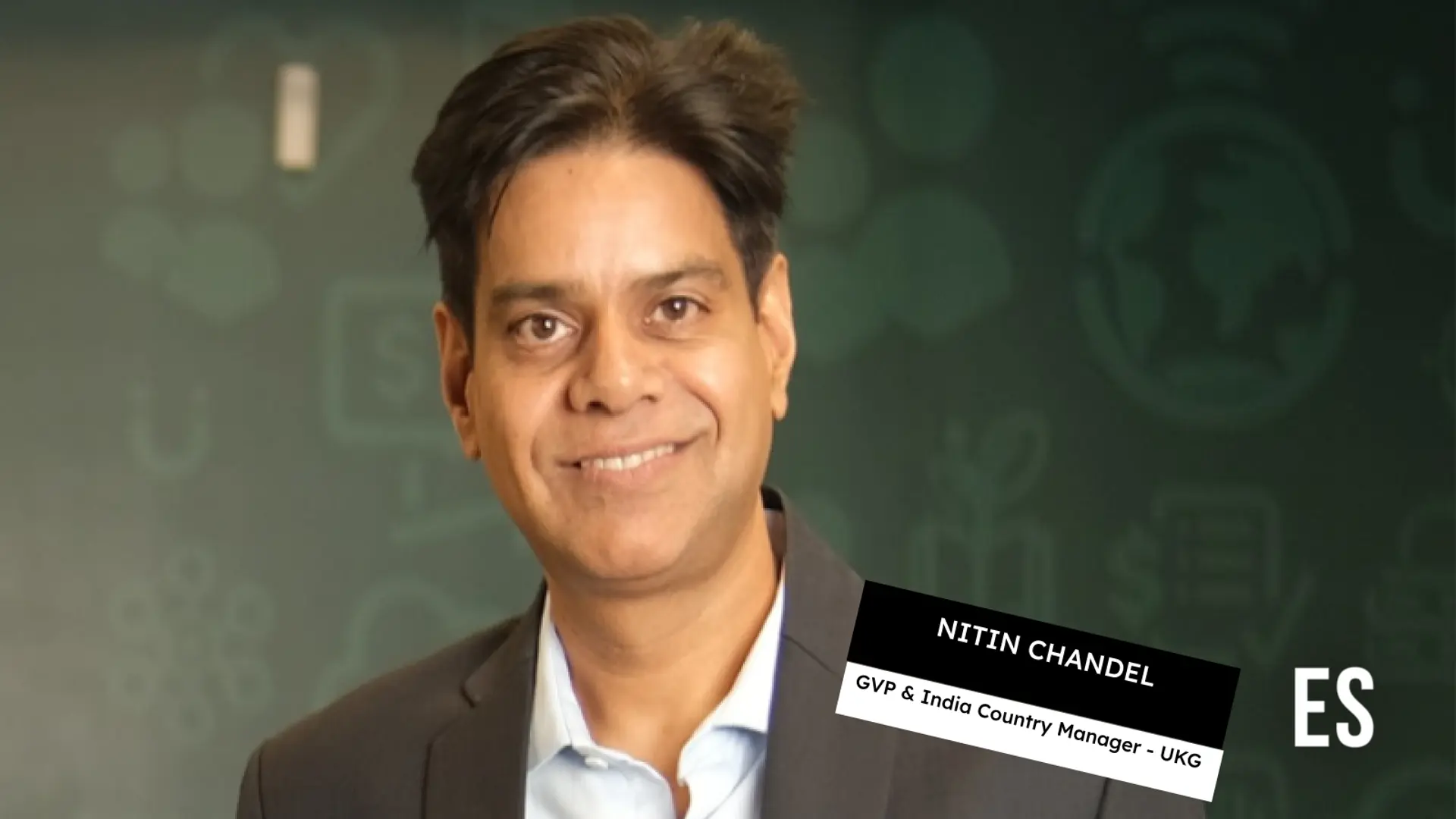

UKG, a workforce management technology solutions provider, believes its global capability centre (GCC) in India will strengthen its leadership position worldwide, spearheaded by AI platforms.
The group's GCC has been present in India since 2007. In the last two decades or so, it has grown to over 4,000 employees across four locations: Noida, Pune, Mumbai, and Bengaluru. The GCC in India is now on par with any other key engineering centre of the company across the globe, including the United States, Canada, and Australia, says Nitin Chandel, Group Vice President & India Country Manager, UKG.
“Any of the work that happens globally for the company, there is some or the other footprint of that in India,” says Chandel.
US-headquartered UKG provides cloud-based workforce management solutions to automate HR, payroll, scheduling, and time tracking. Services include time and attendance tracking, advanced scheduling, labour analytics, and payroll integration to optimise productivity, reduce labour costs, and ensure compliance.
Over the years, the company's GCC in India has built a strong leadership team and expertise in engineering capabilities and services such as customer support and implementation.
The company has five key product lines around HR and payroll management, serving over 80,000 customers worldwide across several industries, including retail, healthcare, and manufacturing. The India GCC heads one of the payroll product lines.


Pharma, life sciences GCCs in India lower drug development timelines: Report
Chandel says it was a conscious decision by the company to treat the India GCC not just as a unit that executes the decisions taken globally but also as a centre that leads products and decision-making.
The presence of a mature talent pool and high-level engineering capability in India is a big plus, which has helped the firm scale its operations in the country, says Chandel. The top leadership in India not only has technical knowledge but also has a keen understanding of the market requirements, he adds.
“In terms of capability, India is at par with any global centre, and we have to leverage it,” he says.
Chandel points out that the global CEO of the group visits India twice a year, demonstrating the confidence the company has in the India GCC’s capabilities.
AI adoption
As for the dominant theme of AI adoption, the company has laid out detailed strategies and programmes to come out with products with AI embedded in them.
The goal is to ensure that people develop AI-first thinking. Programmes include hackathons, building internal products, and demo sessions to inculcate the spirit of AI.
“We have a very structured training programme for all our product teams where we provide a lot of AI tools across the organisation to make sure our employees are inspired by our AI journey,” says Chandel.
UKG is looking at AI in two ways. Firstly, it is building agentic AI platforms, i.e. agents that can carry out tasks autonomously to a great extent. Secondly, it is looking at AI platforms that can provide business insights.
The company deploys AI both internally and externally. In the internal use case, the focus is on driving productivity across the organisation. On the external side, it has deployed AI agents for customers.
The India GCC has been an integral participant in the company’s AI journey, as it has access to vast amounts of data on workforce management and derives valuable insights from this information.
It has built AI agents that handle the compliance elements for employers in payroll management. It has also developed AI agents for workforce roster management in hospitals, especially for nurses.
Many of these platforms are used on a global scale.
To keep pace with the evolution of AI, it is important to nurture talent, says Chandel. “We need people who understand the domain, know the systems, and can leverage AI to take it to the next level,” he says.
Towards this end, the company is pumping in resources for upskilling and also identifying leaders who can lead the transformation. It has identified around 45 leaders in India in the areas of AI adoption, ideas and implementation. At the same time, it is also hiring engineering talent from outside, particularly people with an AI-first mindset.
Going forward, the India GCC aims to strengthen its leadership position in the global landscape with ownership of ideas and the capability to develop global products out of India.
“We are a unique location with scale to own the end-to-end product lifecycle (development to deployment),” says Chandel.
Edited by Swetha Kannan