



India no longer just contributing to global products, but shaping how they evolve: LinkedIn’s Malai Lakshmanan
In an interview with Enterprise Story, Malai Lakshmanan, Head of India Engineering at LinkedIn, says the company’s India engineering teams now lead AI, data, infrastructure, and product development at scale.

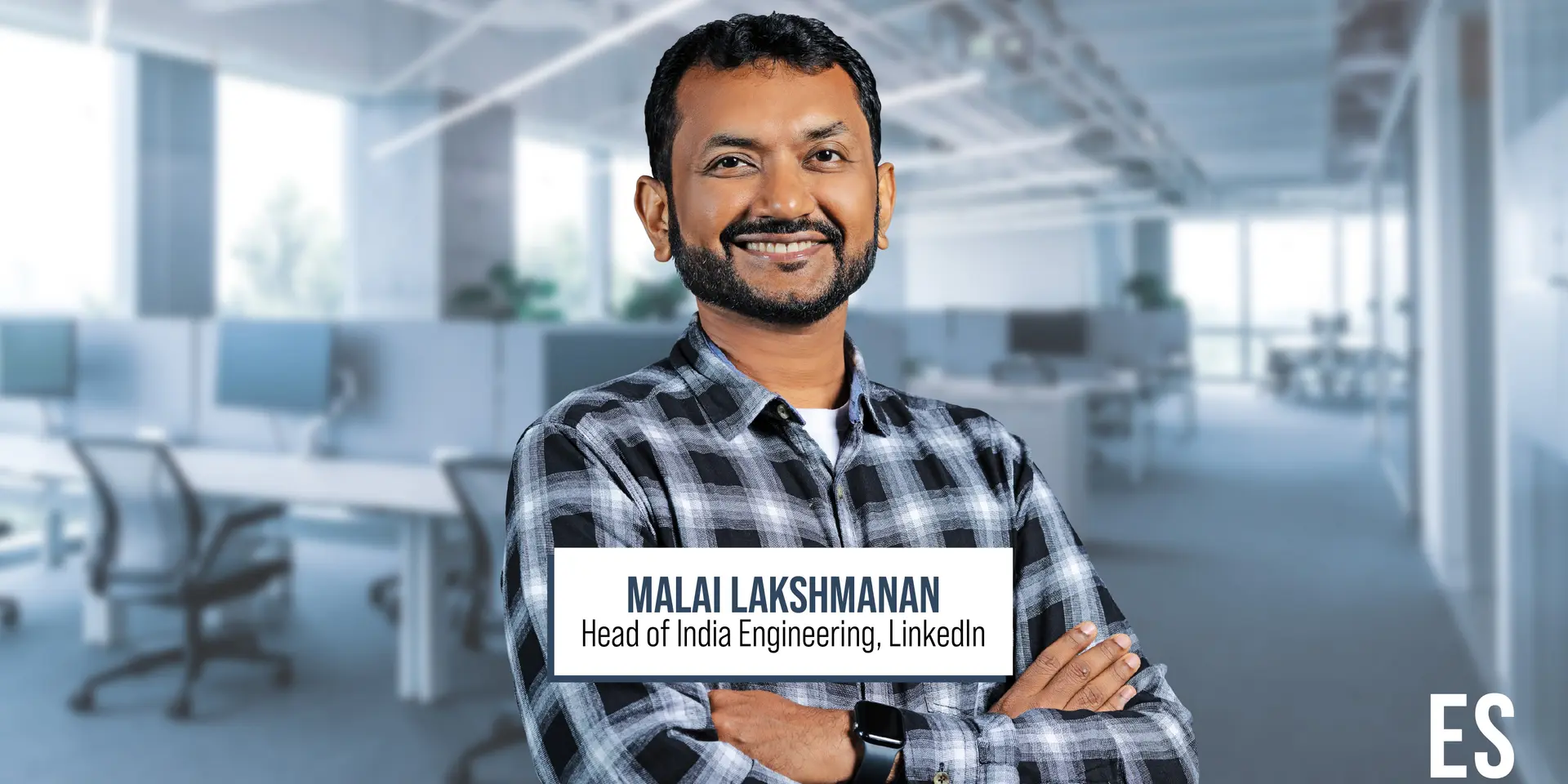

Over the past 15 years, LinkedIn, the global professional networking site, has transformed its R&D centre in Bengaluru from a development hub into a destination where true engineering is happening, driving the company’s global products.
Today, it's teams in India own end-to-end product development for businesses such as LinkedIn Sales Solutions, build the AI, data and infrastructure platforms powering millions of users globally, and are playing a central role in building LinkedIn’s next wave of innovation.
In an e-mail interview with EnterpriseStory, Malai Lakshmanan, Head of India Engineering at LinkedIn, discusses the evolution of the Bengaluru centre, how AI is transforming product development, the company's focus on nurturing AI talent, and the intrapreneurial culture that combines startup-like ownership with the scale of a global platform. Edited Excerpts:
EnterpriseStory (ES): LinkedIn established its technology centre in Bengaluru in 2011. Over the last 15 years, what steps did the company take to transform this centre into a key hub driving global products?
Malai Lakshmanan (ML): Over the past 15 years, we’ve been very intentional about evolving our Bengaluru centre into a core driver of LinkedIn’s global engineering roadmap. We did this by building teams with clear ownership of products and platforms, while investing deeply in areas like enterprise and data platforms, core infrastructure, and AI.
Today, engineers in Bengaluru are not just contributing to products like Talent Insights, Recruiter System Connect, or Ads Trust and Control, but they are also running an entire line of business like LinkedIn Sales Solutions, one of our fastest-growing businesses, where we now have end-to-end R&D based out of India.
On the infrastructure side, our engineers are building and scaling the systems that make these experiences possible, from data and AI platforms to the infrastructure that ensures reliability and performance at global scale.
Today, Bengaluru is not just our largest R&D hub outside Silicon Valley, it’s a place where we build for the world, and increasingly, where we decide what to build next.
ES: What global products and platforms of LinkedIn are being driven out of the Bengaluru centre?
ML: Work from our Bengaluru centre spans core data, AI, and infrastructure, powering both member experiences and enterprise products at global scale.
On the member side, teams have built and scaled offerings like LinkedIn Events. On the customer side, for LinkedIn Talent Solutions, our local engineers contribute to platforms like Apply Connect, Recruiter System Connect, Talent Insights, and the Jobs Ingestion Platform, which powers job discovery and innovations like Hiring Assistant.

Image Source: ShutterStock
Within Marketing Solutions, India teams lead critical areas like Ads Review and Ads Transparency, helping build a more trusted advertising ecosystem. Underpinning LinkedIn’s global platforms is infrastructure built and scaled from Bengaluru, spanning online databases, streaming systems, large-scale storage platforms, control plane and data movement services that process exabytes of data and trillions of events each day with millisecond latency.
This foundation is complemented by platforms that power real-time analytics, AI-driven innovation, rapid experimentation, and robust privacy and governance, helping LinkedIn deliver trusted, data-driven experiences at global scale. Teams in India play a critical role in building, advancing, and operating these platforms, driving reliability, performance, and operational excellence for millions of members worldwide.
This breadth of ownership reflects a clear shift from contributing to products to building the platforms that power LinkedIn globally.
ES: How is LinkedIn integrating AI into its products at the Bengaluru centre?
ML: LinkedIn has a long history of using AI across its products, and now, AI is foundational to how we build and evolve our platform. This includes systems powering feed recommendations, semantic search, and People You May Know, all of which drive discovery and meaningful connections at scale.
Our Bengaluru teams play a critical role in advancing this across an integrated ecosystem, from the underlying AI infrastructure to the product experiences that reach members globally.
More recently, teams in India have been focused on building and scaling GenAI and parts of agent-based experiences, including Hiring Assistant. What enables this is a strong platform foundation that allows us to experiment quickly with large language models and seamlessly bring those innovations into existing products translating cutting-edge AI into real-world impact at global scale.
ES: How is LinkedIn India developing AI talent?
ML: The future of product building is AI-native, and every role across R&D has to evolve with it. At LinkedIn, we’re focused on helping teams internalise that shift by rethinking how we build, not just introducing new tools. That means hiring for skills, including a dedicated AI assessment module in our interview process, and investing in hands-on learning through training workshops that use real workflows and live cases to help teams actively apply AI. We create space for experimentation and innovation through experiment focused events like Hack Week that encourage teams to build and test new ideas. This approach ensures our teams are continuously learning, experimenting, and applying AI capabilities in real-world systems at scale.
ES: What is the Intrapreneur Mindset that LinkedIn talks about?
ML: At LinkedIn, the intrapreneur mindset is about combining startup ownership with the scale of a global platform. Teams have end-to-end ownership; they’re not just building components, but solving problems, shipping solutions, and continuously improving them based on real-world impact.
At the same time, we encourage rapid experimentation while maintaining the reliability and trust expected of a platform used by millions. Our internal mobility programme encourages employees to explore and transition to new internal opportunities—we call these as their Next Play or their next Tour of Duty, which enables employees to take on defined, high-impact roles over a set period that helps them in developing new skills. It’s this mindset that allows us to innovate quickly while building systems that people and businesses rely on every day.
ES: How do you see the future roadmap for LinkedIn's technology centre in India?
ML: Going forward, Bengaluru will continue to expand its role as a global hub for building and scaling LinkedIn’s core business platforms. A strong example is LinkedIn Sales Solutions, one of our fastest-growing businesses, where we now have end-to-end R&D based out of India spanning product, engineering, design, and data science. This reflects a broader shift towards deeper ownership at scale, powered by India’s extraordinary depth of technology talent, where teams are not just advancing our capabilities, but helping define the next wave of innovation for LinkedIn globally.
Looking ahead, a key focus will be on bringing our platforms closer together using AI and data, whether that’s helping recruiters move faster through deeper ATS integrations that embed LinkedIn intelligence directly into their hiring workflows, or enabling better outcomes for marketers and sales teams through more intelligent, connected experiences.
The opportunity for us in India is no longer just to contribute to global products, but to shape how they evolve, and Bengaluru will play an even more central role in that.
Edited by Megha Reddy