



Meet the queer women behind India’s first LGBTQ+ virtual safe space
Aayushi Verma and Deepali Lakhanpal's ‘First Contact’ offers a tech-forward space where queer people can connect without fear of judgement or exposure—even from Tier II and Tier III towns.

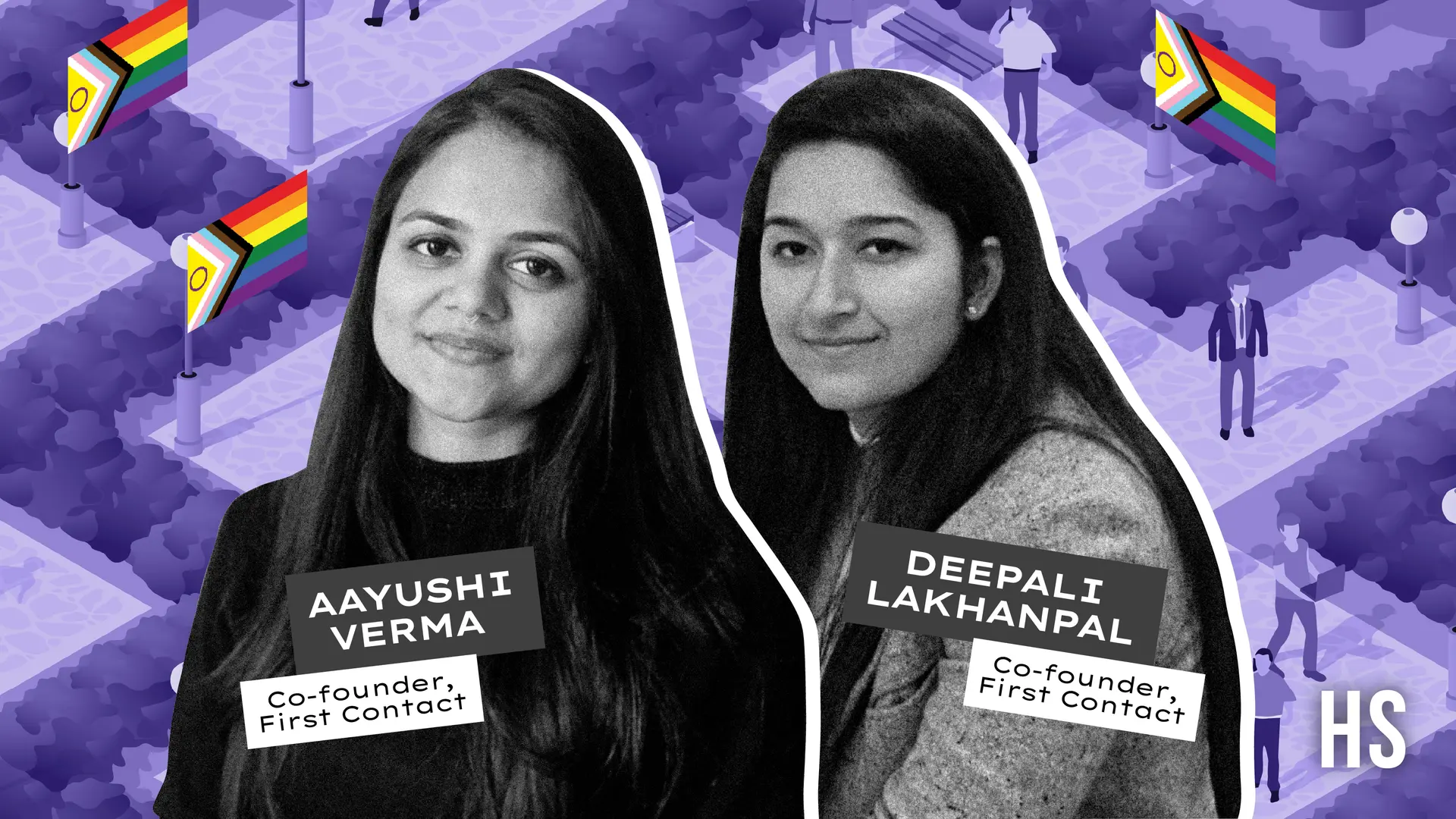

Deepali Lakhanpal and Aayushi Verma, who lived together in an apartment in Mumbai, shared more than just rent—they shared a vision. After countless conversations about the isolation that queer individuals often face in India, especially outside metro cities, the two decided to take action.
What emerged from their lived experiences and shared frustration was First Contact—India’s first LGBTQ+ metaverse platform. As queer individuals themselves, Lakhanpal and Verma created the platform to fill a void they understood.
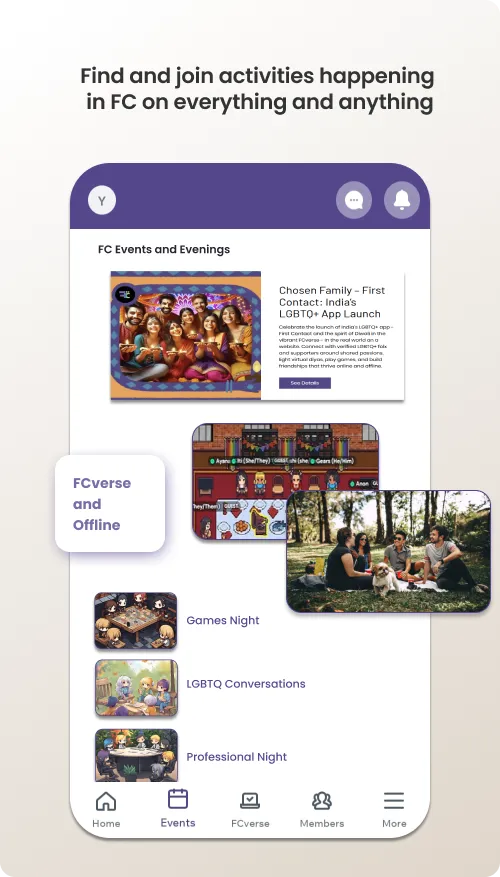
An events page on the First contact app and website.
Launched in 2022 and soon to be relaunched with an upgraded version, Gurugram-based First Contact (FCverse) is more than just a virtual reality hangout. It’s a curated digital sanctuary where people across the queer spectrum—especially from underrepresented groups like the Kinnar (transgender) community, can interact, learn, and find solidarity without fear of judgment.
Research and resolve
Deepali, a 33-year-old marketer from Ludhiana, moved to Mumbai for better opportunities in digital marketing. Meanwhile, Verma, a 28-year-old postgraduate from the Delhi School of Economics and an alumna of Lady Shri Ram College, was delving into research on gender and marginalised communities.
Verma's academic work on the Kinnar community revealed a troubling gap, which formed the basis of their research.
“The journey from realising one’s identity to entering a community always begins with a first contact,” says Lakhanpal—giving their platform both its name and purpose.
Building a safe digital world
The platform has three components—a website, the FCverse metaverse, and a mobile app. The entire ecosystem is designed to be accessible even to users without high-end devices. “Most metaverses require high computing power. We built one that works on phones and older computers,” says Lakhanpal.
Access to First Contact is intentionally selective. To maintain a safe and genuine environment, every new user must complete a psychologically and ethically designed questionnaire during the sign-up process. This system has replaced earlier methods like personal interviews and peer referrals, which were time-consuming and inconsistent.
“The real challenge was making sure only the right people entered the platform,” Lakhanpal explains. “The reason we built a metaverse is because we wanted to protect the identity of our users.”
Once someone registers, their responses are reviewed within 24 hours. If approved, they receive a detailed user manual and are welcomed into the FCverse, where volunteers assist them in creating an avatar and navigating the virtual space.
This careful vetting process reflects the broader reality faced by queer communities in India, where legal recognition has not always translated into social acceptance. While the decriminalisation of homosexuality in 2018 marked a historic shift, discrimination, family rejection, workplace bias, and lack of inclusive public spaces continue to marginalise LGBTQ+ individuals—especially in non-metropolitan areas. Cultural taboos and societal expectations often force many to hide their identities, making platforms like First Contact not just innovative but essential.
From isolation to interaction
With over 10,000 verified users, First Contact is already seeing a community form. The platform is especially vital for those in Tier II and Tier III cities, where queer-friendly spaces are nearly non-existent. “People meet on dating apps, but rarely do they find a place to just be—to connect, grow, and be accepted,” Verma says.
Rashi, a 20-year-old student, says, “FC has been a game changer for me. I have found my chosen family over here. I not only found people I love to spend time with but I also found myself in the process.”
Their small team consists of 5–6 volunteers and 15 interns.
“Being queer is enough to be isolated in society,” says Verma. “A woman who isn’t married by a certain age is ridiculed and called slurs. A man who walks in a feminine way is mocked. We saw this in offices and daily life. That’s why we wanted to create something of our own.”
First Contact allows individuals to engage without revealing their real-world identities. It’s not just about connecting, it’s about belonging in a space that understands and protects you.
Savi, an FC user says, “FC offered me a safe space to be myself without any judgement and to the extent I am comfortable with. No need to share my real name or switch on my video.”
The bootstrapped organisation was built from scratch by Lakhanpal and Verma. However, it will soon be reaching out to investors.
In a world where mainstream social platforms often fail to shield queer users from harassment or exposure, First Contact offers something radical—an affirming space designed by queer people, for queer people—where the first contact is not a risk, but a beginning.
Edited by Megha Reddy