


Valuing care: Re-imagining market systems for women's work
Unless India begins to value and invest in care, millions of women will remain locked out of meaningful economic participation, not for lack of ambition or ability, but for lack of time.

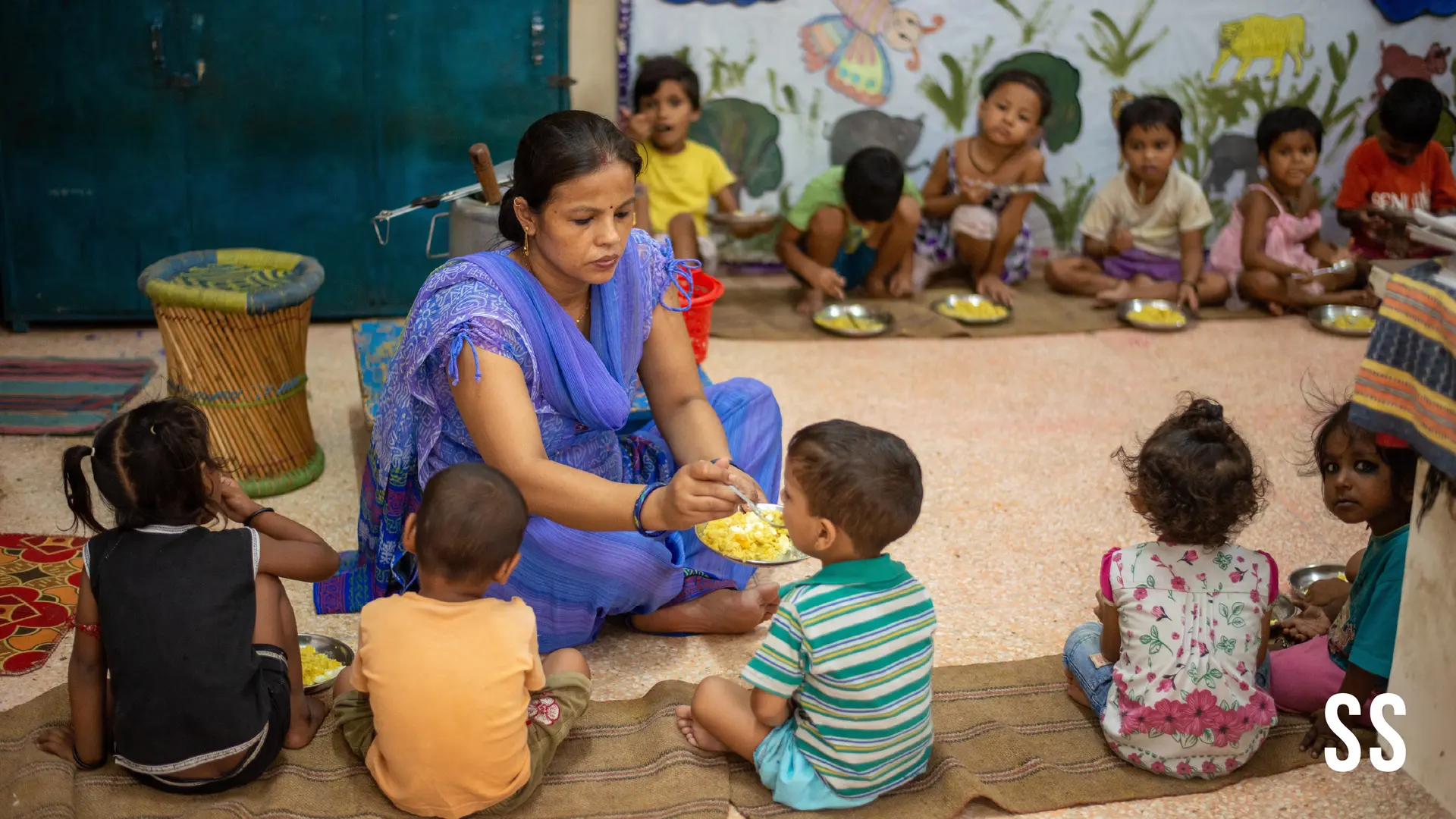

Every day across India, women rise before dawn to cook, clean, and care for children and elders — work that keeps households and communities running, yet rarely counts as “work” at all. These unseen hours come at a cost: less time for paid employment, education, rest, or even self-care. Policy debates on women’s economic empowerment often focus on skills, entrepreneurship, and jobs — all essential — but they overlook this foundational barrier.
The Time Use Survey (2024). makes it plain that women spend around 4.82 hours daily on unpaid domestic work and 2.28 hours on caregiving, compared with 1.47 and 1.25 hours, respectively, for men. Unless India begins to value and invest in care, millions of women will remain locked out of meaningful economic participation, not for lack of ambition or ability, but for lack of time.
Viewed through a market-systems lens, the absence of investments in care presents a significant gap in the economy. Both markets and public policy have yet to address the imbalance fully. Social norms compound the challenge: care is often assumed to be women’s responsibility, creating subtle but pervasive barriers to men sharing care duties. The result: a vast care economy that absorbs enormous human capital but offers few formal opportunities.
There is a different path. When states frame care provisions - e.g. creches, shelter homes - as social infrastructure, the effects are two-fold. First, affordable, reliable and good quality care frees women’s time, enabling participation in the labour market, access to training, and career progression. Second, a formalised care sector becomes a major employer, largely for women, creating decent jobs and career ladders.
International evidence validates this logic. Uruguay’s National Integrated Care System (SNIC) established care as a public good, professionalised care work and expanded services across childcare, eldercare and disability support — helping rebalance care responsibilities and create formal employment in the sector. South Korea has invested in state-supported family and long-term care services as part of a broader employment and social protection strategy.
For India, the opportunity is substantial. While participation rates have risen in recent PLFS cycles, there’s scope for the female labour force participation to improve for the economy’s betterment. The International Labour Organisation finds that large-scale investment in care (universal childcare, long-term care, gender-equal leave) could create nearly 300 million jobs globally by 2035, most of them for women — illustrating the sector’s job-creation potential if actively organised.
But India faces three core challenges in turning this potential into reality. First, the care market is fragmented and informal: many providers are small, unregistered, or operate from the home; workers — often migrants or low-income women — lack social protection and career pathways. Second, information asymmetries and limited aggregation mean families cannot reliably find quality, affordable providers, which keeps demand unsatisfied or pushed back into unpaid care. Third, policy and financing have often been incremental: while effective models exist, many are implemented as short-term initiatives rather than integrated into a long-term, system-level strategy.
Addressing these gaps requires market-making, not market withdrawal. The state has a critical role as enabler and regulator: public investment in childcare and eldercare infrastructure has already begun in states like Karnataka, Haryana, and Kerala which are experimenting with multiple models for child and eldercare; the central government’s Palna scheme seeks to extend the world’s largest childcare infrastructure -the anganwadi into anganwadi cum crèches. The state is also the right entity to set quality benchmarks and bring in providers and organise care workforce platforms.
Social protection and high quality skills linked to formal care jobs can make care work decent and attractive; and licensing frameworks and a tax regime that can reduce information frictions between demand and supply. Public-private partnerships can scale solutions rapidly. SEWA’s childcare centres for rural children, run in collaboration with state agencies, illustrate how community-based, low-cost care services can provide early learning, nutrition, and socialisation — while also freeing women to engage in paid work.
The private sector, too, has a clear role. Employers need to treat care as a productivity lever: employer-supported childcare, flexible schedules, and partnerships with certified local providers reduce attrition and preserve talent pipelines.
Social innovators can evolve models that are both impactful and commercially viable for particular market segments. Philanthropy and CSR can seed proof-of-concept models (community hubs, quality assurance pilots) that the state can then scale. Vedanta Foundation’s Nand Ghar model modernises anganwadis into centres for early education, nutrition, and women’s skilling, showing how delivery innovations can link care provision with livelihood opportunities.
Ultimately, organising the care economy is a strategic economic reform. By recognising, professionalising and investing in care, India can free women’s time for upskilling, career progression and leadership — while generating millions of decent jobs. In short, care is both the constraint and the solution: neglected, it locks women out of opportunity; organised, it becomes one of the most powerful levers for women’s economic empowerment and inclusive growth.
(Yamini Atmavilas works on gender equity across health, livelihoods, and employment policy and philanthropy portfolios.)
(Disclaimer: The views and opinions expressed in this article are those of the author and do not necessarily reflect the views of YourStory.)