


Menstrual leave in India: Rethinking equity beyond optics
India has the opportunity to take a studied and holistic approach towards menstrual leave policy that includes cost-sharing, collective action, incentive schemes and customised application models.

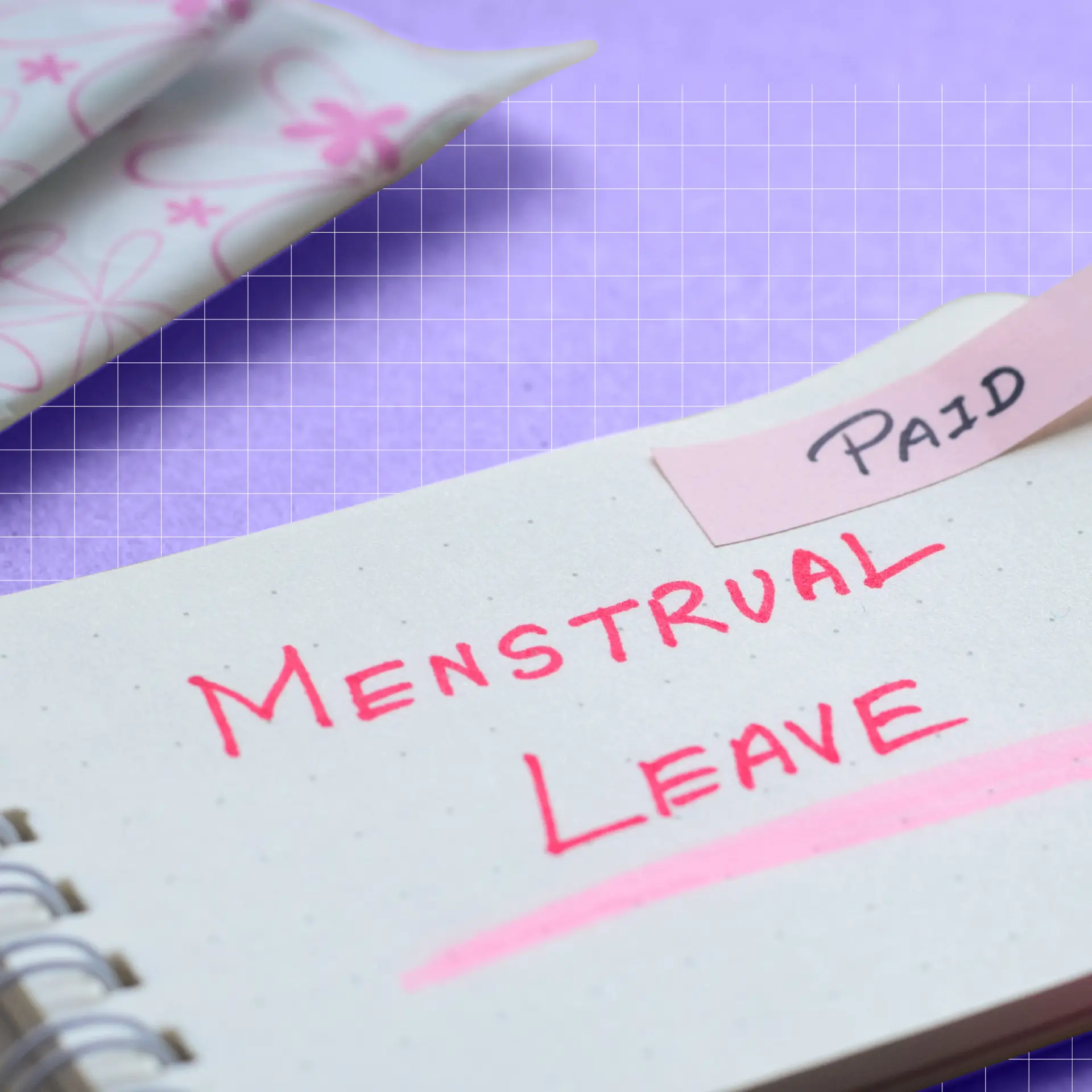

The Karnataka government’s recent approval of paid menstrual leave signals the essential consideration of women’s health in creating equitable workplaces. While the intention to integrate gender-sensitive practices into organisational structures is a progressive one, implementing such policies requires a careful examination of both process and perception.
The immediate and admirable goals of paid menstrual leave include considerations for employee wellness and inclusivity. However, blanket menstrual leave policies, particularly those which are unfunded, heavily risk producing contradictory or regressive outcomes by burdening organisational costs, disincentivising or exacerbating hiring biases, fuelling assumptions of low performance, and signalling workplace stigma that ultimately disadvantages both employed and job-seeking women.
A more nuanced approach is necessary to apply and secure the success of this theoretically beneficial policy. This approach must balance intention with long-term impact, recognising that operational schemes do not automatically result in systemic change – they may, very well, do the opposite.
A static policy in a dynamic economy
India’s economy is not monolithic. From emerging sectors to established industries, from SMEs to informal labour markets, each workplace combats a unique set of logistical, financial, and cultural constraints. A uniform menstrual leave policy would prove incompatible with many workplaces, not due to lack of intent but due to operational realities.
For instance, shift-based work environments, such as hospitality, healthcare, or retail, deploy dynamic workforce schedules. Their processes for leaves of absence, including unplanned or sick leave, would have different administrative and payroll implications than those for standard 9-5 employers.
In contrast, hourly-billed professionals such as consultants, lawyers or independent contractors, even if employed full time, operate under delivery-linked models. In such setups, the professional may already opt for flexible downtime due to agile work schedules. It may be unnecessary – if not needlessly complex – to implement menstrual leave as a formal mandate in such cases.
Across India’s vast micro-enterprise and informal sectors, regulating and implementing the policy equitably becomes an even more challenging task. According to the Periodic Labour Force Survey (2022), over 90% of India’s female workforce is employed in informal or unorganised settings.
Without formal contracts, HR setups or privacy norms, menstrual leave requests are likely to either go unacknowledged or be seen as a reason to deny future work opportunities – reinforcing rather than mitigating biases and negatively impacting vulnerable communities of women seeking employment.
In each of these cases, this precarity is not a result of resistance to menstrual sensitivity but the lack of contextual framing. Redesigning this policy to account for structural variations across workplaces is vital to ensuring that it proves reformatory rather than symbolic – that is, an initiative that signals progress at the top but, in effect, bypasses a majority of its intended beneficiaries at the base.
Reframe paid menstrual leave as wellness - not concession
Let’s call it “wellbeing leave”.
If redesigning to accommodate unique workplace structures is essential to policy adoption, then mitigating biases is essential to policy absorption. The sustained success of a policy – no matter how thoughtfully written and carefully implemented – ultimately and entirely depends on the individuals who action it. This group includes everyone from HR personnel and recruiters to managers and fellow employees.
According to the Social Policy Research Foundation, when menstrual leave is viewed as an ‘allowance’ or ‘exception’ rather than a consideration of women’s health, implementation of the policy results in a damaging mindset labelled ‘benevolent sexism’.
Although the policy is intended to benefit women, its perception as a concession reinforces regressive stereotypes about women’s capabilities, leading to a predictable list of discriminatory beliefs (such as that women are more expensive to hire or that women are less productive than men). This mindset eventually counteracts the purpose of the policy, creating an unequal professional environment for women.
To dismantle these biases, menstruation must be recognised – neither as a hindrance to professional accomplishment nor a determination of social roles – but as an essential component of health and wellness. Menstrual leave in this case would be regarded as no different than policies that support mental health or care-givers.
New policy architecture: principles to consider
For menstrual leave to achieve its intended impact (supporting women’s health as well as workplace inclusivity), without surfacing biases or compromising workplace equity, a new policy architecture must be considered. These three key principles can help balance social intent with structural viability:
Government reimbursement models:
If menstrual leave is to be treated as a legitimate health-based requirement, then its costs should not be exclusively borne by the private sector. Instead, state-led reimbursement models - integrated into broader public health or gender equity frameworks - can be applied to reduce the risk of hiring bias and ensure that enterprises are not disproportionately affected by the mandate.
Inclusion incentive codels:
Companies that voluntarily adopt menstrual leave policies or integrate them into broader wellness frameworks could be recognised with diversity certifications, ESG scoring enhancements, workplace rankings, eligibility for government schemes and other incentives that encourage enterprises leading the way in workplace wellness as well as gender equality.
Voluntary and individualised implementation models:
To collectively shape menstrual leave as a health policy rather than a one-size-fits-all corporate liability, enterprises choosing to adopt the policy could be allowed to collaboratively implement the policy according to their operational realities. Volunteering and vetted enterprises across industries, in addition to receiving appropriate incentives for their initiative, could then serve as a reference model for innovative and sector-specific implementation of the policy – showcasing its viability, benefits and best practices. This system to test, evaluate and improve implementation could lead to the development of a highly contextualised and higher-impact policy model.
Not new, but rarely well done
Menstrual‑leave policies are far from novel – they have existed in nations such as Japan since 1947 and South Korea since 1953. Yet despite this longevity, uptake has remained strikingly low: According to a 2017 government survey, in Japan fewer than 0.9% of eligible female workers reported taking menstrual leave. In South Korea, usage fell from 23.6% in 2013 to 19.7% in 2017 (CNN Business, 2017).
Many women also report being informally discouraged from availing menstrual leave. In culturally stringent and male-dominated environments, this spotlights the way in which good policies can render unsatisfactory results.
Sustainable inclusivity and health empowerment
These figures reveal a sobering reality but reveal critical truths required to inform successful menstrual leave policies that result in enduring, meaningful change. What we can learn from the experience of other countries implementing similar legislation across several decades is that workplace support for women’s menstruation health requires cultural acceptance, administrative infrastructure and thoughtful integration into a wider system of wellness initiatives.
At this inflection point, India has the opportunity to take a studied and holistic approach towards menstrual leave policy that includes cost-sharing, collective action, incentive schemes and customised application models.
Together, these considerations can unite DEI-focused enterprises and nurture an ecosystem of behavioural change that truly prioritises women’s health as well as their immense contributions to the economy.
(Shruti Shibulal is the Executive Vice Chair of the Board of Directors at Tamara Leisure Experiences. Shruti serves as a Trustee for all Foundations of the Shibulal Family Philanthropic Initiatives, which provide educational opportunities and healthcare assistance to underprivileged sections of society.)
(Disclaimer: The views and opinions expressed in this article are those of the author and do not necessarily reflect the views of YourStory.)