



Women-led solutions are shaping the future of rural climate action
By championing gender circularity, we can recognise women as vital contributors to climate action.

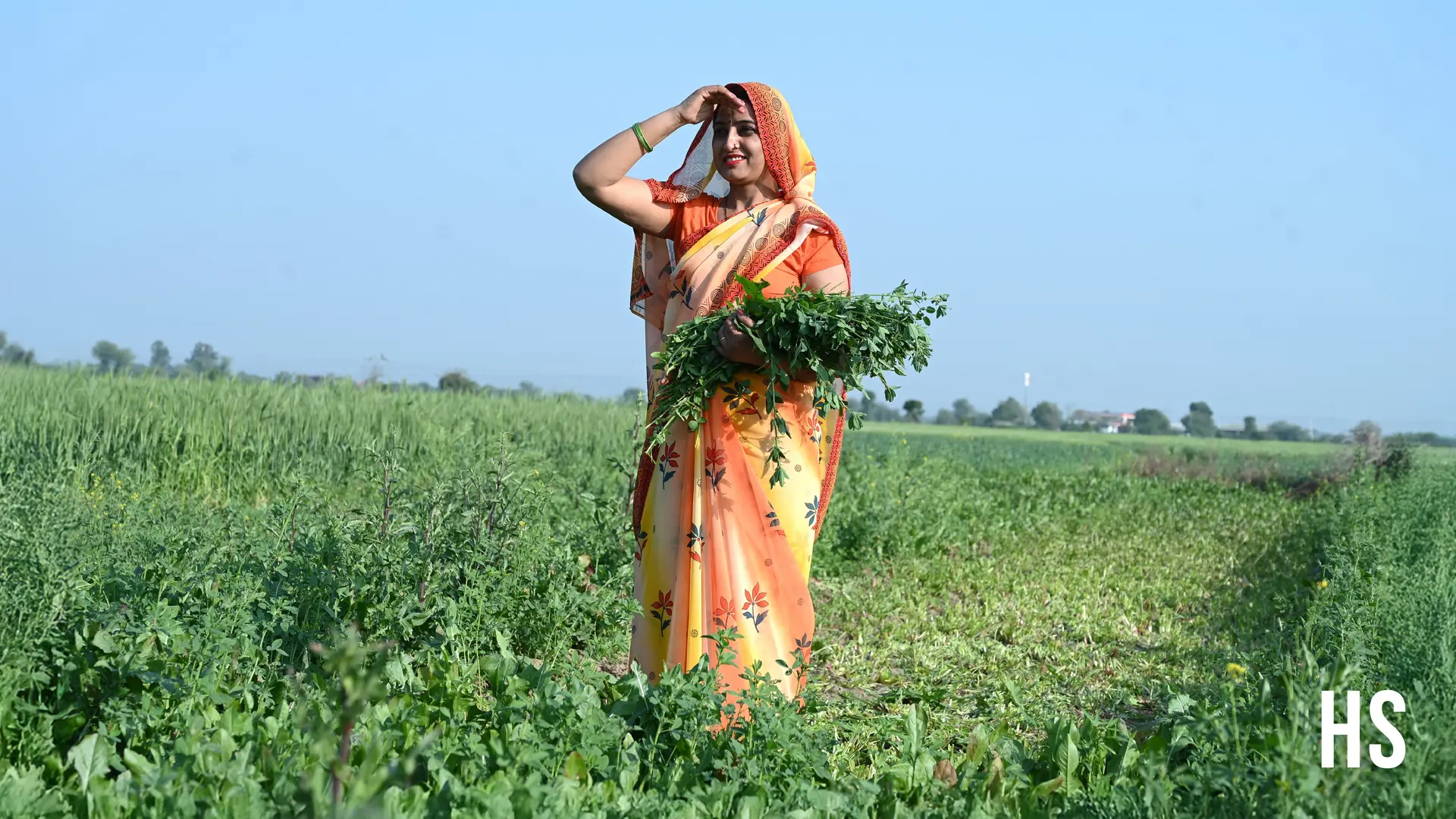

The rural economic fallout is stark: climate shocks widen wage gaps and cause productivity losses, pushing women further into poverty and insecurity. Each day of extreme weather adds at least two extra hours of unpaid domestic work, and this invisible strain extends beyond the household, affecting women’s health, income, mobility, food security, and safety.
Maternal mortality rises by 25 per 100,000 live births for every 1°C increase in temperature, yet it is rarely attributed to heat stress and the related preparedness. Dantewada in Chhattisgarh witnessed one of the highest rainfall totals in a century, and women, especially, are left with the task of recovering, rebuilding, and recalibrating their lives around this.
"Agricultural drudgery, combined with the harmful use of chemical fertilisers without protective gear, exposes women to a range of health issues, including tiredness, breathlessness, irregular menstrual cycles, and even serious issues", shared a didi from Tappal block of UP. Despite these realities, only 6% of India’s national climate policies explicitly mention women, highlighting a glaring gap in support.
In states such as Jharkhand, Uttar Pradesh, Chhattisgarh, and Madhya Pradesh, insights from rural women reveal a multifaceted picture of hardships. In agriculture, severe heat reduces crop yields and incurs more losses.
A didi from Uraon block shares her neighbourhood story, “The productivity of urad dal in Uttar Pradesh’s Uraon block has fallen sharply, and mango orchards now bear fruit only every alternate year instead of annually.”
Women’s participation in restoration has declined during extreme weather, endangering the immediate action required on adaptation and mitigation. This does not, however, reflect an actual drop in their work, but a hidden increase in unpaid care labour induced by climate change, maintaining drudgery at high levels.
Climate change’s impact on livestock is severe, and women are more vulnerable to zoonotic diseases. In rural areas, power outages increase drastically, with load shedding rising by up to 220% in some states, during the hottest periods. A didi from Chimai village in Kondagaon shares her experience, “It restricts mobility and economic opportunities."
Affordable solar solutions and practical awareness are essential, as only a minority of women benefit from current schemes. Reliable water supply, especially during acute heat stress, is urgently demanded, with calls for doorstep tanker delivery. Improvements to the electricity supply, particularly for fans and irrigation, are needed during periods of up to eight hours of daily load shedding in some villages. Many rural health centres lack ORS and basic medicines for illnesses related to climate-induced stress.
Another didi from Kanker shares, “Women in labour often cannot access institutional deliveries due to lack of power supply at the nearest health centres.” Women elected representatives, SHGs, and women entrepreneurs call for training to tackle climate-induced poverty across multiple dimensions. Similarly, restricted access to technology, financial services, land titles, credit, and renewable energy limits women’s capacity to invest in climate solutions. A lack of gender-disaggregated data, compounded by insufficient on-ground climate insights, blocks targeted investment and recognition of rural women’s climate resilience.
As gender roles evolve in climate action, it is vital to understand what women value, enhance their leadership and adaptive capacities, agency, build predictive knowledge systems, leverage traditional wisdom in the design of governance for climate action, and actively support their stewardship of regenerative landscapes and social resources. By championing gender circularity, we can recognise women as vital contributors to climate action.
Despite these limitations, rural women are designing solutions to combat climate change. Moving beyond isolated projects toward sustainable systems, through multi-stakeholder platforms like restoration hubs and the intentional inclusion of women in non-traditional roles, signals a profound shift in agency and truly centres women’s leadership in India’s climate resilience journey.
Women’s self-help groups in Chhattisgarh demonstrate large-scale water security by constructing and maintaining over 37,000 water-conservation structures, collectively saving 30 billion litres of water and benefiting 5,000 households across 32,000 hectares. Women, organised in agro-ecological clusters, are adopting natural farming and cultivating “winner crops,” successfully doubling their cash flows while improving soil health through sustainable techniques.
Communities, with strong women’s leadership, spearhead landscape assessments and have restored nearly 30,000 hectares of degraded land via local Restoration Hubs that promote a multi-actor platform for shared learning and stewardship. In mining-affected areas, women help design economic diversification that moves them towards resilient livelihoods.
Distributed renewable energy initiatives see women managing solar microgrids and promoting community solar irrigation, supporting over 11,000 smallholder farmers. Women-led cooperatives are pioneering agri-voltaics, integrating solar power and agriculture to reduce grid dependency and enhance incomes. More than 1,00,000 smallholders, many of them women, now generate carbon credits through global voluntary markets, creating new income streams while expanding tree cover and restoring landscapes. These solutions are locally owned, context-driven, and demonstrably effective in building adaptive, regenerative rural economies.
To reduce the climate burden on rural women effectively, linking aspiration and resilience becomes crucial to realise their economic and social ambitions while systematically dismantling structural barriers, such as unequal access to land titles, credit, technology, and climate adaptation resources, that limit their potential in climate action.
Reimagining climate finance and policies to support decentralised, gender-responsive infrastructure and services, decentralised renewable energy, water and irrigation infrastructure, and tailored health and heat-stress services can relieve their unpaid labour and vulnerability. Empowering women as active stewards of regenerative landscapes and championing their leadership across sectors, supported by inclusive multi-stakeholder platforms, will transform climate resilience from a burdensome challenge into a collective opportunity for sustainable rural futures.
(Neeraja Kudrimoti, is Lead - Climate Action, Transform Rural India, a development design organisation working on transforming India’s bottom 1,00,000 villages into flourishing localities.)
(Disclaimer: The views and opinions expressed in this article are those of the author and do not necessarily reflect the views of YourStory.)