



Hundreds of women in Mangaluru are rebuilding their lives through micro-entrepreneurship
In Mangaluru, women who once relied on unstable daily-wage work now run small businesses from their homes and streets. Their journeys into entrepreneurship began with a single intervention by four nun-led NGOs.

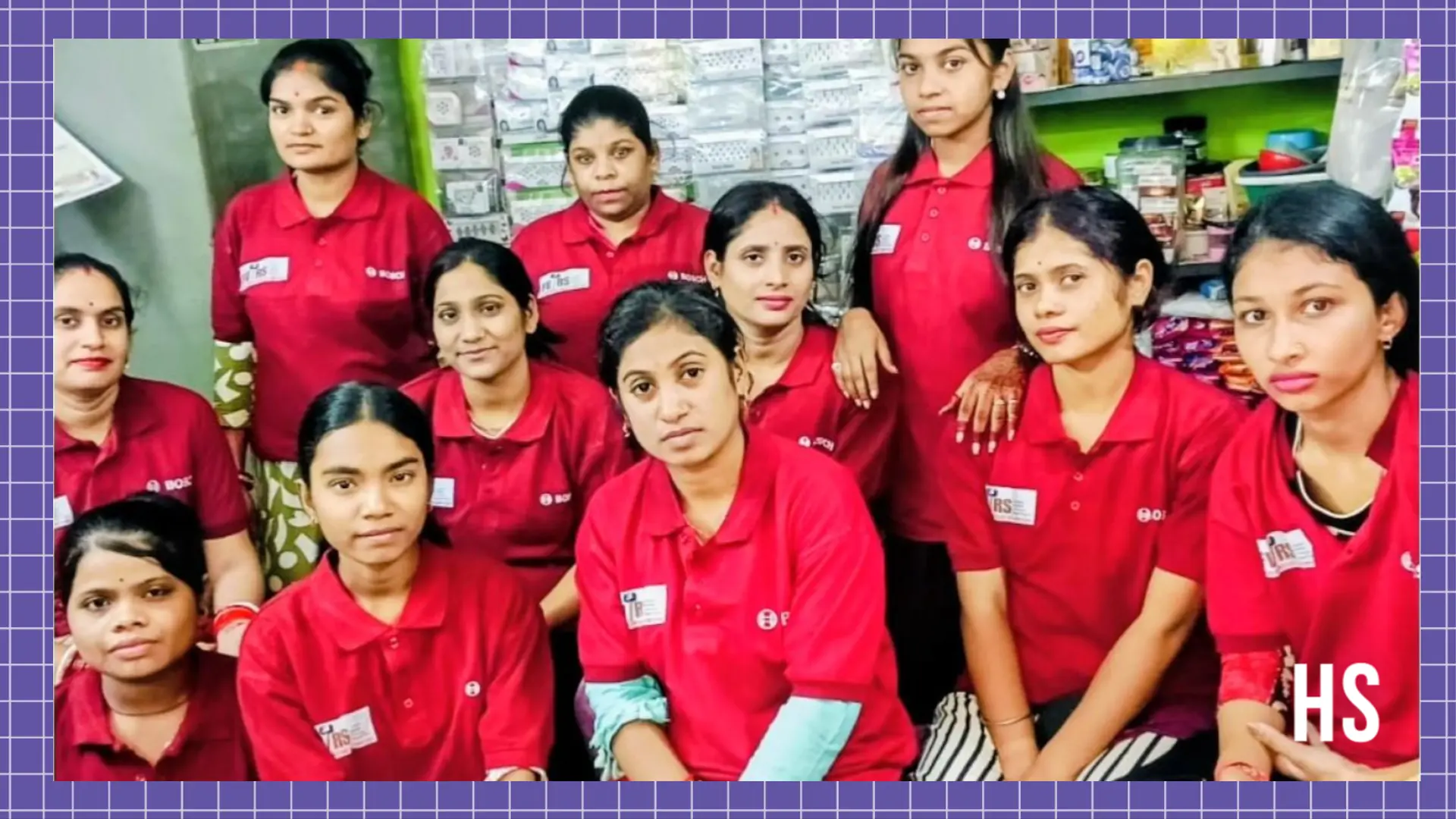

When 34-year-old Shanti walked into her first entrepreneurship training session in Mangaluru, she had only one skill she believed could help her earn: jewellery making. Today, she runs her own small training centre, teaching other women how to make the same leap into financial independence.
Meanwhile, Marceline, also from Mangaluru, has used the Rs 12,000 seed fund she received from the same entrepreneurship programme to expand her homemade snack business, turning her kitchen into a self-sustaining livelihood.
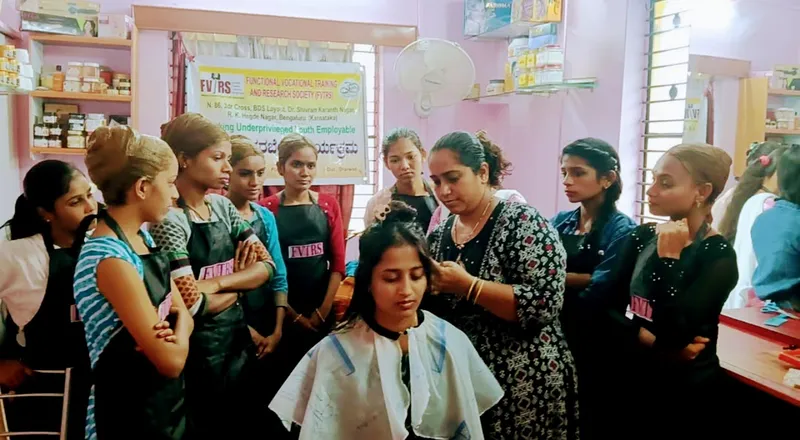
A beautician training session in progress
This transformation is echoed by hundreds of women across the coastal district. Women in their 20s, 30s, and 40s who once depended on daily-wage labour, informal jobs, or their husbands’ income are now running tailoring units, food stalls, coconut counters, beauty services, dry-fish vending, and home-based retail. What binds them is a programme by the Bengaluru-based nonprofit Functional Vocational Training and Research Society (FVTRS), which has supported 1,408 women across Bengaluru, Mysore, and Mangaluru in starting or strengthening micro-enterprises.
Of these, 208 women are from Mangaluru, organised through four longstanding, nun-run NGOs - Spandana, Jeevandhara, Sahodaya, and Dharma Jyothi - each running self-help groups (SHGs) in low-income neighbourhoods.
“In Mangaluru, these women were already part of the SHGs supported by these NGOs, but had little to no background in entrepreneurship. They were skilled but didn’t know how to take these skills forward. The training gave them the confidence and the capital to start,” says Clara D’Cunha, the Mangaluru coordinator of the programme.
The four NGOs, managed by different congregations of Catholic sisters, had long supported women through SHGs, but after the pandemic, they saw widespread income loss, debt, and economic instability. The FVTRS programme, which began in 2022 and was funded by ChildFund India and Citi Foundation, arrived at the right moment.
The programme combined community trust with professional training. It began with a Training of Trainers (ToT) for NGO staff like D’Cunha. These trained social workers then delivered Entrepreneurship Development Programmes (EDP) to the selected women. Every participant received a Rs 12,000 seed fund to invest in equipment, raw materials, or shop setup.
“FVTRS trained us first in marketing, growth planning, and digital basics. Then we trained the women. Some wanted tailoring machines. Some wanted to start coconut shops or food stalls. Many just needed that first push,” says D’Cunha.
The project targeted women aged 20 -45, most with little formal education and limited mobility, but a strong desire to become independent.
Training designed for real-life constraints
For women who had rarely travelled alone, lacked vehicles, or feared losing whatever capital they invested, the training was designed to be practical and attainable.
“Family is a big challenge,” explains D’Cunha. “Women can’t travel long distances since they don’t have the facilities men have. Many also fear losing capital. These problems are common among most women in this demographic.”
The training addressed these gaps through modules on pricing, financial literacy, quality control, marketing, digital basics, soft skills, managing risk, and business expansion.
This foundation enabled several women to rebuild or expand their businesses. Stella, a 33-year-old beautician whose income collapsed during the lockdown, restarted her work after purchasing a new beautician kit with the seed fund. She now works as an independent beautician and earns Rs 30,000 per month.
Another participant, Nethravathi, revived her catering business and expanded it into a small outlet. “I wanted to expand my business and give jobs to more women and girls like me who are facing difficult times. I am able to do this now, slowly,” she says.
In women’s personal spaces, too, this independence has meant higher self-esteem.
“Initially, my neighbours were making fun of my idea of starting a business, but now they see the change and are becoming envious,” says 31-year-old Swarna. Alamelamma, another beneficiary, adds, “Even family members and friends hesitate to trust with money, this programme came at the right time.”
A rare scale of success
What distinguishes this initiative is not only its design but its outcomes too. For the 1,408 women trained across three cities, incomes rose steadily, with many now earning between Rs 3,000 and Rs 10,000 a month. The programme generated 78 additional micro-jobs beyond the enterprises the women established. Close to 45% of participants applied for MSME registration, indicating a shift from informal livelihoods to formal enterprises, while 68% joined collective marketing groups, strengthening long-term sustainability.
Most importantly, nearly all women reinvested their earnings, signalling growing confidence in the stability of their businesses, according to FVTRS senior manager Jimmy Mathew.
Why this matters
Across India, millions of women are part of SHGs, yet multiple national studies show that only a fraction transition into sustainable micro-enterprises. Research by NABARD, APMAS and CGAP notes that SHGs require training, capital, market linkages, and ongoing support to evolve into viable businesses.
The Mangaluru model stands out because it offered exactly this combination through existing SHG structures, the trust built by NGOs, professional entrepreneurship training, seed capital, ongoing hand-holding, public exposure through events, and strong social support. Together, these factors created an environment where women could not only start enterprises but sustain and grow them.
A central reason the programme worked in Mangaluru was the longstanding presence of the nun-led NGOs. “Women trusted them deeply, and this trust carried over into the entrepreneurship programme,” says Clara. “Since they were already familiar with these NGOs, follow-up became easier.”
This trust-based ecosystem ensured high attendance, smooth fund disbursement, transparent processes, strong group accountability, and continued peer support — linkages that lasted long after the programme formally ended.
A quiet, lasting shift
Two years on, many women in Mangaluru continue to run their micro-enterprises. Some have expanded, others remain stable, and a few have stepped back — but the deeper change is clear: women now see themselves as earners, contributors, and decision-makers.
“What matters is that they know they can earn,” says D’Cunha. “That makes all the difference.”
Edited by Jyoti Narayan