



Rise without reach: women entrepreneurs in India’s informal economy
Across villages and cities, more women are stepping up as entrepreneurs, but beneath it lies a more uneven story, where ownership is growing faster than the ability to scale, compete, or exercise economic power.

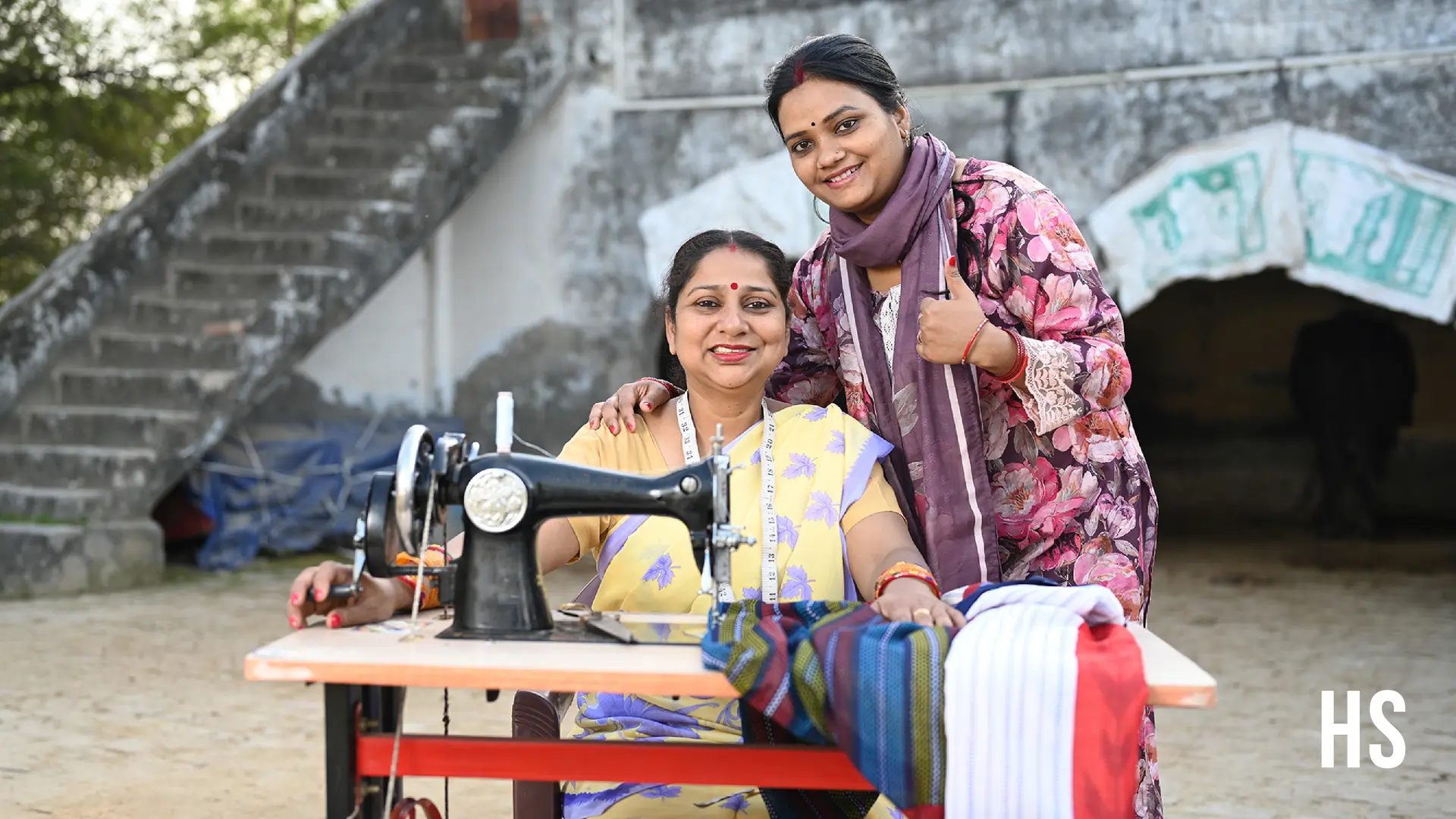

India’s informal economy is expanding, and so is women’s presence within it. Across villages and cities, more women are stepping up as entrepreneurs, running everything from home-based food businesses to small manufacturing units. On the surface, this rise signals progress. But beneath it lies a more uneven story, where ownership is growing faster than the ability to scale, compete, or exercise economic power.
Data from the Annual Survey of Unincorporated Sector Enterprises (ASUSE), conducted by the National Sample Survey Office under the Ministry of Statistics and Programme Implementation (MoSPI), with analysis by the Centre for Economic Data and Analysis at Ashoka University, shows that the share of proprietary establishments in the informal non-agricultural sector owned by women increased from 23.9% in 2021-22 to 27.2% in 2023-24. Rural India leads this charge, with about 2.5 male-owned enterprises for every woman-owned one, compared to nearly 3 to 1 in urban areas.
Solo operators in low-growth sectors
Women still own fewer than three in ten informal enterprises. More telling is what kind of enterprises they own. In 2023-24, women accounted for 26.3% of own-account enterprises, that is, businesses run without any hired workers, relying solely on the owner or family labour. But their share in enterprises that actually employ workers? Just 0.9%.
Women are nearly 30 times more likely to run a solo operation than one that generates jobs for others. For men, that gap is roughly five times. This is not a minor statistical footnote. Enterprises with hired workers are better positioned to expand, access formal credit, and integrate into wider supply chains. Own-account enterprises, while critical to household livelihoods, tend to remain locally confined and structurally limited in their growth potential.
Sectoral patterns further reinforce this divide. Women-owned enterprises are heavily concentrated in manufacturing, accounting for 58.7% of establishments. At first glance, this suggests strong representation.
However, much of this activity is in home-based and low-value production, such as food processing, garment stitching, handicrafts, and incense making. These sectors are accessible and compatible with domestic responsibilities, but they offer limited returns and restricted market reach. In contrast, women remain underrepresented in trade and services, owning just 13.8% of trade enterprises and 16.4% of service enterprises in 2023-24, sectors that are more market-facing and offer greater potential for scale, diversification, and growth.
Home is where the business is- by default, not design
Where women run their businesses is as revealing as what they run. In 2023-24, 84% of rural women-owned establishments operated from within the household, compared to just 29.4% of male-owned ones. Even in cities, only 35.4% of women-run enterprises operated outside the home, against 75.5% for men.
Operating from home is often not a choice- it is the most viable option given safety concerns, care burdens, and social expectations. But it comes at a cost. A home-based business is largely invisible to customers, cut off from professional networks, and insulated from the market intelligence that drives growth. The home, for many women entrepreneurs, is simultaneously a shelter and a ceiling.
The digital and financial access deficit
Digital exclusion compounds these disadvantages. Among rural women-owned enterprises, fewer than 1 in 10 used the internet in 2023-24. This is less than half the rate for rural male-owned businesses and far below the rate for urban male-owned enterprises, where usage is closer to 4 in 10. In an economy where digital payments, online marketplaces, and e-government services are increasingly the norm, this gap is not just about technology. It is about who gets to participate fully in the economy and who remains on its edges.
On financial inclusion, the picture is somewhat more encouraging. Approximately 60% of rural and nearly two-thirds of urban women-owned enterprises now hold a bank account, reflecting a meaningful expansion of basic financial access. However, account ownership has not translated into meaningful credit access. Most women entrepreneurs continue to depend on personal savings or informal borrowing, limiting their capacity to invest, absorb shocks, and sustain growth.
The trend is unmistakable- more women are entering informal entrepreneurship, and that visibility matters. It signals a shift in participation in a sector where women’s work has long been undercounted. Yet the nature of this growth remains uneven. Many women continue to operate within tighter constraints- limited mobility, concentration in low-return activities, and restricted access to finance and digital tools.
The more important question, then, is not how many women own enterprises, but what those enterprises enable. Do they expand, generate employment, and connect to broader markets, or remain small, home-bound, and precarious?
Ownership reflects entry; it does not, on its own, reflect agency or economic power. If the aim is meaningful empowerment, the focus must move beyond counting participation to improving outcomes. This means enabling women to enter higher-value sectors, strengthening access to credit and digital infrastructure, and easing the structural constraints that tether enterprises to the household. The data has done its job in revealing the gaps. The imperative now is to act on them.
(Sneha Mariam Thomas, Senior Research Analyst, Centre for Economic Data & Analysis (CEDA), Ashoka University, Delhi-NCR)
(Disclaimer: The views and opinions expressed in this article are those of the author and do not necessarily reflect the views of YourStory.)