



Former badminton star Aparna Popat on pressure, purpose, and life beyond the court
Former badminton champion Aparna Popat opens up about thriving under pressure, embracing life beyond sport, and translating lessons from the court into leadership roles.

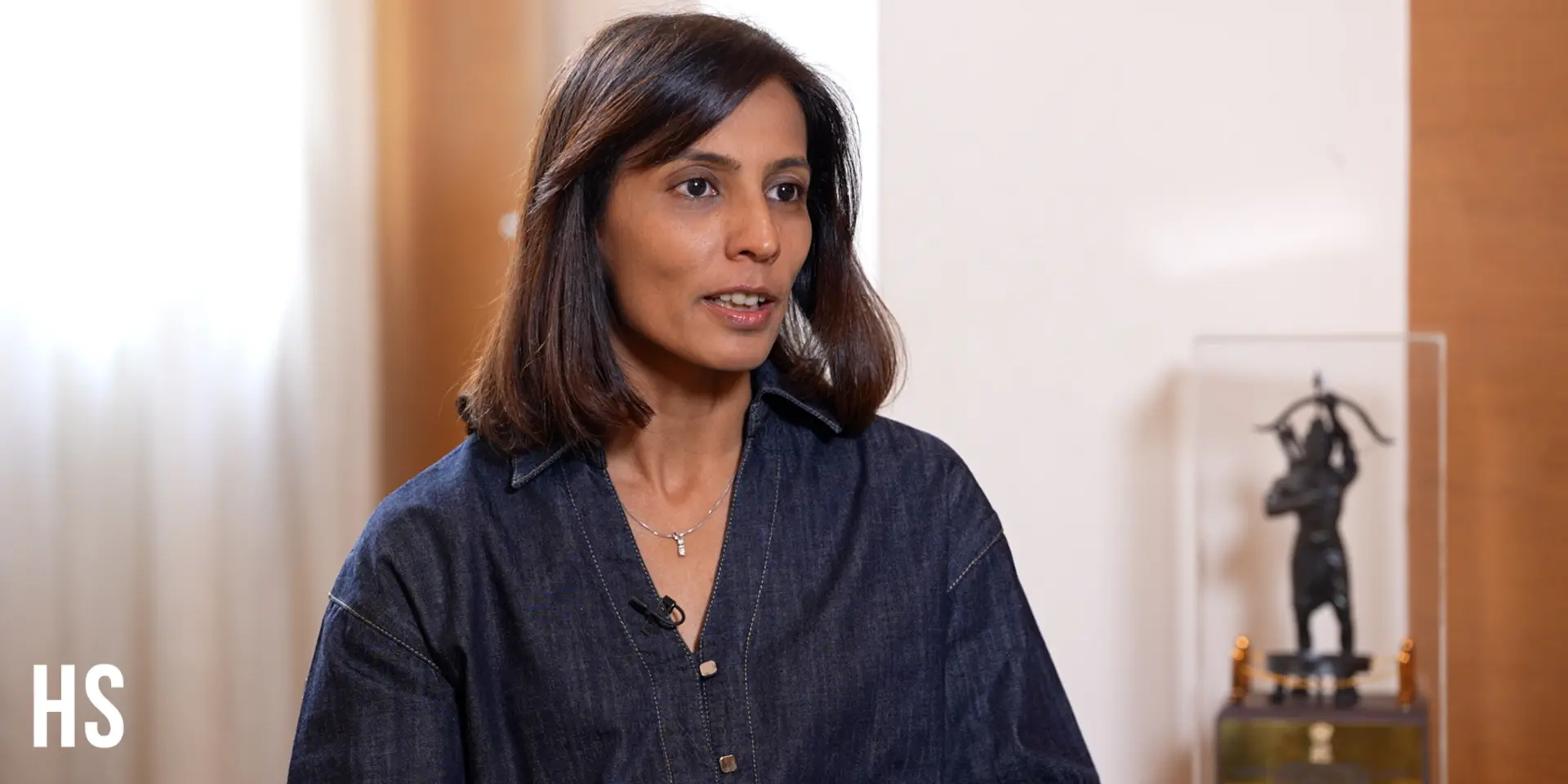

Aparna Popat is one of India’s most accomplished badminton players, best known for dominating the women’s circuit in the country from the late 1990s to the mid-2000s. She began playing badminton at the age of eight and later trained under legendary coach Prakash Padukone in Bengaluru. Her dedication and consistency helped her rise to a career-high world ranking of 16 and establish herself as one of India’s leading shuttlers.
Over a career spanning nearly two decades, Popat won a record-equalling nine consecutive Senior National Championships between 1997 and 2006, matching Padukone’s feat. She also became the first Indian woman to win a medal at the World Junior Championships, claimed international titles including the French Open, and represented India at the Olympic Games in 2000 and 2004. Her achievements earned her the Arjuna Award in 2005, one of India’s highest sporting honours.
In a conversation with YourStory’s Senior Director - Strategic Partnerships & Content, Shivani Muthanna, as part of the RoadToSheSparks series, Aparna Popat reflects on a career built on excellence, resilience, and continuous learning. She shares how the lessons she learned on the badminton court continue to shape her work in leadership, governance, and women's empowerment.
Edited excerpts from the interview:
HerStory (HS): You have been a nine-time champion, a record that still holds. So at that level of dominance, what was more difficult? Was it winning multiple times or staying hungry and relevant year after year and meeting those expectations?
Aparna Popat (AP): It’s a mix of everything. It starts off as something you really want to do. While passion is important, it’s also about having fun along the journey. Over the years, apart from the fame, titles, and trophies, it was more about the decisions I made along the way.
These are simple things like how ready you are when you start training, how many times you have said no to certain things while training, how well you attempt a particular shot or repeat what you do, and the quality you bring to your practice sessions.
At the end of the day, when you look at it, one decision over the other in each session compounds in a way to make you actually more dominant, make you win much more, and keep winning.
I started playing in 1989 at my first nationals and continued competing at nationals for 17 years. I won 16 singles titles in 17 years. So, pretty much, I was the number one in the country right from the day I started playing the nationals to the day I retired.
HS: You competed in the formative era of Indian badminton, much before sports science and global exposure became mainstream. What did your generation have to do differently to compete at the international level as opposed to what is available today?
AP: We played during the era where we got a little more than the athletes who played before us. I trained under coaches who had represented India. Anil Pradhan, my first coach, had been a national doubles champion. Later, Prakash Padukone and Vimal Kumar at the Prakash Padukone Academy, and under Ganguly Prasad at the Sports Authority of India.
All these coaches had their own journeys; we learned from them and moved up the ladder. A lot of credit goes to them. Also, I was very cognisant of the fact that when you get a chance to represent the country, don’t take it lightly. Take it with a sense of responsibility and put in all you have.
At the end of the day, I have no regrets. I made the most of the opportunities given to us and left enough for the next generation to pick up.
Things were challenging. There wasn’t enough exposure or funding.
But I think belief comes from the fact, or from where you are at that moment and what you have around you, and a little more than that.
HS: How did you manage the stress, pressure, self-doubt, and setbacks in your journey?
AP: When you get selected to represent the country, there is pressure. But pressure is a privilege because it means you have the opportunity to go out there and make a difference. Why do we train? As athletes, we train to represent our country and compete.
I, for one, thrived on competition. As a tournament approached, you could almost sense the excitement. I never really looked at it as pressure; I looked at it as an opportunity to say, ‘Hey, now I have a chance to go out, give it my all, and showcase everything I’ve been training for.’
Of course, that comes with its ups and downs. You don’t always succeed in sport. Two plus two is not always four—it can sometimes be zero, but it can also sometimes be five. That’s the nature of sport. You compete as hard as you can, and hopefully you come out on top. And no matter what happens, there’s always a next day. You get back to training and competing.
While pressure can sometimes take away the joy of sport, competition isn’t the only place where pressure exists. Pressure is there every day because you set certain standards for yourself. I certainly did. In many cases, I wasn’t playing to meet other people’s expectations; I was playing to meet my own standards, which were often higher than what others expected of me.
HS: You have had many firsts and set several records—from becoming the first Indian woman to win the French Open junior title and a medal at the World Junior Championships, to equalling Prakash Padukone’s historic national record. Did these milestones feel symbolic at the time, or did their significance sink in later?
AP: At the time we were playing, there wasn't much social media, so there wasn’t a lot of hype around what we were doing. We were just grateful to get the opportunity to compete. It may sound trivial today, but back then, getting to a Commonwealth Games or qualifying for the Olympics was a huge deal. There was a lot of hard work involved, but also a fair amount of calculation and luck.
Because of that, I never really focused on whether something would be a first, whether I was emulating someone, or whether I was chasing a record.
Take the World Junior Championships, for example. No Indian had ever won a medal there before. When I went into the tournament, believe it or not, we carried only two sets of kitting because that’s how far Indians were generally expected to go—maybe the second round. By the third or fourth round, I had run out of kitting and actually had to borrow clothes from other team members. The final I played was my seventh match of the tournament, so that tells you how prepared we were for a deep run.
Similarly, when I played my final National Championships, where I was attempting to win a ninth consecutive title, I knew what it would mean. Mr Prakash Padukone, who has always been my idol and mentor, was sitting in the stadium for the final. Across the net was a young Saina Nehwal, who was already generating a lot of attention and playing exceptionally well.
But even then, my focus wasn’t really on the record. I was dealing with a serious wrist injury, and all I was thinking about was whether I could get through the tournament. Match after match, my only prayer was, ‘Please let me finish this one. Please don’t let the pain come back.’
Thankfully, I managed to win. The pain returned the very next day—it was almost magical. Looking back, it feels like it was meant to happen.
Of course, equalling Mr Padukone’s record was very special. He’s a legend, and I would never compare myself to him or to everything he has done for Indian badminton. But in hindsight, it feels good to know I was able to do what I loved.
HS: As a woman athlete competing not just to play, but for visibility and funding, did you feel the weight of that representation?
AP: It wasn’t talked about much because that’s how it was. At practice sessions, the boys would get the best new shuttles, and we would play after they were done. This included court timing and booking. We never really thought about resisting or resisting. But I believed that if you wanted attention as much as the boys did, you’d have to work twice as hard and do twice as well.
A men’s singles national champion would be treated differently from a women’s singles national champion. So that little bit of motivation or realisation to know that you have to do more really pushed us. I don’t think gender was talked about as openly and in a way that we talk about it today.
But it just helps to know—or rather share—what it did for me as a person, because being a very shy, introverted child, sport really gave me a platform to actually express, to prove, to compete, in many ways. And I think that is very powerful because confidence comes from evidence.
HS: From sports governance to corporate governance—you are doing a lot of work even with startups that have become mainstream. You are on the board of Eternal and Hero MotoCorp. How do you show up here as a woman leader, as a person making boardroom decisions, especially when there's a lot of uncertainty and high-stakes moments in startups and new-age tech companies today?
AP: Having lived the life of an athlete, I believe it’s valuable to have experienced sportspersons on corporate boards because they bring a different perspective. It adds diversity of thought, enriches discussions, and broadens the way challenges and opportunities are viewed at the board level.
Having said that, when you break it down, many of the lessons from sport are directly applicable to the corporate world. As athletes, we've constantly dealt with uncertainty and external pressures. You learn how to stay calm, maintain clarity, and keep your focus despite the noise around you.
That mindset becomes particularly relevant in boardrooms as well. Decisions need to be based on substance and informed judgment. They require you to draw on your experience while exercising ethical judgement and safeguarding the company’s integrity. Whether it’s adhering to corporate governance standards, protecting the interests of minority shareholders, or ensuring due diligence throughout the decision-making process, independence and objectivity are critical.
HS: You also do a lot of work around women in sports and women’s empowerment at the grassroots level. What are some of the lessons that women and girls should learn early on, particularly through sport?
AP: When it comes to sport, it’s a powerful way for women and girls to earn their place. When you participate, you make your own decisions, take responsibility for the consequences and outcomes, and then take credit. You go through that entire cycle yourself.
There’s nobody else there doing it for you; it’s you navigating that journey. And I think that creates evidence and confidence to do other things.
As women, we are often perceived to be, or expected to be, collaborative and compassionate. And that’s great—those are qualities we should absolutely value. But I also think we need to know how to compete.
That spirit of competition comes through sport. Leadership comes from that spirit of competition and from understanding that you can make a difference, own your decisions, and have your own space. So my message is simple: take your space.