



Radhika Gupta of Edelweiss on financial literacy, investing, and women's agency
Radhika Gupta, MD & CEO of Edelweiss Mutual Fund, reflects on ambition, motherhood, and the leadership lessons that continue to shape her journey.

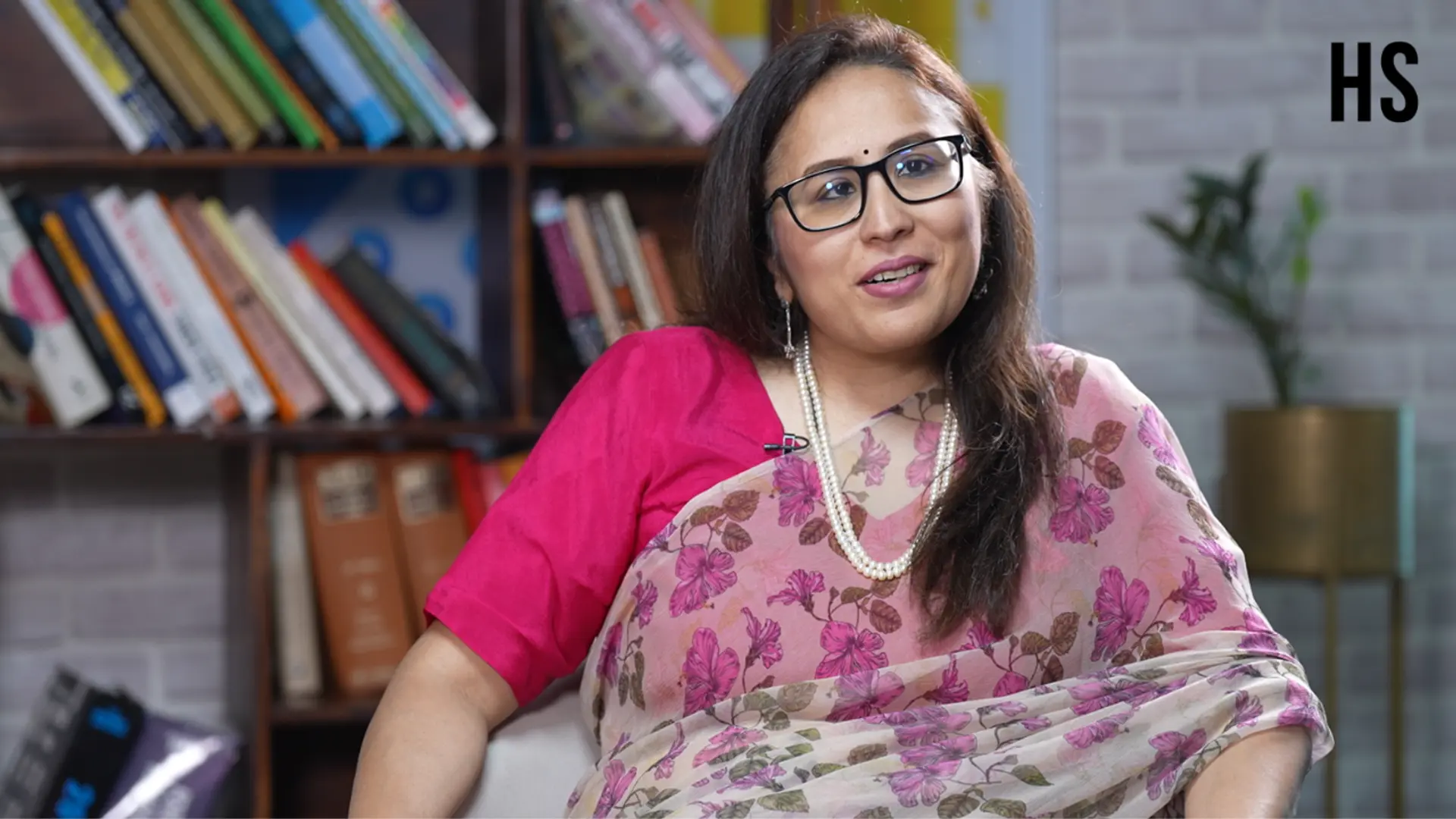

Radhika Gupta, Managing Director and CEO of Edelweiss Mutual Fund, is one of India's most influential voices on investing, wealth creation, and financial inclusion.
A founder who has built and scaled businesses, she has global experience that has shaped a leadership philosophy rooted in long-term thinking.
Radhika began her career at prestigious firms like Microsoft, McKinsey & Company, and AQR Capital Management. She co-founded Forefront Capital Management in Mumbai in 2009. Following its acquisition by Edelweiss Financial Services in 2014, she entered the asset management sector. She became CEO of Edelweiss Mutual Fund in 2017. She is the author of two books, Limitless and Mango Millionaire.
In a conversation with YourStory’s Senior Director - Strategic Partnerships & Content, Shivani Muthanna, as part of the RoadToSheSparks series, Radhika Gupta talks about building long-term wealth, why women must take ownership of their financial decisions and the lessons that have shaped her journey.
Edited excerpts from the interview:
HerStory (HS): Before becoming a CEO, a fund manager and a public voice when it comes to wealth creation, what were some of the personal and professional aspects of your journey that shaped how you look at ambition, resilience and success?
Radhika Gupta (RG): In my generation of women, we weren't as fortunate to grow up with female role models. I mean no disrespect here, but if you look at the '90s, we had very few visible faces of women's ambition beyond maybe the entertainment industry and Miss Indias, etc.
I grew up with parents who had never worked in corporate India. My father worked in government, and my mother was an educator. So, when it came to making career choices, I was sort of figuring my way out. The 20s were about finding my feet. It was later in my 30s that I channelled myself in one direction, really figured out that this is what I like, and wanted to go deeper.
HS: You have been to Wharton, worked at McKinsey; you have essentially been a student of a movement across countries and careers. You went on to become one of the youngest CEOs of an Indian mutual fund house. How did you make it your own in terms of even the mental and internal self-worth decisions that you took?
RG: When you were graduating in the 2000s, it was about the brand and the label you had. And I think you were taught to seek excitement in that. So my first few career stints are exactly that — Wharton, Microsoft, McKinsey. I think as you grow older in your career, you start to understand what success means to you. And for me, it's not about the label I'm working in. It's about the impact I can make in that role.
I've often found that a smaller, more boutique organisation, or doing something of your own, lets you expand the boundaries of what you can do a lot more. It lets you take a lot more risk. The success is yours. The failure is yours. The accountability is yours. The authority, good, bad, everything — is yours.
I have worked for some wonderful boutique brands, including Forefront Capital, which was my own startup, and Edelweiss Mutual Fund, which was as good as a startup when I started building it. The journey of creating something from scratch, the impact you can make, and the growth you can have are just incredible.
HS: You wrote a book, Mango Millionaire. How does it tie with your investment philosophy? How do you look at sustainable leadership?
RG: Mango Millionaire is about equipping people to make better decisions. There is a lot of questioning people do after they make an investment, and too little research and study before they do.
I've done hundreds of thousands of investor education programmes with men and women, affluent and less affluent, across the north, south, east, and west. And there are just so many basic misconceptions about investing. Among many women, there's also a lot of fear about even stepping into the space.
I genuinely believe that 95% of books in the finance field are written for 5% of people—the 5% who already understand the language, the terminology, and the subject. But not even 5% of books are written for the 95% of people who don't really know what the word "risk" means, who can't distinguish a stock from a bond, but are the ones who actually need that knowledge.
So Mango Millionaire is meant to be the equivalent of a beginner's cooking guide. You are scared to enter the kitchen, but by the end you are able to cook a basic meal for yourself. I think that was the idea.
HS: You have always been vocal about the fact that women in India are strong savers but not necessarily investors. Do you believe this is more of a confidence gap, a trust gap, or a conditioning gap?
RG: I think it's a combination of all three. Mass media doesn't do us any favours by providing terribly bad role models. I've been a big critic of finance conferences where you see 40 speakers on stage and not a single one is a woman. What message does that send to young girls?
The same thing is true of most media around investing or markets. You grow up believing that this is a male-centric profession, that money is not for me. And from there comes the lack of confidence.
I meet really smart, really talented women who have gone to some of the best educational institutions in this country, and they still say, "Finance isn't for me. It's boring," or "I'm not a numbers person." You have to ask yourself: where does that conditioning come from?
The other thing is that people feel they can get away with outsourcing their finances until a crisis comes.
HS: What would you say women should do, especially since many of them outsource money decisions to their fathers or spouses without really questioning them? What are some of the invisible costs of doing that? And what are the first three money decisions that every woman must own, irrespective of her income level?
RG: I've seen women earn for years, go through a divorce overnight, and not know where 20 years of their earnings are. I've seen women in business families who may not be earning themselves, but because they didn't know what was going on financially, they ended up with loans in their name and were equally liable for them. I've seen women lose a family member and then break down simply because they didn't know where the money was kept or how to access it.
My suggestion to women is this. First, get financially literate. Either read Mango Millionaire or use the wealth of content available online and offline—but make the effort to become financially literate. And financial literacy doesn't mean you have to start picking stocks tomorrow. It means learning the basics of money.
Second, find a good financial adviser. I think this country has many excellent mutual fund distributors and financial advisers, including some very talented women you may feel more comfortable working with.
And third, write down what you need your money to do for you, and then get started with something. This isn't something you learn just by staring at books and telling yourself you'll do it someday. It's okay to start. It's okay to make mistakes. And then it's okay to build your plan and get better over time.
HS: How has motherhood reshaped your definition of success and leadership?
RG: It's about time we stopped scaring women. I remember being very scared when I was pregnant because so many people kept telling me, "Your life will change." You'd think that would mean the arrival of a newborn and all the beautiful things that come with it. But "your life will change" is often said in a way that implies you're going to lose everything you had.
I was told, "You won't be able to travel. How will you manage this?" It all feels overwhelming. And then the noise starts in your head—not just, "Can I accelerate my ambition?" but, "Will I even be able to continue on this path?"
I don't think I've become any less ambitious since becoming a mother. In fact, I think I've become even more ambitious about what I want to do.
What you do need is a genuine support ecosystem. You need honest conversations with your workplace about the support you need. You need honest conversations with your family, your parents, and your in-laws about the support you need.
For many years, women in this country have worn a cape and tried to be superwomen, carrying every burden on their shoulders. Shed the cape.
HS: There's often an internal guilt, too, whether it's choosing between work and caregiving. How do you navigate ambition without apology?
RG: I keep telling young women that the one promise I made to myself and my mother made me do this, when I became a mother, was that I would not feel guilty.
Because guilt comes from doing something without purpose. When I'm caring for my child, there is purpose in that. And when I'm giving my all to my work, there is purpose in that too.
If you choose to work, or if you choose not to work, that's entirely your choice. But if you choose to work, remember why you are spending that time away from your child.
For me, my work, my profession, is now a 20-year-old that I've nurtured. It gives me joy. It gives me purpose. It helps me build a livelihood for my child. So I'm very clear about why I do what I do.
By the way, my son comes to the office all the time, and it's lovely. I think more mothers should bring their babies to work. More babies should be roaming around offices.
The other thing is to let go of the need to be perfect. One day your child's day won't go perfectly. One day there'll be a costume party where you haven't sewn the perfect caterpillar costume. One day something will go wrong at work. That's all part of life. Stop being so harsh on yourself.
I had my son when I was 38 or 39, and that's okay too. I was an entrepreneur. Before that, I worked in the US, and then I built a company in my early thirties. I barely had time to sleep, and I barely had an income. I didn't want a child at that stage. I also had multiple miscarriages.
So I don't believe there's a formula that says you have to do this by this age and that by another. That only creates stress. Lead your life in a way that works for you.