


‘Science has no gender’: Missile Woman Dr Tessy Thomas on leadership, DRDO and women in STEM
Popularly known as the Missile Woman of India, Dr Tessy Thomas reflects on leading India's Agni missile programme, working alongside Dr APJ Abdul Kalam, and shares lessons on leadership, resilience, and innovation.

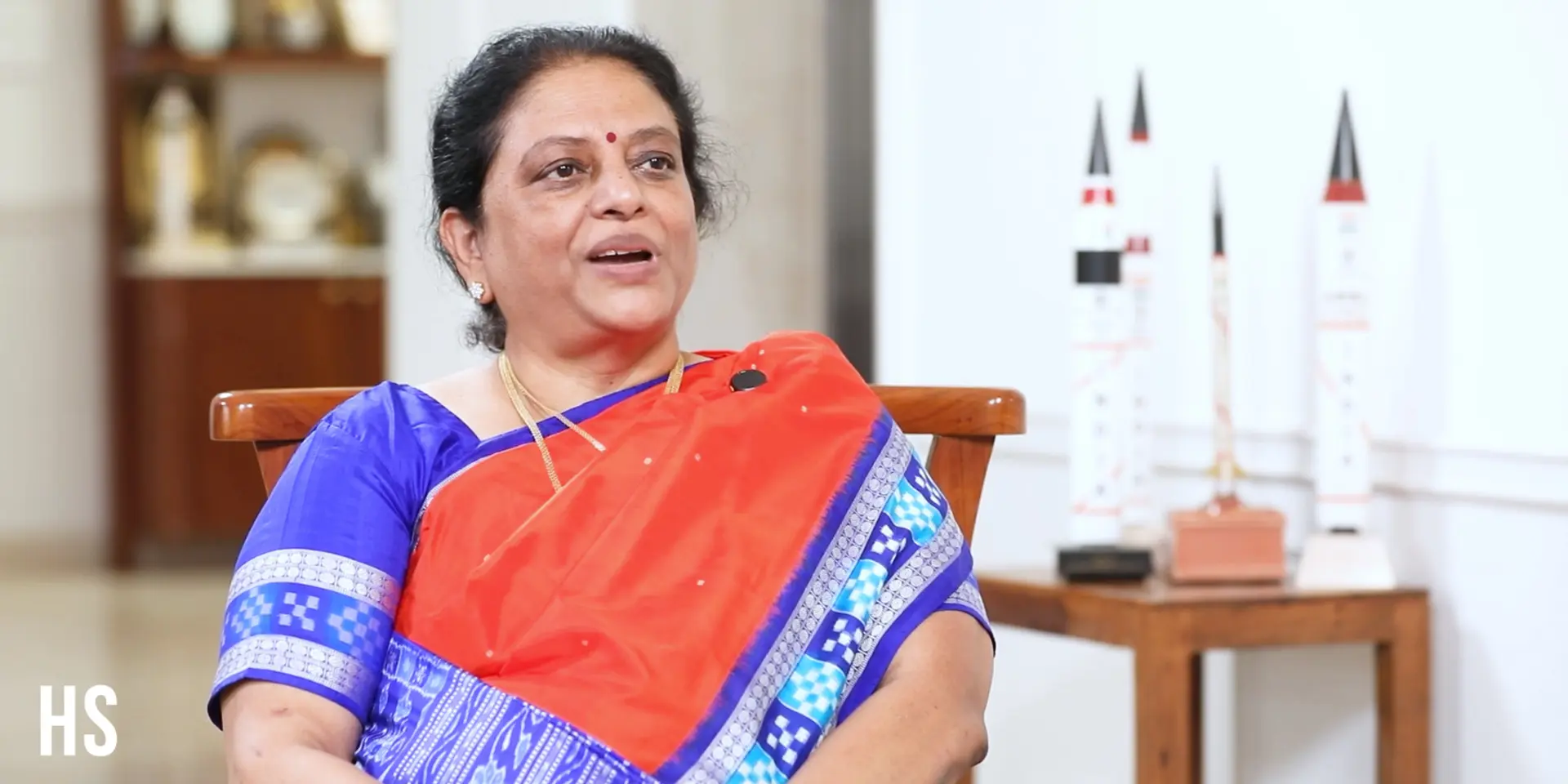

Popularly known as the Missile Woman of India and Agnipurti, Dr Tessy Thomas was the first woman to lead a major missile development project in the country, steering the Agni-IV and Agni-V programmes.
She joined the Defence Research and Development Organisation(DRDO) in 1988. In 2009, she became the project director for the Agni IV ballistic missile, leading the development of a state-of-the-art missile system incorporating several new technologies and successfully flight-testing it.
She also served as Project Director (Mission) for the long-range Agni-V missile, overseeing its successful development and flight testing.
As former Director General of aeronautical systems at DRDO, she played a pivotal role in strengthening India's strategic self-reliance in advanced defence technology.
In a conversation with YourStory's Senior Director – Strategic Partnerships & Content, Shivani Muthanna, as part of the Road to SheSparks series, Dr Tessy Thomas reflects on her journey from a young engineer inspired by science to leading some of India's most ambitious missile programmes. She also shares her advice for the next generation of engineers and women in STEM who aspire to build deep-tech careers.
Edited excerpts from the interview
HerStory (HS): To understand your early days as a young engineering student, when defence and aerospace technology and engineering were just evolving in India. What were some of your early influences?
Dr Tessy Thomas (TT): Science and Mathematics fascinated me the most during my childhood. With that background, I could choose engineering. My journey in missile technology started when I joined for an MTech in guided missiles.
I studied at a government engineering college, which gave me the opportunity to understand the engineering behind many areas of science. There were specific subjects, like radar systems, which I took as my elective in the final year, and they gave me insights into missile technology. So that application-oriented learning was there, which gave me knowledge of most radar applications in the defence field. Definitely, teachers and the subjects we get inspired to learn are all driven by our teachers from our school days.
HS: When you joined DRDO, it was the era of the Integrated Guided Missile Development Programme. What did the ecosystem really look like from a scientific level and an emotional level, as a young engineering graduate who joined to be part of this nation-building programme?
TT: I joined DRDO when it was undergoing a transformative phase in India's defence technologies. We all started working during the technology denial regime, when long-range missile technology was not available. DRDO had embarked on the Integrated Guided Missile Development Programme, under which five missile programmes were undertaken simultaneously. We were evolving technologies step by step—learning, designing, and developing systems and algorithms. It started as a learning phase and gradually matured into development and testing.
It was a journey of gaining knowledge, from understanding systems to becoming a designer, learning about production, acquiring the technology know-how and know-why, and eventually building indigenous capability.
That satisfaction has always stayed with me because, from the very beginning of the design phase through to development, we largely learned on our own within DRDO while also working with other scientific organisations such as ISRO. Establishing expertise in these systems and building indigenous capabilities was truly a breakthrough.
HS: You also worked closely with Dr APJ Abdul Kalam in the initial years of the missile programme. What were some of his leadership principles that inspired you?
TT: Dr Kalam was a visionary leader, as all of us know. His aim of building indigenous capability and self-reliance for our defence strategic requirements has been the driving force behind all of DRDO's work in aerospace and missile development. I was fortunate to work under him when I joined as a junior scientist. He was the Director of the laboratory.
Every moment with him was inspiring. I was assigned the job of designing the guidance system for long-range ballistic missiles, where the technology itself was not available to us. So we had to develop the algorithms ourselves, and he kept motivating us all through until we achieved our goals.
He gave us opportunities irrespective of whether we were women scientists or men. He was a role model. He always had a visionary outlook—planning not just for the immediate future but for what we should achieve over the next 20 or 30 years. He encouraged scientists at every level to learn, grow, and contribute to the country. He's someone who believed that leadership is about enabling others to rise along with you.
HS: It’s also a male-dominated space. How did you deal with it?
TT: Yes, in the initial phase, way back in 1988 when I joined, within a few months I had to decide to buy a Kinetic Honda because our work didn't have fixed timings. Assignments required us to complete certain activities, regardless of the hour. I decided to buy a Kinetic Honda without even knowing how to ride it. I learned to ride only after buying it. Of course, I already knew how to cycle. My belief was that if we have to do it, we have to do it.
At that time, there were very few women working in such strategic roles. We had to create the required support mechanisms. My husband was in the Navy, so he understood very well the kind of responsibility I had. The late hours, starting the day very early, cooking for the whole family and for my son, then going to work, and coming back at an uncertain time—that was all part of life. We always felt that one had to plan the entire day carefully.
HS: When we talk about Atmanirbhar Bharat in the context of defence technology, where do you think India stands today?
TT: We have established almost all the technologies required, starting from raw materials to design, algorithm development, and avionics. We are also mastering AI-enabled systems. All these capabilities have been achieved by India in the fields of aerospace and missile technology. We now have indigenous capability and have achieved self-reliance in the intellectual know-how behind these technologies. We have strengthened our expertise across the entire ecosystem. So I would say we are strong in these areas and can confidently say that we are self-reliant.
HS: When you look back at the history you have created—you are known as the Missile Woman of India and were the first woman to lead a missile programme in the country? Did you face any structural barriers at that time?
TT: I can speak about DRDO as an organisation. We were given every opportunity. From the very beginning, I have always said that science has no gender. What matters is your capability and your competence—acquiring knowledge and taking the right decisions. That is what mattered throughout our journey.
We also had very visionary leaders along the way. Everyone in leadership took the responsibility of mentoring junior scientists, and that is how DRDO progressed.
HS: What advice would you give to young women and engineers in STEM who want to enter deep tech roles? What kind of mindset or skills should they cultivate from the very beginning?
TT: It is important to have a focused mind to learn scientific knowledge, sustain that learning, and start applying it. Organisational requirements and opportunities will come, but your own decision to keep learning and your focused approach towards your work are what really matter.
Rapid-fire questions
HS: One leadership lesson that science taught you early on.
TT: Science taught us that every mission is different. One mission is never the same as another. So you have to constantly focus on the system's quality and reliability.
HS: One moment in your career that tested your confidence.
TT: The launch of every critical mission. Every launch tests you, and every successful launch gives you confidence.
HS: One non-negotiable quality that every scientist, engineer, and leader should develop.
TT: Integrity—both in your knowledge and in your personal conduct.
HS: If India's next generation of scientists takes away one lesson from your journey, what should it be?
TT: If I could do it, I believe they can do even more. Today, the opportunities and technologies are much better. Anyone with a focused mind can do wonders.
HS: You are also known as Agniputri. What would be your one piece of advice to women who still have glass ceilings in their own minds?
TT: It is your intuitive spirit to keep learning and your ability to take decisions that make you different. Build strong technological knowledge, and then have the determination to take on every challenge.
Edited by Affirunisa Kankudti