


From National Fiber Scheme to Rs 10,000 Cr SME Growth Fund: Textiles, MSMEs get major push in Budget 2026
FM Nirmala Sitharaman's Budget 2026 unveiled major reforms across textiles and MSMEs, including mega textile parks, a Rs 10,000 crore SME Growth Fund, and mandatory TReDS integration for CPSEs.


Finance Minister Nirmala Sitharaman presented her ninth Union Budget on February 1, Sunday. She announced a comprehensive package of initiatives aimed at revitalising India's textile sector, empowering MSMEs, and transforming the country into a global manufacturing hub.
Textile sector proposals
In a major boost to the labor-intensive textile industry, the FM proposed an integrated programme comprising five key components designed to enhance self-reliance, modernisation, and global competitiveness.
The National Fiber Scheme will focus on achieving self-reliance in natural fibers including silk, wool, and cotton, alongside man-made and new-age fibers.
The Textile Expansion and Employment Scheme aims to modernise traditional clusters with capital support for machinery, technology upgradation, and common testing and certification centers.
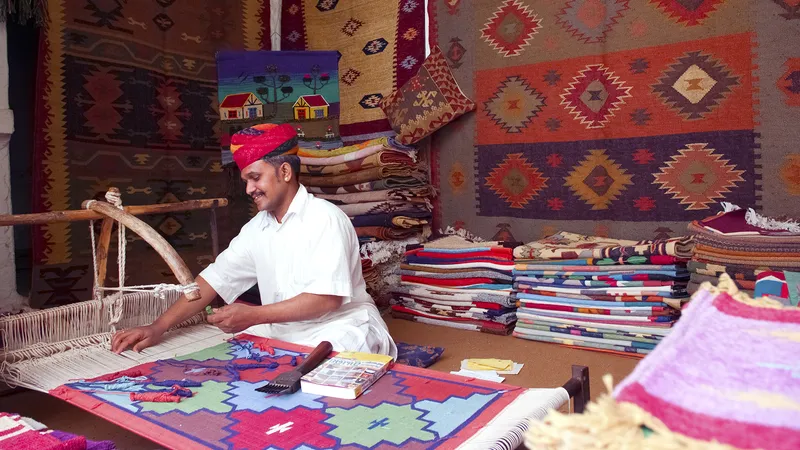
A National Handloom and Handicraft Program will integrate and strengthen existing schemes to provide targeted support to weavers and artisans, while the Tex-Eco Initiative will promote globally competitive and sustainable textiles and apparels.
SAMARTH 2.0 will modernise the textile skilling ecosystem through collaboration with industry and academic institutions.
The FM also unveiled the Mahatma Gandhi Gram Swaraj Initiative to strengthen khadi, handloom, and handicrafts sectors. The initiative will facilitate global market linkage and branding while streamlining training, skilling, and quality of process and production.
"This will benefit our weavers, village industries, the One District One Product (ODOP) initiative, and also our rural youth," she added.
Boost for MSMEs
The FM announced a scheme to rejuvenate 200 legacy industrial clusters across the country, aimed at improving their cost competitiveness and efficiency through infrastructure and technology upgradation.
In what could be a game-changer for the MSME sector, FM Sitharaman outlined a three-pronged approach to help MSMEs grow as ‘champions’.
A dedicated Rs 10,000 crore SME Growth Fund will be introduced to create future champions by incentivising enterprises based on select criteria. Additionally, the Self-Reliant India Fund, established in 2021, will receive a top-up of Rs 2,000 crore to maintain micro enterprises' access to risk capital.
With more than Rs 7 lakh crore already made available to MSMEs, the FM proposed four transformative measures to enhance liquidity support through the Trade Receivables Discounting System (TReDS):
Firstly, TReDS will be mandated as the transaction settlement platform for all purchases from MSMEs by Central Public Sector Enterprises (CPSEs), serving as a benchmark for other corporates.
Secondly, a credit guarantee support mechanism will be introduced through Credit Guarantee Fund Trust for MSMEs (CGTMSE) for invoice discounting on the TReDS platform.
Thirdly, the Government e-Marketplace (GeM) will be linked with TReDS to share information with financiers about government purchases from MSMEs, encouraging cheaper and quicker financing.
And finally, TReDS receivables will be introduced as asset-backed securities, helping create a secondary market and enhancing liquidity and settlement of transactions.