



Speciality medicines: How MrMed is bringing life-saving drugs to far corners of India
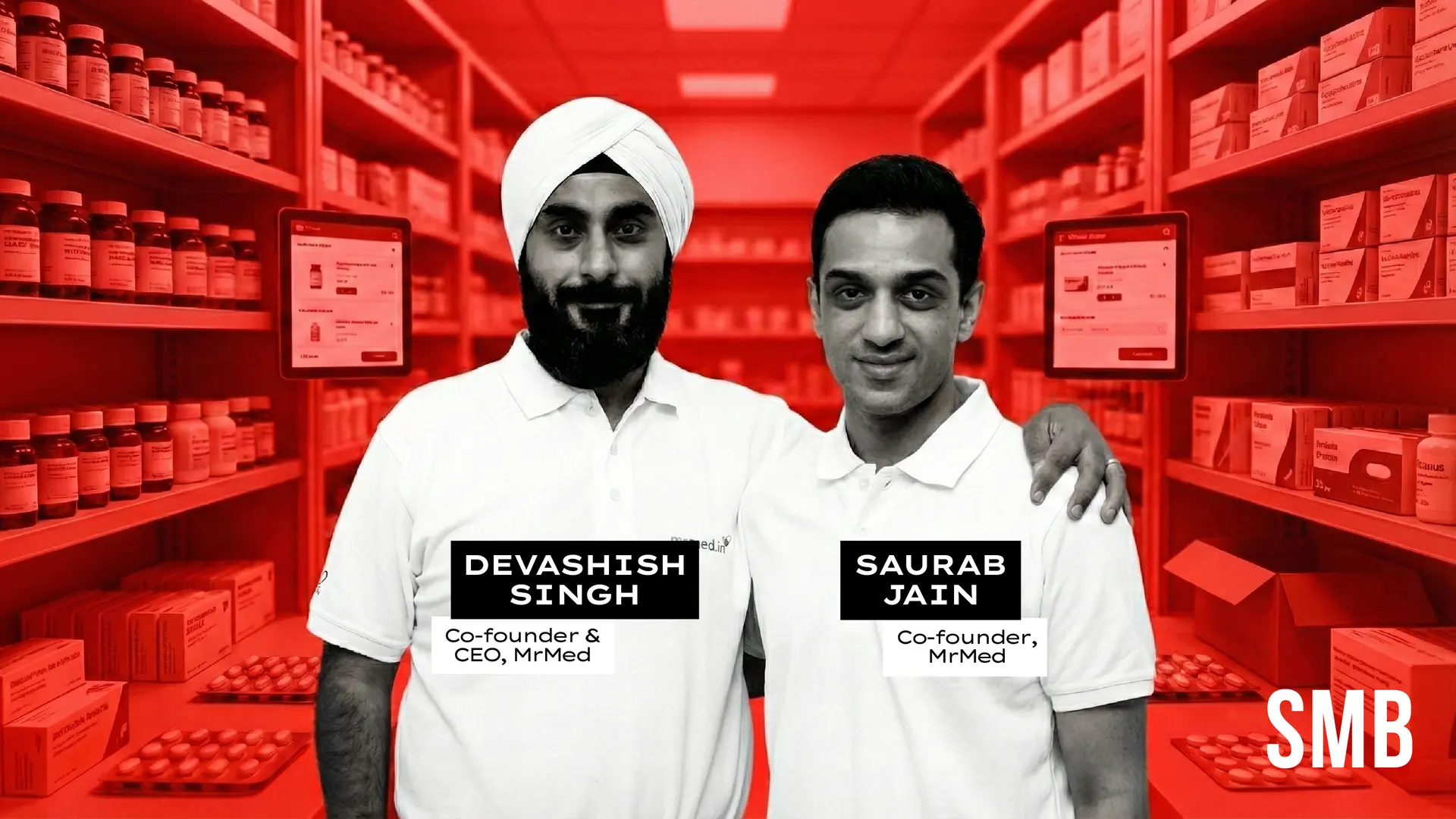
Founded by Devashish Singh and Saurab Jain in 2021, Chennai-headquartered MrMed operates a digital platform that connects patients directly to verified suppliers of speciality medicines.


In India, when patients in smaller towns and villages are prescribed a cancer drug or a rare-disease therapy, sourcing the medicine is often harder than finding the diagnosis.
These high-value, tightly regulated drugs are typically stocked by only a handful of hospital pharmacies in large cities, forcing families to navigate a complex network of distributors, delays, and inflated prices.
In fact, patients who travel to metro cities for treatment often struggle to access the same medicines once they return to Tier II, III or smaller towns and villages.
Seeing this disparity, Devashish Singh and Saurab Jain launched MrMed in 2021 to build what India’s healthcare system lacks most for complex therapies: a reliable, nationwide access layer.
The Chennai-based company operates a digital platform that connects patients directly to verified suppliers of speciality medicines, handling everything from prescription validation to cold-chain delivery.
“Speciality drugs are expensive, require cold-chain handling, and are prescribed in precise combinations depending on a patient’s condition, stage of disease, and even body weight. For a typical neighbourhood pharmacy, it rarely makes financial sense to stock these products,” says Jain in an interaction with SMBStory.
He adds, “For drugs not available in India, we also support imports under the government’s Named Patient Programme, which allows specific medicines to be brought in for individual patients with regulatory approval.”

This Chennai-based startup is matching startups with the right talent using AI
The backstory
Before launching MrMed, Jain ran a speciality pharma distribution business, which gave him firsthand insight into the fragmented and often opaque nature of speciality medicine supply chains—particularly beyond large metropolitan hospitals.
Singh, meanwhile, had built large-scale digital systems at the Narayana Group, where he helped move over 4.5 lakh students onto online learning platforms and shifted a large portion of the group’s marketing to digital channels.
When MrMed went live in May 2021, India was in the middle of a deadly COVID-19 wave. “Hospitals were struggling to secure life-saving drugs, such as Remdesivir and Amphotericin B. Supply chains were breaking down, and patients were asked to source medicines on their own,” recalls Singh.
Within days of launching, the company found people transferring money directly into its bank account, hoping it could arrange critical vials for their families.
That moment shaped what MrMed has become today: a direct-to-patient platform focused on speciality medicines—high-value drugs used to treat conditions such as cancer, HIV, hepatitis, and rare diseases—rarely stocked by neighbourhood pharmacies.
Business model and market opportunities
According to Research and Markets, the critical care drugs market is expected to grow to $1.44 billion by 2029 at a compound annual growth rate (CAGR) of 6.2% from $1.13 billion in 2025.
MrMed’s business is inventory-led for commonly used therapies and just-in-time for rarer drugs. It works directly with large pharmaceutical companies and their authorised distributors, including companies such as Eli Lilly, Cipla, Dr Reddy’s, and Mankind, to source life-saving drugs.
The company’s business model integrates a digital platform with a pan-India logistics network, with a team of under 100 people, including pharmacists and logistics staff. So far, MrMed has delivered over 3 lakh orders across India.
Customers can place orders online directly through the company’s app or website. Additionally, they can initiate place orders via WhatsApp or phone support, ensuring assisted access for those who may be less digitally savvy.
It offers average discounts of around 38% on the medicines it sells, which the co-founders argue helps patients stay on their prescribed treatment plans.
“For many chronic and cancer therapies that cost thousands of rupees per dose, affordability often determines whether patients continue or drop off midway,” adds Singh.
Financially, MrMed reported revenue of nearly Rs 33 crore in FY25, up from roughly Rs 20 crore in the previous year. It expects to close the current financial year at Rs 80–90 crore, driven by higher volumes and expanded reach.
MrMed claims to have no direct competitors in India, but operates alongside several players in adjacent segments of the speciality and oncology pharmacy ecosystem, including Onco Healthmart, Apothecare, WingsMed, Medanta Pharmacy, BuySM, Meds2U, Super Specialities Pharma, Bluemoon Super Speciality, Galaxy Super Speciality, Health29, Singhla Medicos, and ZenOnco.
Going forward
Beyond medicines, MrMed is also piloting home-based cancer care services with a group of doctors in Chennai and other partners across different cities in India. This includes nurse-led infusions and pre- and post-chemotherapy injections at patients’ homes—an effort to reduce hospital visits for those undergoing long treatment cycles.
The co-founders say the company’s early experience during the pandemic reinforced their focus on access. “We saw how quickly supply can break down when systems are under pressure. Patients without the right connections simply couldn’t get what they needed,” Jain says.
Four years on, MrMed is trying to turn that lesson into a national digital distribution layer for speciality healthcare—one that works not just for big hospitals in metros, but for patients wherever they live.
Edited by Suman Singh