


Economists urge government’s focus on SMEs in the first pre-Budget meeting: Report
At the pre-budget meeting chaired by FM Sitharaman, economists have urged the government to calibrate policies strengthen domestic manufacturing, particularly for SMEs.

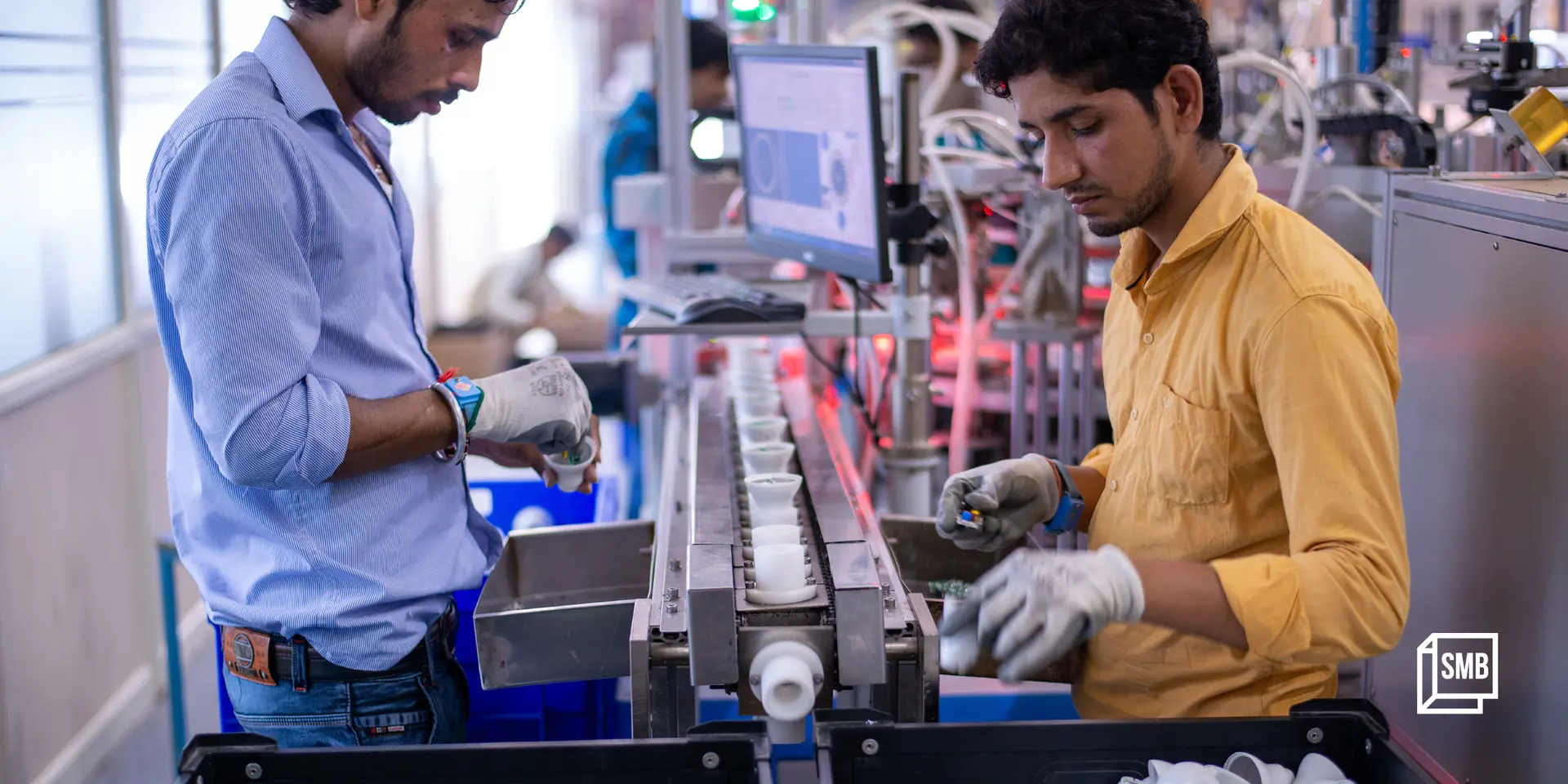

At the first pre-Budget meet chaired by the Finance Minister Nirmala Sitharaman on Monday, economists urged the government to recalibrate policies to strengthen domestic manufacturing, particularly for small and medium enterprises (SMEs).
Amid an uncertain global economic climate marked by trade tensions with the US, economists have urged the fine-tuning of the PLI (production-linked incentive) scheme, a report by The Indian Express stated.
Ahead of the Union Budget for 2026–27 in February, the pre-budget meeting was attended by 19 leading economists and academicians. While acknowledging the government’s steady capital expenditure on infrastructure, the economists called for increased investment in digital infrastructure, research, and development.
Experts also highlighted the need for a comprehensive manufacturing policy that addresses the MSME sector’s challenges around employment generation, technology upgradation, and import dependence.
Senior Finance Ministry officials, including Anuradha Thakur, Economic Affairs Secretary, and Anantha Nageswaran, Chief Economic Advisor V., were present at the meeting. Later in the day, FM Sitharaman and her team held another round of pre-Budget consultations with representatives of farmer associations and agriculture economists.
Economists reportedly noted that the reduction in personal income tax and GST (Goods and Service Tax) rates had supported consumption but suggested further indirect tax reforms such as import substitution measures, and streamlining customs procedures. They also emphasised research and development incentives for green technologies and renewable energy.
While acknowledging the slowdown in the pace of capital expenditure growth, participants reaffirmed its positive multiplier effect and advised maintaining its share in the Budget alongside fiscal discipline. The issue of high combined debt of the Centre and states was flagged, though experts agreed that state finances fall under the purview of the Finance Commission.
From 2026–27, the government will begin targeting its overall debt-to-GDP ratio instead of the annual fiscal deficit, which is expected to decline to 4.4% of GDP this year. The Centre aims to reduce its debt-to-GDP ratio to 49–51% by March 2031, down from 57.1% in 2024–25.
The pre-Budget discussions come amidst the increasing concerns over the ongoing US trade war on Indian exporters, particularly MSMEs (Micro, Small and Medium Enterprises).
Indian goods have faced cumulative tariffs of around 50% in the US market since August.
Edited by Affirunisa Kankudti