


'Fintech startups have brought positive change for MSME credit': Loantap CEO
At the MSME Sparks 2025 summit, Loantap co-founder and CEO Satyam Kumar highlighted the important contributions made by fintech startups towards the growth of MSMEs.

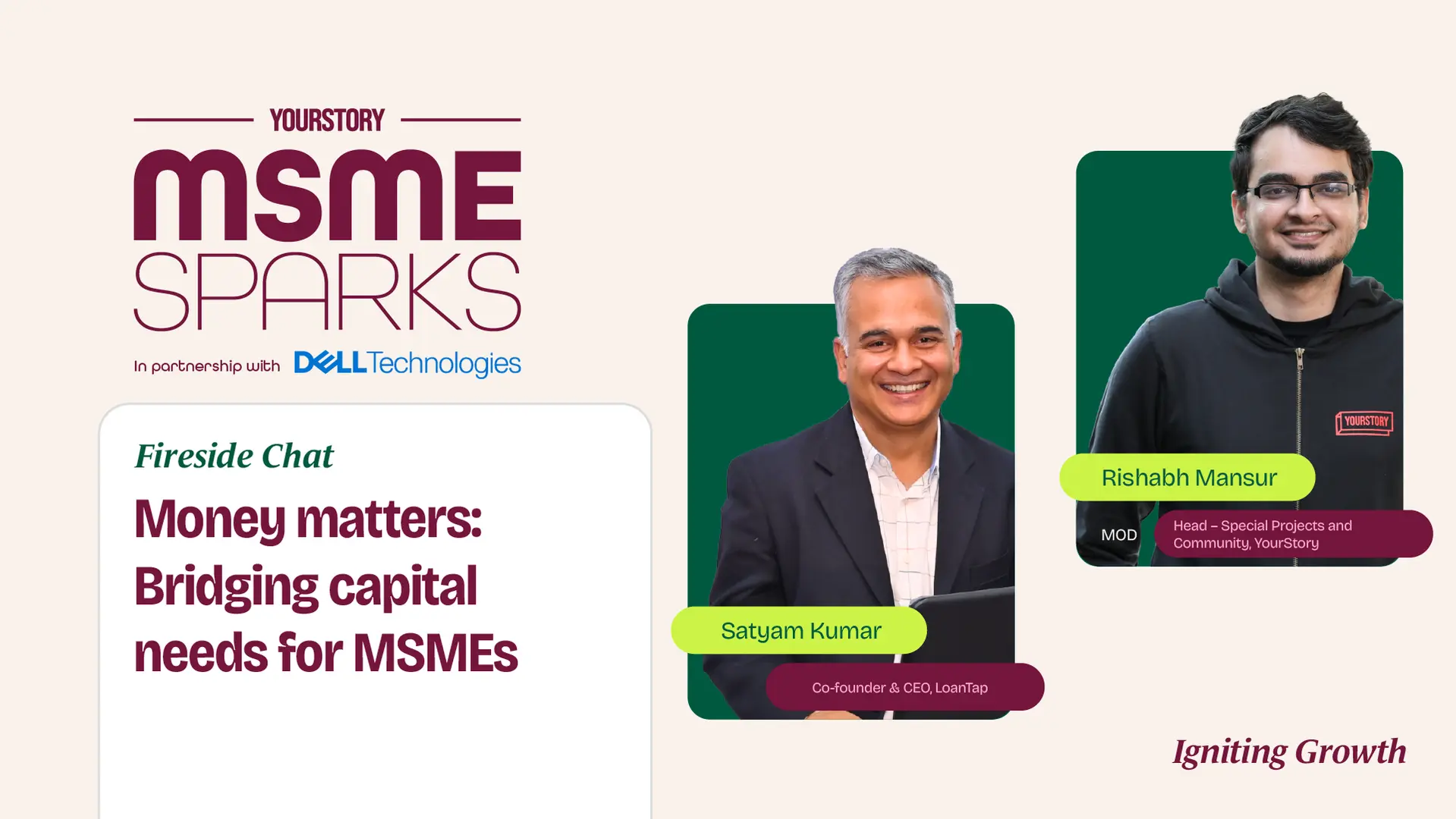

Fintech startups in India have brought about a much-needed positive change for the medium, small and micro enterprises (MSMEs) sector in India to enable a smoother inflow of credit, according to an industry expert.
At a fireside chat at MSME Sparks 2025, a week-long event hosted by YourStory spotlighting the unsung heroes building the country’s economic future, LoanTap co-founder and CEO Satyam Kumar said, “The collaboration among NBFCs, banks and fintech has demonstrated the scale and possibilities of bringing larger value to the MSMEs.”
Kumar further highlighted how fintechs have made a significant difference to MSME growth during the session, titled 'Money matters: Bridging capital needs for MSMEs'.
The biggest challenge faced by the MSMEs is the lack of ready availability of credit, though this scenario has changed significantly over the years, primarily driven by technology. According to SIDBI, overall MSME commercial credit exposure increased to Rs 35.2 lakh crore as of end-March 2025 as against Rs 31 crore as of end March 2024, registering a growth of 13%.
According to Kumar, many elements in the ecosystem have come together to enable higher credit inflow to the MSMEs. The big push came from the Reserve Bank of India (RBI), whose new guidelines ushered in important changes.
The key factor along with new guidelines is the role played by fintech startups, whose technology platforms opened up new credit channels for MSMEs.
“The entire ecosystem has been at the forefront of this digitisation journey,” Kumar said.
The digital framework established by the government, along with the growing popularity of unified payment interface (UPI), has been a catalyst for the availability of digital credit to MSMEs.
Kumar added that MSMEs are now able to avail themselves even small ticket loans, which was not possible earlier. “Our philosophy is that what is available to large corporates should be accessible to MSMEs,” he added.
The biggest change has been the availability of data from MSMEs, which is captured through the digital platforms. Kumar noted that technology of fintech platforms makes it possible to make credit available to various business functions of MSMEs. Also, data from MSMEs is now available to many more players in the ecosystem, allowing them to come out with innovative products.
“There has been a lot of innovation from fintechs which is led by data,” he said.
However, this also requires certain changes on the MSMEs' end, who will have to keep digital records of their business as this will improve their visibility to lenders and make a strong case for the availability of credit.
“The big driver for business growth is having this information, and it makes the whole process of raising credit friction free with much better quality,” Kumar remarked.
For MSMEs, this is also a gradual process as there is much ground to be covered in terms of making credit widely available to this sector. The traditional lending channels of banks and NBFCs have not changed much in terms of how they provide credit to MSMEs, while the route of equity financing option is not easily available.
Kumar believes that the numerous schemes of the government both at the Centre and State need much more awareness among the MSMEs.
Edited by Jyoti Narayan