



How Nova Dairy built a vast supply network and modern processing units with a focus on sustainable practices
Nova Dairy has grown from a small shop in Old Delhi in the early nineties to a large dairy processing setup with a diverse product portfolio. It sources raw milk from a network of 1.5 lakh farmers, processes 2.6 million litres of milk every day, and exports to over 30 countries.


India’s dairy sector has witnessed a phenomenal evolution since it was delicensed in 1991. Deregulation created a platform for private players to expand rapidly, introduce technological innovations, and cater to the growing consumer demand. All this helped the country grow from a milk-deficient nation to the world’s largest milk producer.
At the same time, the sector has also faced significant operational challenges, including fragmented procurement networks, seasonal supply fluctuations, and volatile market conditions.
Amid these challenges, Nova Dairy, the consumer-facing arm of Sterling Agro Industries Ltd., has grown from a modest retail setup in Old Delhi to one of the prominent private-sector entities with integrated supply chains and modern processing facilities.
Nova Dairy’s journey began in Khari Baoli, Old Delhi, considered to be Asia's largest spice market, with a family-run shop that sold ghee, milk powder, and assorted dairy ingredients.
Today it has a much diversified product portfolio that meets both domestic and international demand—this includes pasteurised and flavoured milk, paneer, dahi, lassi, chhaach, butter, ghee, dairy whitener, creamers, and skimmed milk powder.
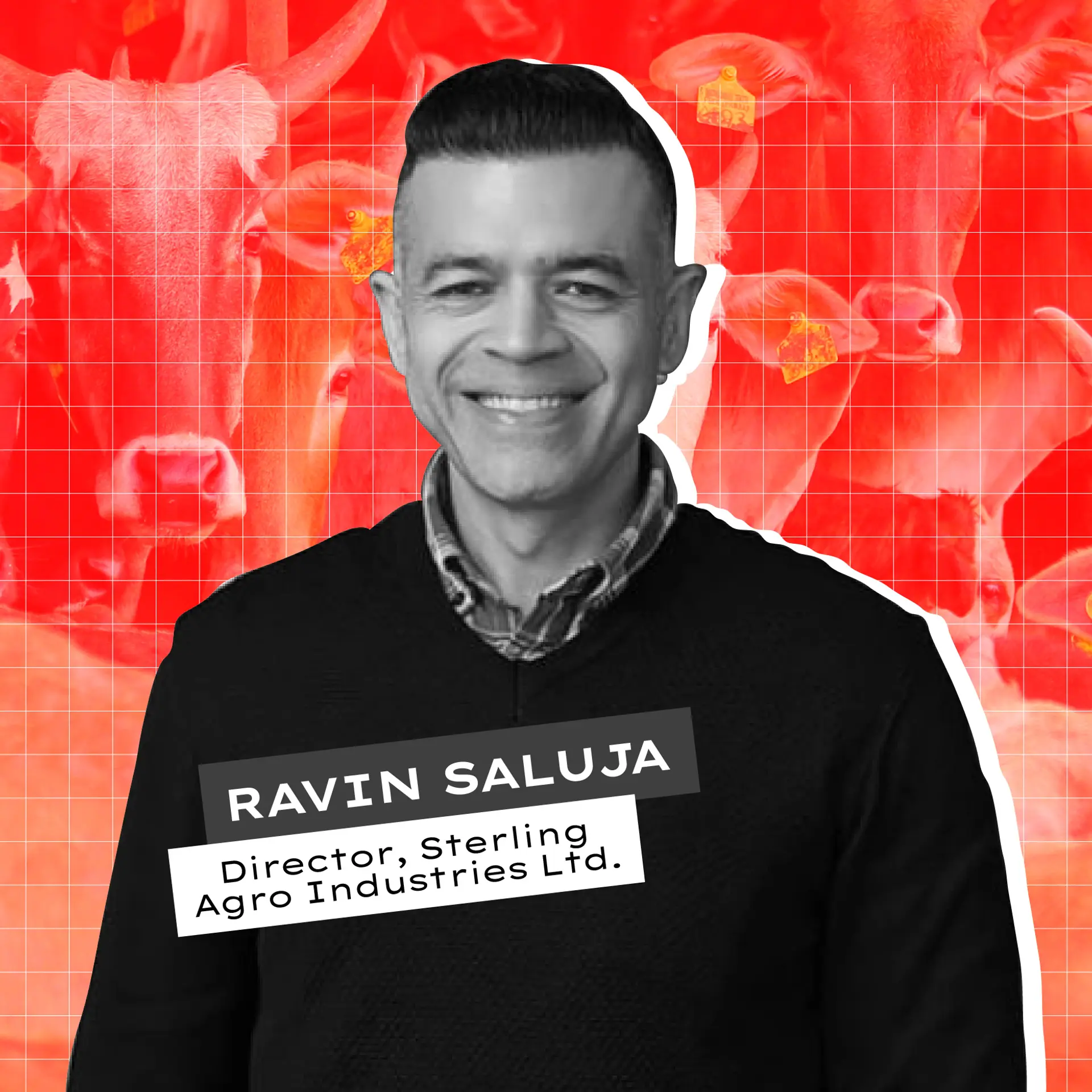
“Our shop was where we learned the nuances of milk quality, customer trust, and pricing. Every transaction was a lesson. Moving from retail to manufacturing was not a leap but a calculated step grounded in these early learnings,” recalls Ravin Saluja, Director of Sterling Agro Industries Ltd.
The shop continues to be operational, even as Nova Dairy has diversified into processing and manufacturing a wide range of products.
In 1991, shortly after deregulation, the Saluja family leased Sterling Agro’s processing unit in Kundli, Haryana, for a year. After navigating operational challenges, they bought it back within two years, marking the birth of the Nova brand. n
“Those years were about building systems that worked consistently. We were learning how to scale without compromising on quality,” says Saluja.
Market presence
Nova Dairy operates across both B2B and B2C segments; each contributes roughly 50% of its annual revenue of Rs 1,500 crore.
Major institutional clients include Indian Railways, Nestlé, ITC Limited and Air India. The company’s distribution is the strongest in Delhi-NCR and Haryana, while the reach is limited in the neighbouring regions.
In the B2C segment, Nova sells its products through retail outlets, department stores, local kirana shops and regional distributors, giving the brand a good on-ground presence in its core markets.
White-label manufacturing is also a significant part of its revenue; Nova supplies its products to select FMCG clients including Cadbury and Modi Naturals.
“Serving institutional and consumer markets simultaneously demands attention to different expectations. For B2B clients, reliability, bulk consistency, and traceability matter. For consumers, freshness, taste, and safe packaging are critical,” says Saluja.
The company also exports products such as anhydrous milk fat and butter oil to over 30 countries. Export volumes fluctuate between 5% and 20% of total revenue depending on global market conditions and domestic milk prices.
Manufacturing setup and operational efficiency
Nova Dairy started its manufacturing stint in 1992 with a plant in Kundli, Haryana, processing 1 lakh litres of milk per day before expanding to 2 lakh litres in 1995.
Rising demand led to a second facility in Malanpur, Madhya Pradesh, in 1999 with a capacity of 4 lakh litres per day. The production doubled within two years.
In 2005, a third plant in Kasganj, Uttar Pradesh, was commissioned with an initial capacity of 8 lakh litres per day. Today, the company handles 2.6 million litres of milk every day across its three facilities.
“All our capacity expansions were aligned with demand and the reliability of supply from farmers. Scaling without a secure supply chain risks both quality and operational stability,” notes Saluja.
Nova Dairy’s plants use European processing machinery from Alfa Laval and Tetra Pak, complemented with Indian packaging lines. The lines include automated systems that fill, seal, and pack milk and dairy products.
Maintenance is regular, with parts replaced every two to three years, says Saluja.
The company’s production efficiency is closely tracked, with wastage usually at 0.5%–1% and sometimes touching 2%. Any material that can be reused is processed again, and the remaining waste is diverted to cattle feed or other basic uses.
“Operational discipline shows up in every litre. I know within hours if something is off in production because we track inputs, outputs, and losses meticulously,” remarks Saluja.
Nova employs around 150 permanent staff and 100–120 casual labourers who support the daily operations. “A dairy business is not just about milk; it’s about governance, systems, and people. Each layer requires accountability to maintain resilience.”
Procurement and supply chain complexity
Procurement is one of the most complex aspects of Nova Dairy’s operations. Raw Milk is sourced from districts in Uttar Pradesh and Madhya Pradesh through collection agents, independent suppliers, village-level centres, and eight formally adopted villages.
Sourcing is done across a procurement network of over 1.5 lakh farmers.
While the milk procured is primarily cow’s milk, some amount of buffalo milk is also sourced from certain regions.
The company’s operations are also supported by 120 chilling centres in Haryana, which consolidate milk from different routes. Each chilling centre handles 2,000–5,000 litres. The raw milk is then transported in tankers to the processing units.
“Milk is a living product, and small changes at the farm level affect quality downstream. We trace every batch to its source and work with farmers to improve feed, animal health, and milking practices,” Saluja emphasises.
The quality is tested at three stages, at the village, chilling centre, and plant, followed by post-production checks. Any deviations in fat content, SNF levels, hygiene or microbial standards are addressed immediately.
SNF or solids-not-fat refers to all components of milk except water and fat, including proteins, lactose, and minerals.
Support includes cow health check-ups and treatment, guidance to farmers on milking practices, and subsidised feed (feed offered at a reduced cost to help improve cattle nutrition and milk quality).
Sustainability efforts
The company claims that it is recognised as India’s first carbon-negative dairy—it removes more carbon from the atmosphere than it emits, driven by its large-scale investments in renewable energy such as wind and solar to offset operational emissions.
This has been acknowledged by industry sustainability forums, says Saluja.

These brothers scaled their bootstrapped nutraceutical brand to Rs 20 Cr
Nova’s Sustainable Dairy Programme, implemented with partners such as Nestlé and Unilever, focuses on improved animal feed, housing, animal health, and waste management. Other initiatives include methane-reducing feed interventions, biogas adoption, and animal welfare training.
“Our sustainability efforts are not just compliance exercises. They directly support farmer income, supply reliability, and long-term operational viability,” says Saluja.
He adds, “When farmers are supported with practical tools and guidance, productivity improves, and milk quality rises.”
Market challenges and future plans
Nova Dairy operates in a challenging environment where external factors can have immediate financial implications. Last year, the floods in Punjab and eastern Uttar Pradesh caused cattle loss, feed shortage, and crop damage, driving raw milk prices significantly.
As contracts with multinational clients are fixed in advance, these abrupt cost increases directly impact margins.
The market is also fragmented with many unregulated competitors, and there is a growing threat from counterfeit ghee sold across retail and digital platforms.“Our biggest challenge is protecting both our brand and farmers from a market that sometimes rewards shortcuts.”
Looking ahead, Nova Dairy aims to stabilise procurement by ensuring consistent, quality milk sourcing throughout the year, expand sustainable farming practices, and enhance biogas adoption at the farm level.
The company is also exploring new product categories, more exports, and operational innovations to reduce losses arising from supply fluctuations, wastage, and high input costs, and to improve overall efficiency.
“Growth without stability is unsustainable. Our priority remains resilient operations, supporting farmers through unpredictable seasons, and ensuring that every litre we produce meets our quality and sustainability standards,” concludes Saluja.
Edited by Swetha Kannan