


Tally’s Nupur Goenka charts a new digital course for India’s MSMEs
At MSME Sparks 2025, the Executive Director of Tally Solutions discussed AI adoption, software legacy, and the challenge of digitizing millions of small businesses.

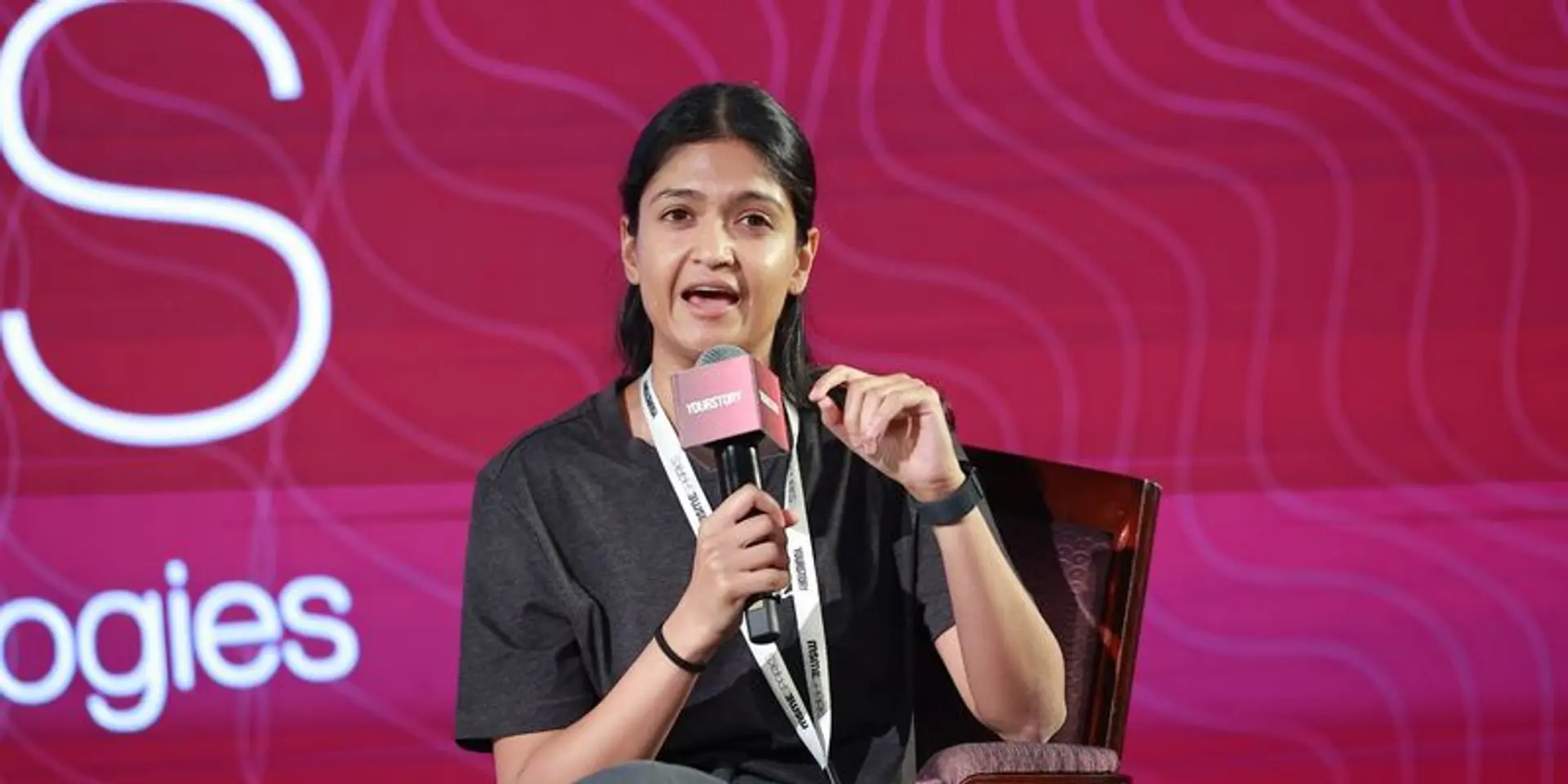

Nupur Goenka, Executive Director of Tally Solutions, said the company is undergoing its sixth major technology overhaul, as it seeks to modernise its software and broaden its reach among India’s micro, small and medium enterprises (MSMEs). The remarks came during a fireside chat at YourStory's MSME Sparks 2025, where Goenka spoke about the company’s AI experiments, software redesign, and long-term ambitions to scale its user base from 2.5 million to 200 million.
Goenka, who formally took charge of the family-run enterprise software company last year, emphasised that Tally is “not just an accounting software company” but a technology firm at its core. “We’ve built our own database, memory manager, and programming language. And we’ve scrapped and rebuilt it multiple times,” she said. The company is currently overhauling its tech stack to incorporate artificial intelligence features, she added.
Tally, founded in 1986 by Bharat Goenka, has long dominated the Indian accounting software market, particularly in Tier II and Tier III cities. The firm claims a 70% market share in the MSME segment, and a presence in more than 95 countries, with India accounting for 90% of its revenues. The United Arab Emirates is its second-largest market.
Despite India’s 700 million internet users, Goenka noted that only 25–30% of MSMEs currently adopt digital tools, often due to software being designed for large enterprises and retrofitted for smaller businesses. “That’s not how you build a small business. You start with how they work, what they need,” she said.
AI experiments and limits of hype
Goenka acknowledged the difficulty of integrating AI into MSME workflows, describing Tally’s early pilots as “hit or miss.” Some experiments, she said, ended up being slower and more costly than manual execution. “We’ve had projects where it took us 200% more time than just doing it the old way,” she said.
Still, she sees potential. Tally is actively testing AI features with a mix of legacy and new-age MSME customers. “There’s a perception that small businesses won’t pay for technology. In our experience, if it delivers value, they absolutely will,” she said.
She also highlighted the company's belief in open experimentation and customer-led feedback, saying Tally has seen interest from users in testing AI-led automation in billing, compliance, and back-office tasks.
Tackling piracy through access, not enforcement
In a departure from conventional software policy, Goenka described how Tally chose not to crack down on software piracy through digital rights management or legal action. In the early 2000s, for every paid license, the company estimated 20–25 users were on pirated versions.
Instead of litigation, the firm focused on expanding distribution and access. “We built a 28,000-strong partner network across India to make licensed software easier to buy,” she said. That strategy has paid off, bringing the piracy ratio down to roughly 1:1 today.
Goenka said the company’s long-term goal of reaching 200 million users will likely hinge on solving interoperability — the ability for businesses to digitally communicate and transact with one another within software platforms.
“Many businesses are already digitized, but they still interact with others through paper, calls, or emails,” she said. “If software can enable inter-business communication within the platform, that could fundamentally change how MSMEs operate.”
She also pointed to growing international demand. “We’re seeing traction in markets like the UAE. But compliance differences are a barrier to faster global rollout,” she said, noting that product localization remains a challenge.
A digital toolkit for MSMEs
Asked what tools MSMEs should adopt early in their digital journey, Goenka listed financial and compliance software as foundational. “Your financial health needs to give you peace of mind. That’s non-negotiable,” she said. She also advised small businesses to invest in peer networks and digital communities. “Technology can simplify complexity, but community helps businesses navigate change,” she said.
Goenka said Tally remains bullish on the “Made in India” software story and believes the next wave of growth will come from smaller cities and traditional businesses digitizing at scale. “We’ve seen entrepreneurs in small towns using AI models inside their operations,” she said. “The appetite for change is there.”
Edited by Jyoti Narayan