



Nearly 24,000 women-led MSMEs shut down in the last 5 years: Minister
Over 2.6 crore women-led MSMEs were registered between July 2020 and November 2025, with Maharashtra, West Bengal, and Tamil Nadu accounting for the highest number.

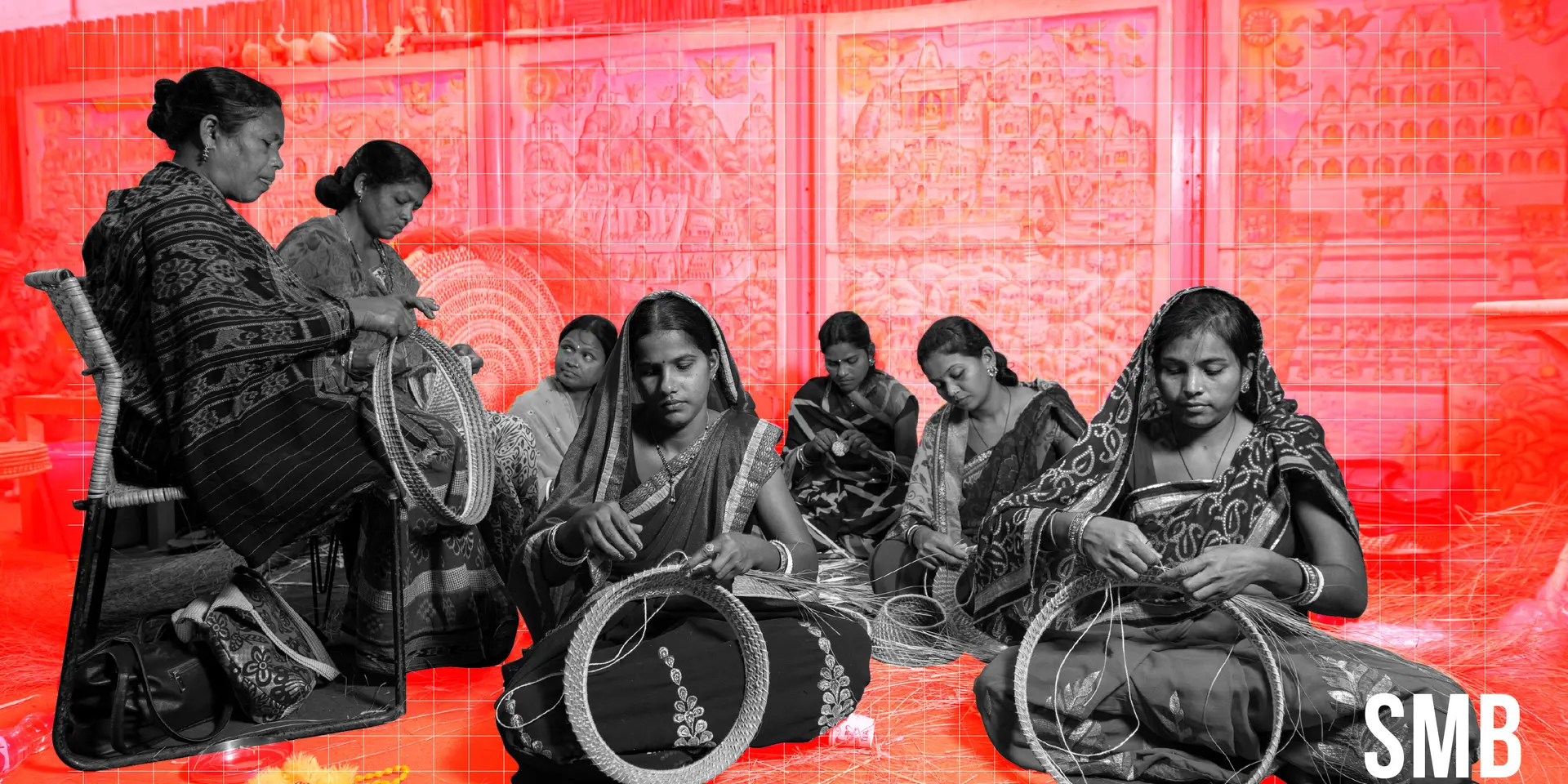

More than 24,000 women-led MSMEs (Micro, Medium, and Small Enterprises) shut down between July 2020 and November 2025. That’s an employment loss of 1,61,580 jobs across the country.
Answering questions raised during the Parliament Winter Session, Shobha Karandlaje, Minister of State for MSMEs, said, more than 2.86 crore women-led MSMEs were registered between July 2020 and November 2025.
The minister presented detailed data in the Lok Sabha on Thursday in response to an unstarred question on the status of women in the MSME ecosystem.
The Udyam Registration Portal and Udyam Assist Platform, which came into effect in July 2020, has become the government’s primary source of verified MSME information.
According to Annexure-II of the report, states such as Maharashtra, Tamil Nadu, Karnataka, Andhra Pradesh, West Bengal, and Uttar Pradesh account for the highest number of women-led MSMEs.
Maharashtra comprises over 33.5 lakh women-led MSMEs, followed by West Bengal at 28.47 lakh, and Tamil Nadu at 25.5 lakh. Closely following is Karnataka at 20.5 lakh, and Andhra Pradesh at 20.1 lakh.
However, these states also feature prominently in the shutdown list.
Maharashtra reported the highest closures at 6,086 women-owned MSMEs, followed by Tamil Nadu (3,916), Gujarat (1,856), and Karnataka (1,497).
The Ministry clarified that de-registration does not necessarily indicate business failure. Enterprises may exit the portal due to ownership changes, duplicate entries, in cases where a certificate is no longer required, or actual shutdowns.
The Minister ensured that the government has undertaken several initiatives to increase women’s participation in MSMEs, including special drives for registering women-owned MSMEs on Udyam Registration and Udyam Assist Portals.
Further, to support women entrepreneurs, the government has rolled out targeted interventions over the last few years. The Public Procurement Policy now mandates that 3% of all annual purchases by central public sector enterprises must come from women-owned micro and small enterprises.
Under the Credit Guarantee Scheme, women-led units receive up to 90% guarantee coverage, against 75% for others, as well as a 10% concession in guarantee fees.
Women entrepreneurs are also receiving preferential support under schemes such as the Prime Minister’s Employment Generation Programme, where they constitute 39% of total beneficiaries, and the Skill Upgradation and Mahila Coir Yojana, which focuses on training women artisans.
Trade fair participation for women is subsidised at 100% compared to the 80% support available to others. Newer initiatives, like PM Vishwakarma and the Yashasvini awareness campaign, are designed to build skills, visibility, and institutional support for women in traditional trades.
Edited by Suman Singh