



This producer is championing women-led ecological storytelling, one film at a time
Roundglass Sustain is empowering women filmmakers to tell stories about India's hidden natural worlds and the communities that sustain them.



Kolkata-born Ashwika Kapur is a passionate wildlife filmmaker and the director of the BBC Natural History Unit, Bristol. She directed 'Catapults to Cameras' (2024) on children's participation in illegal wildlife hunting festivals in the forests of West Bengal. The film was awarded the Best Inspirational Film at the New York International Festival.
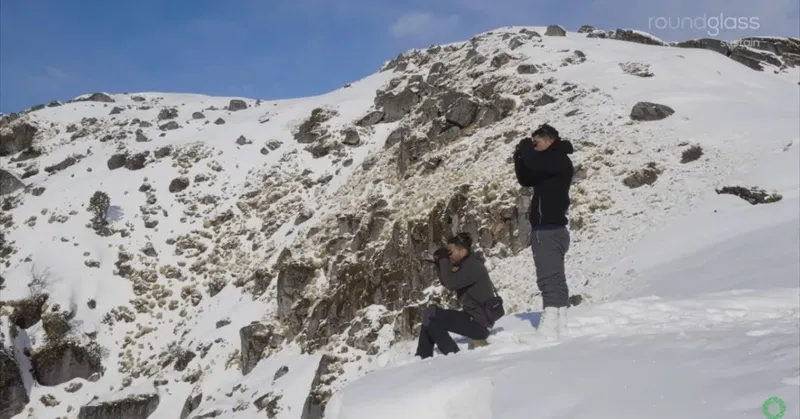
A still from Neha Dixit's In Search of Kasturi. Credits- Roundglass Sustain
Kapur recalls the support she received from Roundglass Sustain Films. "The most valuable aspect of working with Roundglass Sustain has been its commitment to preserving creative freedom. As a filmmaker with a distinctive voice, I deeply appreciate their approach, which prioritises authentic, responsible storytelling without imposing formulaic constraints on style, format, or duration," she tells SocialStory.
She explains how Roundglass Sustain has helped her learn more about India's natural biodiversity. "Through Roundglass Sustain, I've vastly expanded my knowledge of Indian wildlife. They've become the go-to resource for India's natural heritage, from iconic species to lesser-known creatures. For a natural history storyteller like me, it's a treasure trove at my fingertips."
Roundglass Sustain was founded in 2019 by Seattle-based entrepreneur and philanthropist Gurpreet "Sunny" Singh. It is a partner organisation of Roundglass Living, a global promoter of individual wellbeing.
Roundglass Sustain enables storytelling on India's natural wildlife. Additionally, it also provides a platform to female storytellers. Over the last six years, it has produced over 600 pieces of video content, out of which more than 200 have been spearheaded by women.
Beginnings and early work
Samreen Farooqui, filmmaker, producer and creative head of video at Roundglass Sustain Films, explains the collective's purpose. "The organisation tells stories of India's natural world. We talk about ecosystems, we talk about species, and we strongly believe in talking about communities that share space with the natural world. Our entire mandate is to get people to interact with the natural world."
Roundglass Sustain Films collaborates with various filmmakers from around the country. This includes film production and funding, as well as providing them with a platform and mentoring directors.
The production house releases the films on its website. The team also does extensive marketing to promote the films. They conduct offline screenings across the country in multiple languages. "What we are trying to do is create an Indian vocabulary or a cinematic language to talk about India's natural world. So it only makes sense that the films are seen by the people they talk about," says Farooqui.
The organisation tries to champion stories and communities that are often overlooked. Instead of focusing on megafauna, it places emphasis on little-known habitats, ecosystems and species. Additionally, the focus is on local filmmakers.
Roundglass Sustain also uses a multimedia approach to talk about the natural world. It also creates photo stories, infographics, written essays, and cartoons.
When asked about the organisation's choice to focus on women filmmakers, she explains, "There is also a certain way we tell stories. We do not want to sensationalise. Instead, we want to look beyond the obvious.
There is a certain characteristic that women bring in as storytellers which goes beyond the obvious. It is also a way of telling that doesn't reduce the plot to 'heroes' and 'villains'. I'm not talking about absolutes, but stories told by women do not sensationalise. Instead, it is a more organic way of storytelling."
The organisation's philosophy has had an impact on the craft of several filmmakers, including Ashwika Kapur and Neha Dixit.
Kapur, while directing a series about the Sundarbans, chose to focus on fiddler crabs and mudskippers instead of Sundarban tigers. Similarly, Dixit chose to focus her work on Munsyari's (Uttrakhand) women-led van panchayats.
Farooqui recounts, "When you see the film, you realise that it's about a community. The only hero is nature. It has a unique quality. In another film by Dixit, I had to keep reminding her to show her face to the camera because, as audiences, we had to see her face. But she kept telling me, 'No, you have to see my experience.'"
Impact and testimonies
In 2024, Roundglass Sustain's content reached 10 million people across digital platforms, showcasing more than 2,500 pieces of content covering over 350 species and over 90 habitats.
Neha Dixit, director of 'In Search of Kasturi' (2024) and 'A River in Trouble: The Fragile Gori Basin' (2024), testifies to the support provided by Roundglass Sustain.
"Filmmaking is tough, but Sustain made it easier. They backed us not only financially but also creatively. Having Samreen, an experienced filmmaker herself, as executive producer meant we always had someone who truly understood the craft. Getting films out there is daunting, but RG Sustain made it happen—film festivals, competition sections, school discussions—things filmmakers can't do alone."
"Sustain fills a huge gap in accessible, engaging biodiversity stories. It’s empowering to be part of something that inspires more environmental storytelling in India," she explains.
Roundglass Sustain's impact does not end here. Kapur's 'Catapults to Cameras', for example, encouraged local children who previously participated in hunting games to pick up cameras and discover wildlife. Some children have even managed to convince their families to stop hunting local species.
Similarly, Roundglass Sustain's collaboration with Rodingliana Apeto, a tribal filmmaker from Dampa, Mizoram, on unsustainable frog harvesting has traversed the screen. The organisation now works with the filmmaker to raise awareness about the need to preserve this rare frog species.
Challenges
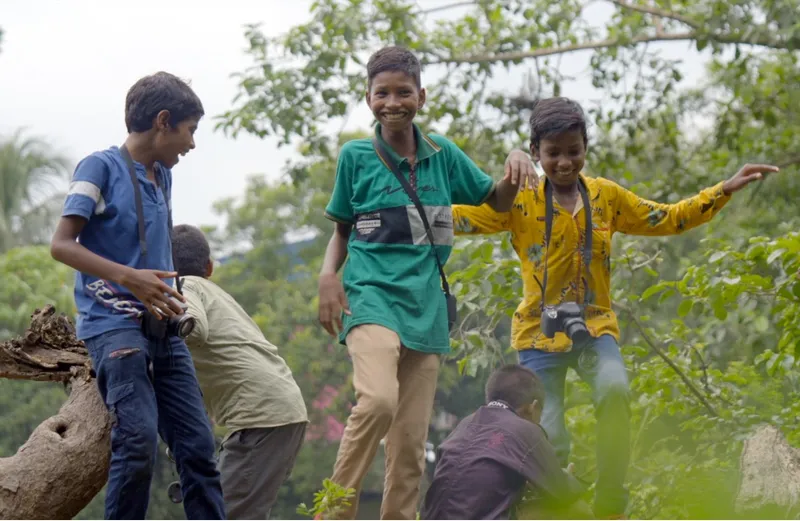
A still from Catapults to Cameras by Ashwika Kapur
Credits- Roundglass Sustain
"Communities know how to keep the balance of their natural world. They are extremely responsible. Through means of sacred forests and other socio-religious practices, they strike a balance with nature. Preservation is inbuilt because they connect with nature in a way we cannot,” says Farooqui.
“However, with films like 'Catapults to Cameras', we realised that traditional practices, due to their popularity on social media, have completely gone awry. Many non-locals have joined the practice, making it unsustainable,” she adds, explaining that tribal communities are often romanticised, ans as a result, people are not able to fully understand their perspective and desires.
Moreover filmmakers have to work in risky terrain and unsuitable weather conditions. Spotting and filming rare species without disturbing them is also a challenge.
Way forward
For most women, Farooqui says, access to forests, large cameras and the agency to tell their own stories is relatively new. However, a handful of women have decided to tell stories of India's wildlife.
Roundglass Sustain too, is committed to championing stories told by women filmmakers. The team wants to continue to focus on ecosystems that fall off the radar and are not mainstream. It has many exciting films in the pipeline.
(The story has been updated to correct some typos.)
Edited by Kanishk Singh