



How Project Hifazat is tackling issues related to reproductive health in rural communities
Started by high school students, Project Hifazat endeavours to address the taboos surrounding reproductive health and empower women in rural communities.

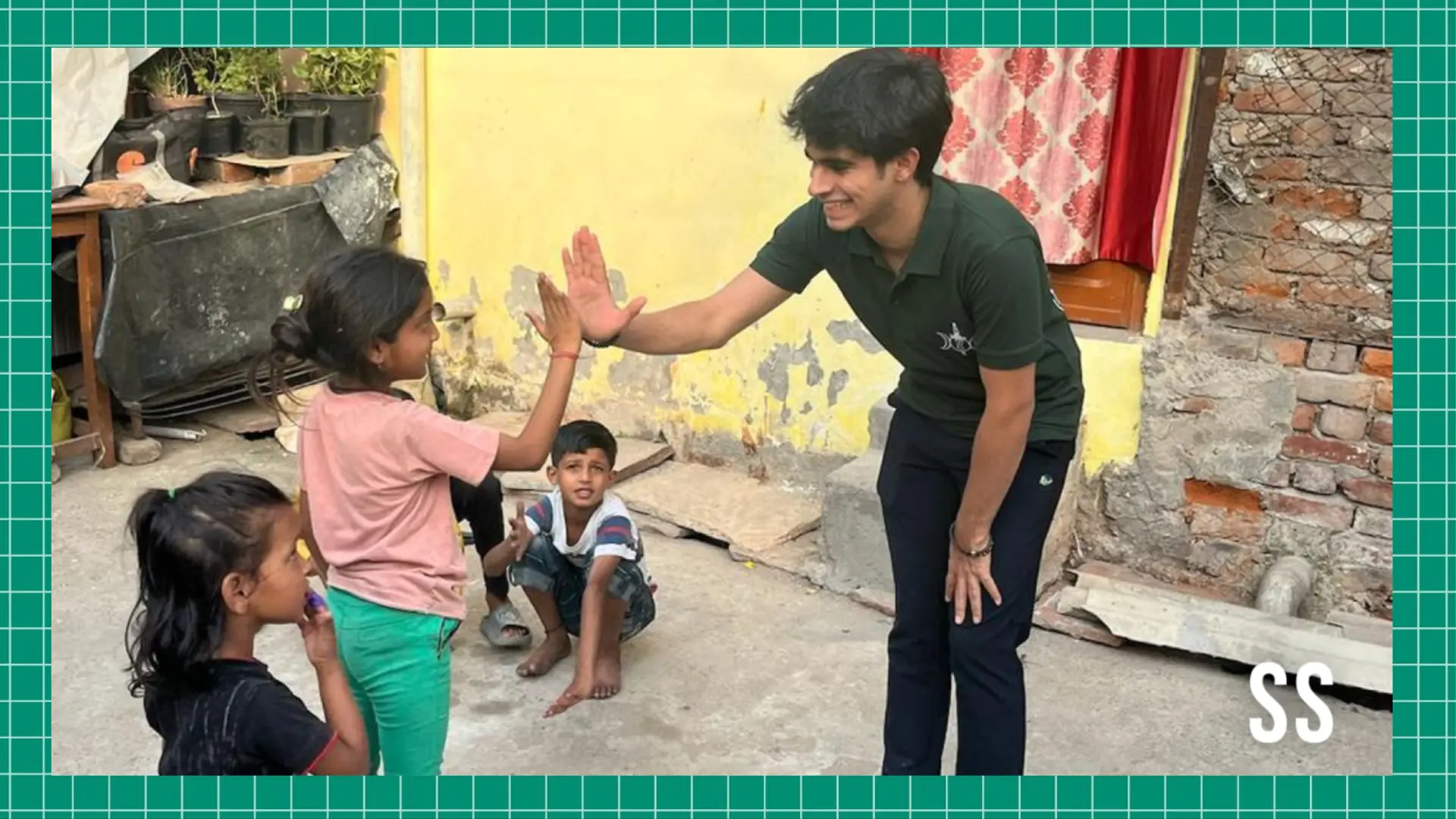

Three years ago, 12th-graders Tanish Arora and Anoushka V of Shiv Nadar School in Noida were scouting the internet for their school assignment. That’s when they came across news about the American government’s decision to strike down the Roe v. Wade decision, a landmark judgement to protect abortion rights.
The news caught their attention and prompted them to dig deep. As they undertook more research, they uncovered more facts and figures.
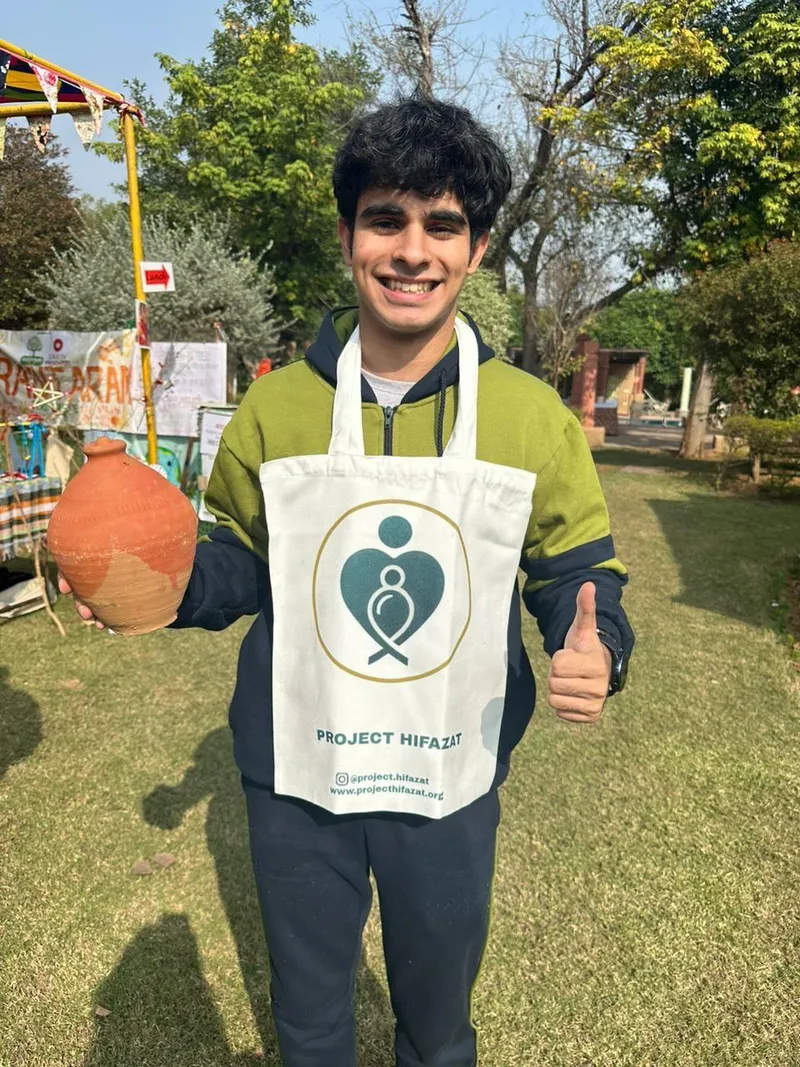
Tanish Arora, founder of Project Hifazat
According to a United Nations Population Fund report, 121 million unplanned pregnancies occurred each year between 2015 and 2019. One in seven unintended pregnancies globally occurred in India. Nearly 67% of all abortions conducted in India to terminate these pregnancies were unsafe and resulted in the death of over eight women every day.
The two students decided to bring to light these issues, leading to the genesis of Project Hifazat. The project envisions a world where all women are aware of their reproductive rights and have equal access to reproductive justice.
‘Hifazat’ means ‘safeguarding’, and this is what the founders want to do—safeguard the reproductive rights of rural women.
Anoushka explains, “We started out with a single thought in our head: the only way to solve a problem is to go to its root. We realised that abortions were a result of a long process of improper family planning. The lack of awareness surrounding reproductive health was also glaring. So, we decided that we would go to the root of the problem and tackle unintended pregnancies first.”
From coursework to collective action
The students began by understanding the stigma around women's health. During their visit to a health camp in Mangar, a village in Faridabad district of Haryana, they were shocked to learn about the taboos and misconceptions surrounding reproductive health, including menstrual hygiene, cervical cancer, and sexually transmitted diseases (STDs).
This visit broadened their understanding of ground realities, and they decided to focus on issues related to reproductive health, including unintended pregnancy and family planning. In November 2022, Arora and Anoushka, along with volunteers, hosted their first health camp in Mangar.
Project Hifazat conducts health camps focused on screening for cervical cancer and STDs in Mangar with the help of Dr Alka Gupta, a senior obstetrician-gynaecologist associated with Laksh Foundation Education Society. If the diagnosis is positive, patients are taken for an ablation treatment or are referred to a hospital nearby.
The team behind Project Hifazat also conducts awareness camps in rural areas around Mangar. It also conducts workshops in government and private schools across Delhi-NCR covering a variety of topics such as reproductive health, family planning, cervical cancer, STDs, and menstrual health.
In November 2023, Project Hifazat launched a bilingual chatbot named ‘Asha’ to provide easy access to information about reproductive health.
Shrejea Mallick, team lead and a Grade 11 student at Shiv Nadar School, Noida, explains that the chatbot was developed after the team realised how little their own school’s support staff knew about menstrual hygiene. The chatbot’s interface ensures complete anonymity so that users can ask questions without fear of judgement or embarrassment.
In June last year, the team rolled out a comprehensive guide on reproductive health, which is being used in 350 schools across India through a partnership with telecom company Airtel. The guide helps teachers address questions on reproductive health and is used in awareness workshops.
Mihika, a Grade 11 student at Shiv Nadar School, Noida, and a team lead, elaborates, “The syllabus is made for middle schoolers and upper primary schoolers or for children between the ages of 8-14. We want to create youth who are empowered and more aware (of their reproductive rights).”
In November last year, Project Hifazat was officially registered as an NGO.
Impact and recognition
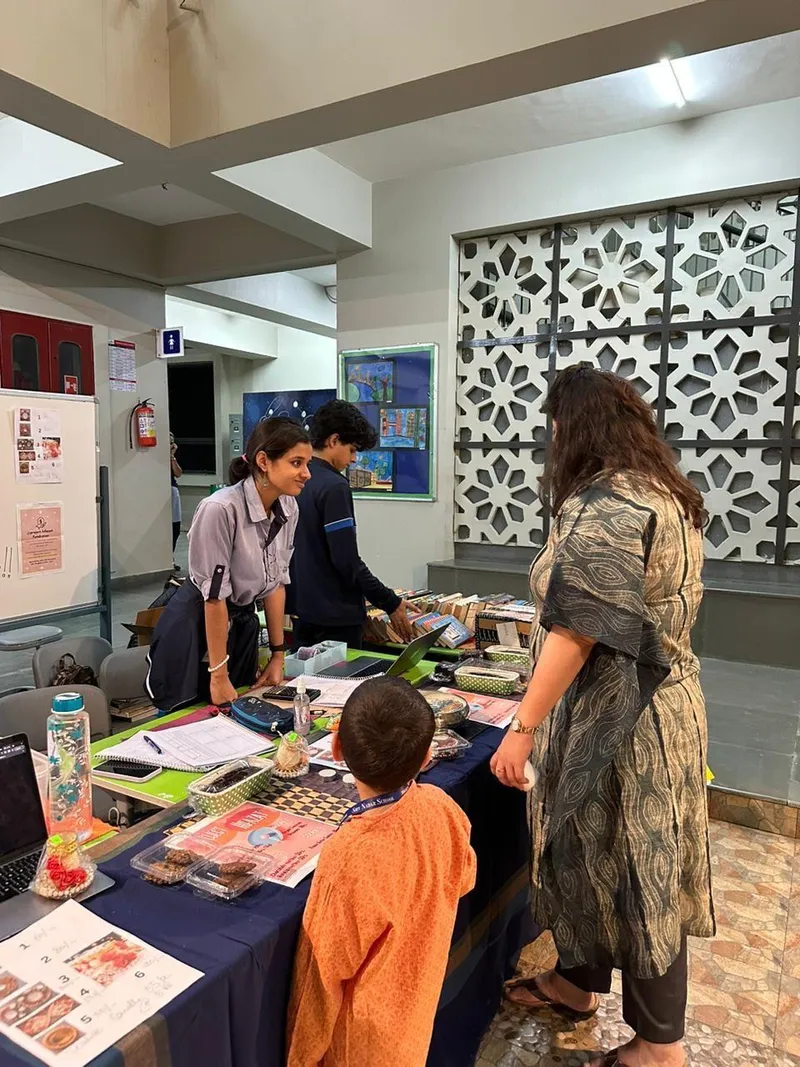
The founders, Anoushka and Tanish, at a camp organised by Project Hifazat
Since its inception, the project has conducted over 250 awareness workshops and 14 health camps. Over 3,500 people have been screened for reproductive diseases through these camps. Through pad donation drives and the reproductive health guide, the project has impacted almost one lakh students.
Dr Alka Gupta talks about how the project has helped alter perceptions around women’s health, “The word that comes up repeatedly is ‘empowerment’. These initiatives have transformed perceptions around female reproductive health by breaking taboos and encouraging open conversations among women in rural communities.”
Deepa, the teacher coordinator of Project Hifazat at Shiv Nadar School, Noida, says younger students have begun to take an interest in the project and many children have adopted a more positive attitude towards menstrual and reproductive health.
Commenting on the impact created by Project Hifazat, 28-year-old Anshika Gupta* says, “Previously, discussing these topics was taboo in our society, but now that stigma has been broken. Women openly talk about cervical cancer and no longer shy away from checkups.
“Earlier, it was even difficult to discuss these issues with our husbands or get them to accompany us for checkups. Now, women go for their check-ups independently, and they don’t need reminders for follow-ups.
Twenty-one-year-old Radhika Kumar* agrees. She says, “The sessions made me—and other women—more confident in speaking openly about our health problems without feeling ashamed.”
In August 2023, the project won the Harvard Model United Nations Impact Initiative recognition for its efforts. In January 2024, it was awarded the Pramerica Spirit of Community Award. In the same year, it also won the Diamond Challenge award conducted by the University of Delaware and the IBO Global Youth Action Fund grant of $3000.
Challenges along the way
Success for Hifazat has not come without challenges.
Arora explains, “When we went to health camps initially, the common argument from the villagers was that we wouldn’t know anything about their problems because we were urban students. Many also asked me what I would know about female issues since I was a man. One major challenge is the misconception that reproductive health issues are linked only to women.”
The team decided to overcome these challenges by training local villagers to conduct workshops in the villages on their behalf.
Another critical challenge was the lack of importance given to reproductive health by rural communities. Most women were content using cheaper alternatives to pads during their periods.
Many women were also skeptical about discussing menstrual and reproductive health. They would shy away from the camps organised by Project Hifazat. To draw their attention, the team had to advertise the camps as cervical cancer screenings.
Going forward
Going forward, the team is looking to expand its operations to regions beyond Delhi-NCR and impact even more people in the coming years.
Deepa, the teacher coordinator of Project Hifazat, says, “We do not want the impact to end when the founders graduate. It’s not always a tangible, goal-based project, but we want to bring sustainable change to a community.”
*Name changed for anonymity
(The story has been updated to the include the full name of Laksh Foundation Education Society.)
Edited by Swetha Kannan