


SwaTaleem Foundation: Giving wings to girls' dreams in rural India
Founded in 2018 by Ananya Tiwari and Vaibhav Kumar, SwaTaleem Foundation is helping adolescent girls from marginalised communities not only stay in school but also imagine a life filled with choices and opportunities.

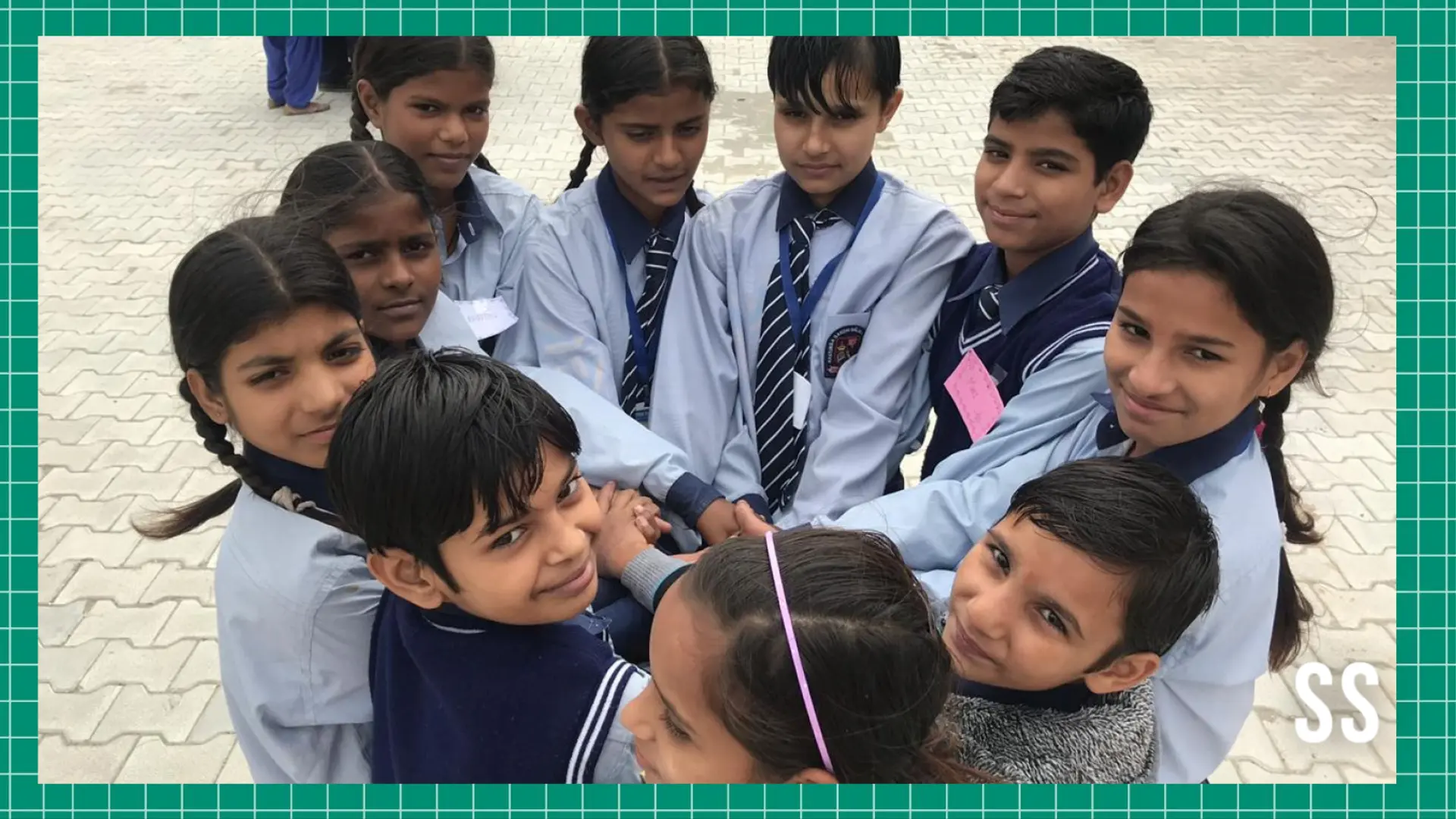

In rural India, where opportunities for girls are often limited by social norms and economic barriers, SwaTaleem Foundation is quietly scripting a story of change.
Founded in 2018 by Ananya Tiwari and Vaibhav Kumar, SwaTaleem Foundation is working to ensure that adolescent girls from marginalised communities not only stay in school but also imagine a life filled with choices and opportunities.
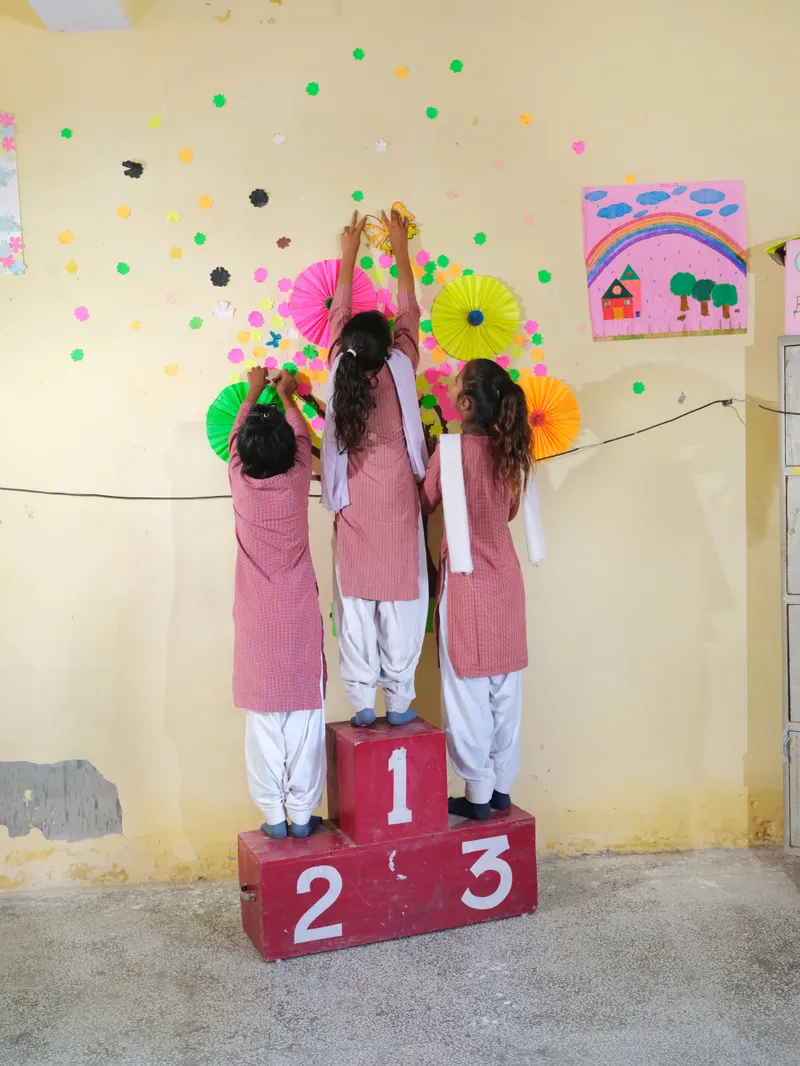
Students joyfully decorate their classrooms in preparation for a special school shoot or other school events.
The idea for SwaTaleem—meaning "owning your education"—took shape during Ananya and Vaibhav’s time as volunteers at IIT Kanpur’s Prayas Initiative.
“We were drawn to the idea of working with communities where systemic support is minimal and the need is greatest,” says Vaibhav, Co-founder at SwaTaleem Foundation.
Their experiences in teaching marginalised children strengthened their resolve to work for education equity. Drawing from Ananya’s earlier work with Kasturba Gandhi Balika Vidyalayas (KGBVs) in Bihar, they decided to set up SwaTaleem. KGBV is a government initiative launched in 2004 to provide quality education to girls from marginalised communities in rural India. It establishes residential schools for girls from disadvantaged groups, aiming to improve female literacy, reduce dropout rates, and promote gender equality in education.
“We wanted a name that captured the spirit of self-ownership. That’s how we landed on ‘SwaTaleem’—a blend of Sanskrit and Arabic, meaning ‘owning your education’,” adds Ananya Tiwari, co-founder at SwaTaleem Foundation.
Early struggles
Starting operations in Mewat, a district marked by poverty, gender disparity, and educational backwardness, posed several challenges. Fundraising was another steep learning curve.
SwaTaleem Foundation chose to work with KGBVs because they are located in educationally backward blocks where the need for intervention is the greatest. These schools target girls from disadvantaged groups, including Scheduled Castes (SC), Scheduled Tribes (ST), Other Backward Classes (OBC), and Below Poverty Line (BPL) families.
With low levels of female literacy, high gender gaps, and persistent social barriers like early marriage, poor health, and high school dropouts, the educational landscape in these areas remains challenging.
To address these layered issues, SwaTaleem’s programmes are built around the philosophy of the Three E’s—Enable Teachers, Engage Community, and Empower Girls. They enable teachers through intensive workshops, monthly sessions, and weekly field support.
In 2020, just two years into their work, the COVID-19 pandemic disrupted education across India. Most girls in the programme lacked smartphones or internet access, posing a serious risk of learning loss. To tackle this, the team pivoted quickly to design an Interactive Voice Response System (IVRS) that allowed learning content to be delivered through basic mobile phones.
“The IVRS calls are a medium for students to learn. Through these calls, students, including me, get to learn a lot. Because of this, our parents also stay connected with us, ask us questions, and inquire about what new things we have learned in school!” Abdul Gaffar a Principal from Tauru, a town in Haryana.
During 2024-25, the IVRS system made over 2,50,000 calls to girls and their parents, ensuring that education continued even in the toughest of circumstances."
Saheli Ki Udaan: Building strong foundations
At the heart of SwaTaleem’s work lies its flagship programme, Saheli Ki Udaan, which focuses on strengthening foundational learning, critical skills, and English literacy for adolescent girls.
Covering 5000 Girls and 28,000 Girls in KGBVs of Haryana and Karnataka respectively, SwaTaleem Foundation collaborates closely with these state government, school administration, and families to ensure impactful learning outcomes.The programme engages teachers, wardens, local community leaders, parents, and government officials to create a comprehensive support system. According to impact assessments conducted over the last academic year, the programme led to significant improvements in girls’ abilities to read, write, and comprehend English.
Speaking about the philosophy behind the programme, Ashly Gopalkrishnan, Communication Lead at SwaTaleem Foundation said, “We don’t just aim for academic learning. We aim for girls to feel confident, resilient, and equipped to lead their lives on their own terms.”
Bridging the digital divide with Tab Labs
Understanding that digital literacy would be crucial for the future, SwaTaleem introduced Digital Tab Labs across all 33 KGBVs in Haryana in 2023. Each school was equipped with 15 tablets, providing structured access to educational resources both during and after school hours.
Over the past year, 580 Tab Lab sessions were conducted, giving girls a new kind of exposure to learning. The tablets allowed students to practice reading, explore new subjects, and complete bridge courses, which otherwise would have been impossible for many.
Career dreams: Kal Ki Kirne
While working with KGBVs, SwaTaleem realised that even girls who completed Grade 12 often dropped out without pursuing higher education. To address this, they launched Kal Ki Kirne, a career awareness programme. During career sessions, girls learned about universities, scholarships, and courses that were previously beyond their imagination.
Muskan Kalsan, a 12th-grade student, is one of the beneficiaries of SwaTaleem.
With her mother selling vegetables to make ends meet, Muskan had limited exposure to higher education opportunities. It was during a career session under the Kal Ki Kirne programme that she first heard about the undergraduate programme at Azim Premji University.
Encouraged by the SwaTaleem team, she applied and secured admission. Reflecting on her journey, Muskan shares, “The tablet lab introduced by SwaTaleem was the major reason why I could attend the APU bridge course regularly. Otherwise, I would not have been able to do it.”
Saloni Panjeta, another student from KGBV Phullia Khurd in Jind district, found her path through SwaTaleem’s consistent support. Having lost her father at a young age, Saloni faced personal and financial hurdles. However, with access to digital learning through the Tab Labs and participation in career guidance sessions, she too secured a place at Azim Premji University.
“I use the tablets regularly in the hostel to learn new subjects. I love discovering new topics. Now, I’m learning something that is a life-changing experience, but I see this APU learning as just another new subject—one that, with the support of the SwaTaleem team, will also be interesting,” Saloni says.
Both Muskan and Saloni were given full scholarships by Azim Premji University. Their journeys highlight the transformative impact that consistent support, access to technology, and exposure to career opportunities can have on young girls from marginalized backgrounds.
The road ahead
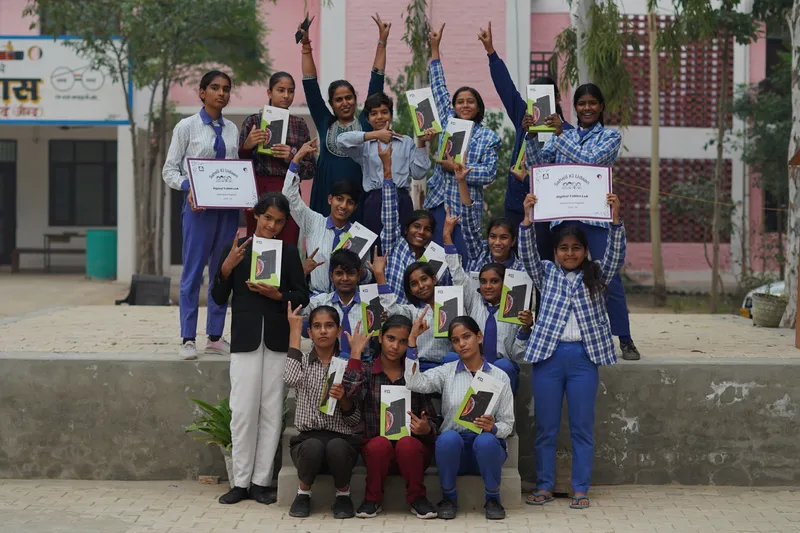
Girls receiving tablets for their schools, an important milestone in enhancing access to technology and education.
Over five years, SwaTaleem has made a measurable difference. The organisation has directly impacted over 33,000 girls across Haryana and Karnataka and reached more than 280,000 family members through its programmes and awareness campaigns. Currently SwaTaleem operates in 10 districts in Haryana and 33 districts in Karnataka.
“Once you start working with such a huge population, it's not easy to move to another system. We can't solve all the problems. We will see the facets of the same problem and new problems. This requires you to stay with the community and population we are serving for a longer period of time,” says co-ounder Ananya.
Looking ahead, SwaTaleem is in conversation with the Uttar Pradesh government to expand their programmes. "Its ambition is to reach more than one lakh girls in the next few years, scaling their impact while staying true to their core philosophy.
As Ananya reflects, one particular encounter left a deep imprint on her journey. “Just before starting SwaTaleem, I met a young girl during a field visit who introduced herself as Nirasha, which means hopelessness. Hearing her name broke my heart. It reminded me why this work is so crucial. No girl should ever feel that way about her life.”
Today, SwaTaleem Foundation stands as a testament to the power of grassroots innovation, community collaboration, and a steadfast belief that when given the right opportunities, every girl can rise.
(The story has been updated to include more information on impact.)
Edited by Affirunisa Kankudti