



How The Unifly Collective is transforming education through leadership and sports
Co-founded by Saumya Aggarwal and Subhankar Paul, The Unifly Collective is a non-profit organisation that aims to empower school leaders and students in under-resourced communities to reimagine learning.



Saumya Aggarwal and Subhankar Paul, two passionate educators driven by a shared vision to deliver transformative, meaningful, and holistic education across India, co-founded The Unifly Collective in Delhi. Originally started in 2018 as the Barefoot Edu Foundation, the non-profit organisation was rebranded as The Unifly Collective in 2024.
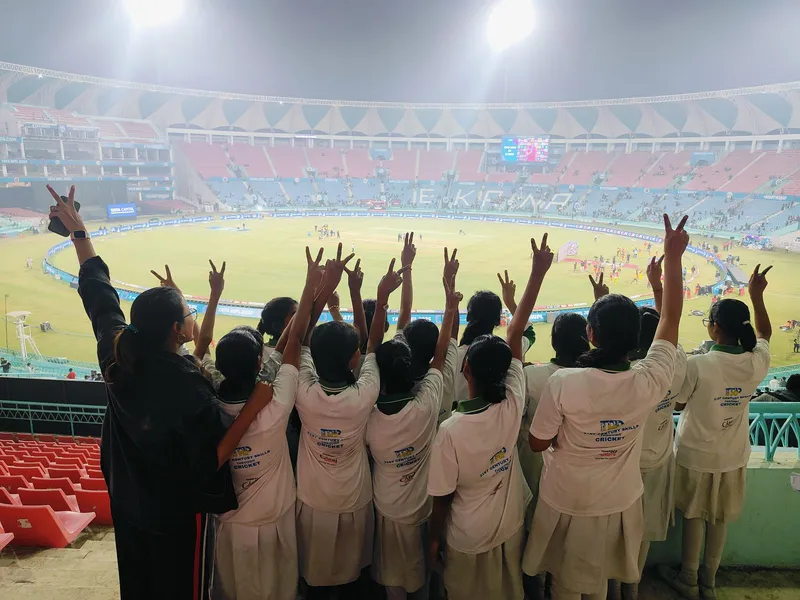
Students watching WPL for the first time
According to the founders, The Unifly Collective is committed to transforming schools into stimulating learning environments for under-resourced communities. It builds the leadership capacity of principals and students so that their voice, values, and goals shape education at the grassroots.
“We started with a simple belief—we wanted every child to receive a meaningful education, regardless of their circumstances,” the founders say.
Aggarwal and Paul did not begin as entrepreneurs. They had two separate organisations and met at an incubation. As they collaborated, COVID-19 forced them to rethink their interventions. “It was during this period that we realised our vision was the same. If we were open to working together toward that vision, why not merge our organisations? Our story is really about coming together,” they recall.
With a vision to help every child think, feel, dream, and drive meaningful change, The Unifly Collective has been actively working in Delhi, Mumbai, and Pune. The organisation currently has a team of 28 members.
Recently, it signed a memorandum of understanding (MoU) with the Uttar Pradesh government to expand its reach.
“My passion for education and social impact stems from witnessing the transformative power of inclusive learning environments. With a background in Engineering and significant experience at Teach For India and my organisation, I have seen first-hand how effective leadership and innovative practices can uplift communities. I am driven by the belief that every child deserves access to quality education, regardless of their background,” Paul tells SocialStory.
Two-pronged approach to education
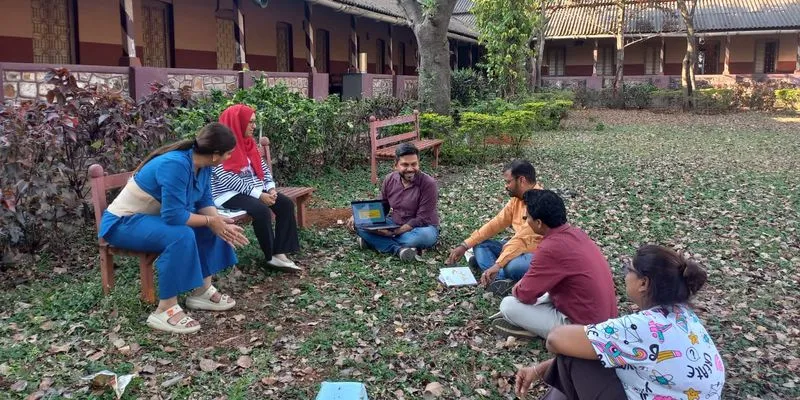
Leaders learning about the making of the student council
The Unifly Collective drives change by focusing on two areas—school leadership and student leadership.
It collaborates with affordable private schools (charging less than ₹2,000 per month) and government schools to foster holistic learning experiences for students.
So far, the NGO has reached over 1,50,000 schools through state partnerships, impacting over 10 million students and training over 130 school leaders directly.
Rehnuma: Incubating school leaders
Aggarwal, an Ashoka Fellow, recognised a crucial gap in school leadership. She saw that while many NGOs worked with students and teachers, very few focused on empowering principals.
A research by McKinsey & Company indicated that a school principal could have a 25% direct impact on student learning outcomes.
For Aggarwal, the inspiration for this initiative came from the time she was appointed as the principal of a school in a tribal forest living with the community. Her goal was to build a contextual curriculum that reflected their culture, language, and values, but language was a big hurdle.
“I believed that children should be taught in their native language. However, when the teachers and parents saw me–an English-speaking educator from the city–they wanted me to start teaching English. Since we were at loggerheads, I proposed a discussion with the community teachers to understand their perspective. Upon being asked why teachers want an English education in this agricultural community, they brought me a fertiliser bottle. They pointed out that the instructions were written in English! Since then, I have dedicated myself to this sector to ensure that schools are designed by the community they are meant to serve.”
This led to the launch of Rehnuma, a two-year incubator programme that equips principals of affordable private and government schools with leadership skills. The programme helps them think like CEOs, treating their schools as organisations and enabling them to make data-driven decisions, enhance public speaking, and secure funding for their schools.
Launched in Mumbai in 2021, Rehnuma later expanded to Delhi and collaborated with the Municipal Corporation of Greater Mumbai (MCGM) two years ago. It continues to grow, fostering a strong network of school leaders.
The Right Pitch: Learning life skills through cricket
The second core programme, The Right Pitch (TRP), was Co-founded by Paul, who previously worked as an assistant school leader with Teach For India. His experience revealed that students were more engaged in school when they had an activity to look forward to—cricket. Seeing an increase in attendance and attention spans, he realised that cricket could be a vehicle for teaching life skills like teamwork, collaboration, and confidence.
TRP integrates structured life skills coaching into cricket training, dedicating 20 minutes per session to discussions on confidence-building, responsibility, and decision-making. The programme began in Mumbai and recently expanded to Pune, with an MoU signed to implement it in 100 schools across Uttar Pradesh.
Operating in underserved communities, TRP runs within slums, focusing on schools without playgrounds. Local coaches, drawn from these communities, train students, and an annual tournament provides participants with opportunities to showcase their skills.
Sharing the experience, a Grade 9 TRP student says, “Before TRP coaching, we knew nothing about cricket, but our coach taught us everything. Most importantly, my coach taught me not to fear anything. Earlier, I was scared and used to cry, but now, even if I fall, I get back up. My favourite part of cricket is bowling, and I’ve learned a lot—not just about the game but also about good habits, friendship, and responsibility.”
Junoon: Fostering student leadership through arts
Another initiative, Junoon, is a national platform that develops student leadership through artistic expression. Now in its fourth edition, Junoon encourages students to create projects that enhance their creativity and critical thinking.
In the recent editions, students learned to produce podcasts and magazines through dedicated workshops, further equipping them with latest skills.
Challenges and future plans
One of the biggest challenges faced by The Unifly Collective is customising its programmes to align with government structures and policies. Despite this, it continues to innovate and expand, with a long-term vision of establishing its own schools.
The dream is to build ACE Schools—institutions excelling in Academics, Co-Curricular Activities, and Edupreneurship. By collaborating with MCGM (Municipal Coorperation of Greater Mumbai), The Unifly Collective is currently building two ACE schools and aims to establish at least five more schools in the near future. These schools will integrate the best practices from Rehnuma and TRP, ensuring leadership-driven learning combined with sports and the arts.
With ACE Schools, it aims to create a sustainable model of education that can be replicated across the country, setting new benchmarks in holistic learning.
“Over the past seven years, we have built a movement of leaders who create meaningful education for the 21st century and lead ACE schools. We achieve this through our two verticals—student leadership (TRP) and school leadership (Rehnuma),” says Sanskriti Bhatia, the organisation’s fundraising lead.
Impacting lives, one school at a time
With a growing presence in multiple states and a commitment to nurturing leaders at every level, The Unifly Collective is trying to revolutionise education for the underserved communities. The NGO’s work empowers both students and educators, ensuring that schools become hubs of holistic learning, where leadership, sports, and creativity play as much of a role as traditional academics.
The organisation sustains itself financially through different sources of funding, with 70% of funding coming through corporate social responsibility (CSR) initiatives. It also receives financial support from individuals (both crowdfunding and through high-net-worth individuals), family foundations, and grants.
Sarita Nair, Principal of Chetan Dattaji Gaikwad English Medium School, Pune, encapsulates the spirit of the movement. “Rehnuma is not just a programme; it is a community of passionate individuals leading to personal and professional growth. It expands your horizons and empowers you to reach new heights,” she says.
With ACE Schools on the horizon, it aims to redefine schooling for the 21st century, ensuring that every child, regardless of background, has access to meaningful and transformative education.
(The story has been updated to correct a typo.)
Edited by Megha Reddy