



How technology is redefining accessibility for people with disabilities
If we are to bridge the gap between aspiration and action, accessibility must be seen not as an add-on, but as a non-negotiable feature of everything we build.

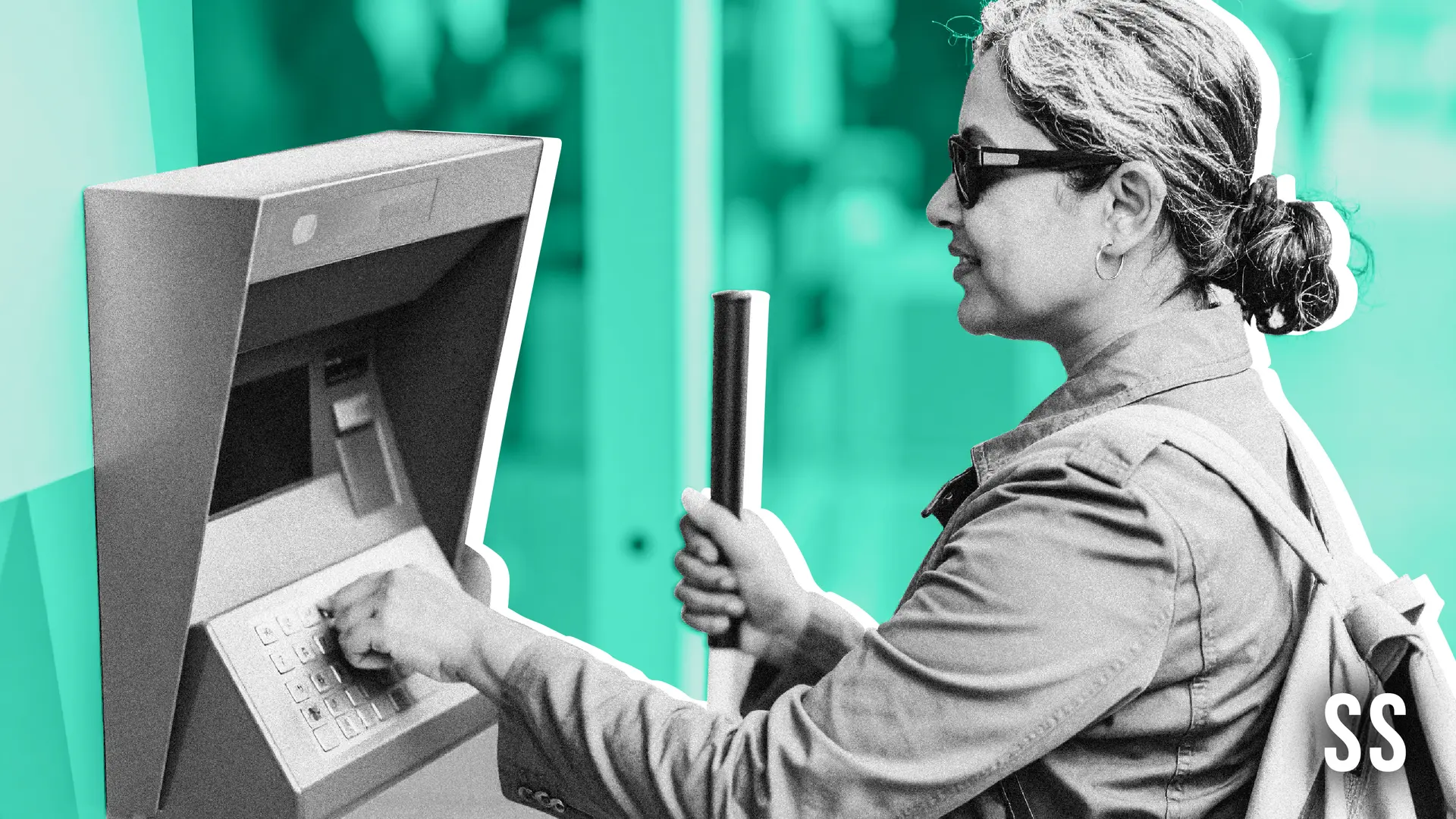

In the early 2000s, disability rights advocate Rajive Raturi filed a Public Interest Litigation (PIL) in the Supreme Court of India, calling attention to the exclusion of persons with disabilities from public transport and infrastructure. His efforts contributed to a 2017 Supreme Court directive urging states to report on their accessibility compliance. But when the states failed to respond, the Court turned to the disability sector for guidance.
This led to the submission of Finding Sizes for All: A Report on the Status of the Right to Accessibility in India by the Centre for Disability Studies at NALSAR University in 2024. The report which was created after consultations with 50+ organisations working in the disability sector, offered one of the most comprehensive assessments of accessibility across India’s infrastructure, legal frameworks, and institutional practices.
Drawing from this report, the Supreme Court issued a landmark judgment in November 2024 directing the central government to notify mandatory accessibility standards. This directive has since laid the foundation for a nationwide audit of public spaces under the Sugamya Bharat Abhiyan (Accessible India Campaign), with technology emerging as a critical enabler in driving this transformation.
Technology as an enabler, not a silver bullet
Carrying out an accessibility audit across thousands of public spaces is no small task. To make this possible, the government and disability rights organisations have jointly embraced a new approach, using digital tools powered by AI and computer vision to crowdsource data from citizens, NGOs, and community volunteers.
This technology allow individuals without formal training to identify common barriers, such as steep entrances, missing tactile paths, or the absence of signage, and submit reports in real time.
The data is then aggregated to help planners and policymakers prioritise interventions. By embedding accessibility expertise into simple, user-friendly interfaces, these tools transform inclusion from a niche concern into a shared civic responsibility.
Learning from global practices
India’s approach mirrors a growing global trend of tech-enabled accessibility. In the United States, platforms like AccessNow allow users to rate and map the accessibility of public spaces. In Europe, Wheelmap combines GPS and user feedback to help wheelchair users navigate urban environments more confidently. Australia’s Smart Transport Systems, backed by its National Disability Strategy, use real-time data and accessible kiosks to improve mobility for people with disabilities.
What unites these efforts is not the technology itself, but the emphasis on public participation, institutional accountability, and co-design with people with disabilities. India’s model is beginning to reflect that same ethos.
Challenges and the way forward
Despite these advances, accessibility in India remains a deeply uneven landscape. A 2023 draft report by the Comptroller and Auditor General (CAG) revealed that pre-accessibility audits were conducted in only 20% of central government buildings before retrofitting. Even more concerning, no post-audit was conducted in 60 of 170 old buildings and 23 of 27 new buildings that had already been declared accessible. Across public institutions and hospitals, even basic features such as handrails, tactile flooring, and accessible washrooms are still missing in many locations.
Digital accessibility and access to technology is the other big challenge.In February 2024, more than 150 establishments, including central ministries, were fined by the Office of the Chief Commissioner for Persons with Disabilities (CCPD) for failing to meet digital accessibility standards.
These are not isolated lapses. They reflect the ongoing need for systemic accountability, design reform, and shared ownership of accessibility outcomes. If we are to bridge the gap between aspiration and action, accessibility must be seen not as an add-on, but as a non-negotiable feature of everything we build. Technology can be the bridge — but only if everyone, across sectors, walks on it together.
(Jacob Kurian is the former COO of Titan and the Honorary Secretary of the Association of People with Disability.)
(Disclaimer: The views and opinions expressed in this article are those of the author and do not necessarily reflect the views of YourStory.)