



How The Apprentice Project is reimagining education for India’s underserved
From in-school art classes to an AI-powered chatbot delivering coding and financial literacy via WhatsApp, The Apprentice Project (TAP) is building a future where choice, creativity, and confidence belong to every child—regardless of their background.

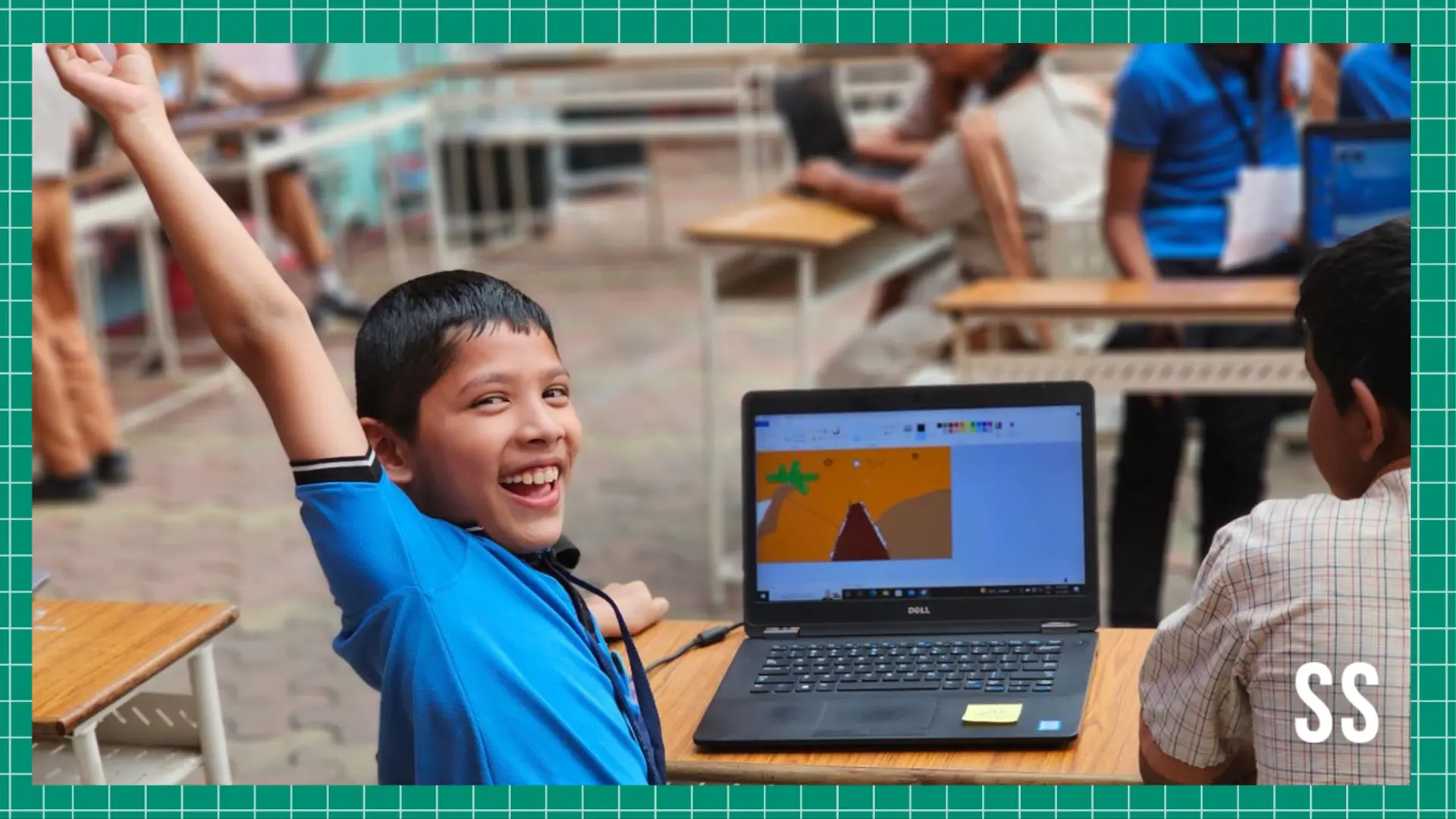

In 2021, a message popped up on WhatsApp amidst pandemic-induced school closures and a rapidly widening learning gap. It wasn’t a forward, meme, or school notification.
It was TAP Buddy — an AI-powered chatbot asking a child in a remote Indian town if they wanted to animate a video, learn to code, or explore the basics of financial literacy. With it, it brought learning—personalised, playful, and purposeful—straight to the palm of their hand.
This was TAP 2.0, a bold education reimagining by The Apprentice Project, started with a few classrooms in Pune and a vision to equip students from low-income communities with 21st-century skills. For Monica Pesswani, Co-founder and Director, this was never just about technology.
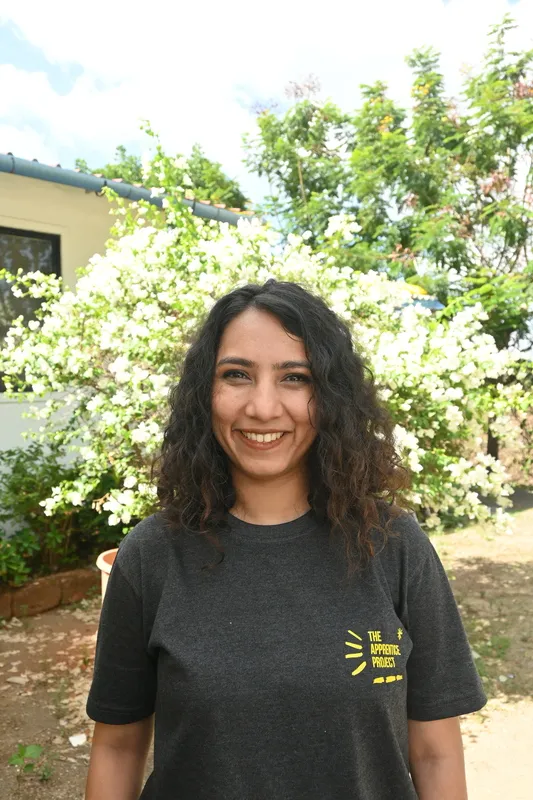
Monica Pesswani, co-founder and Director, The Apprentice Project
“The Apprentice Project was born from a shared fire—a refusal to accept that children from low-income communities should be denied the socio-emotional skills, real-world readiness, opportunities, and exposure often reserved for the privileged few,” she emphasises.
Where it all began
Founded in 2016 by Anand Gopakumar and Prashant Kumar—alumni of Teach For India, with Pesswani also bringing experience from Harvard University—TAP began by embedding itself in public schools in Pune and Mumbai. Their in-school model focused on electives like STEM, performing arts, and life skills. But early on, the team realised that the biggest engagement booster wasn’t content—it was a choice.
“Our first pilot made something abundantly clear: the power of choice, combined with the joy of learning, creates magic,” Pesswani reflects. “When children are trusted to lead their learning journeys—when they are given tools instead of limits—they don’t just participate. They transform.”
Like most education initiatives, TAP’s model was upended by COVID-19. But instead of shutting down, the team pivoted. In Pesswani’s words, “The pandemic didn’t just change how we work—it fundamentally transformed who we are. If I had to put it simply: COVID was our CTO.”
From scratch, the team designed a chatbot—TAP Buddy—that could run on WhatsApp, the country’s most widely used app. It was data-light, multilingual, and capable of guiding students through STEM, visual and performing arts, financial literacy, and coding. Lessons were delivered through YouTube videos, gamified quizzes, and creative challenges.
“We didn’t have the luxury of waiting for perfect infrastructure. We had to meet students where they were in their hands,” she says. “More than anything, the pandemic taught us three lessons: Children can be self-driven learners. Technology must be inclusive. And great education doesn’t have to wait for perfect conditions.”
Not just a product - a philosophy
Through TAP Buddy, children can choose one elective and progress through lessons that adapt to their pace. They submit voice notes, photos, and videos as evidence of learning, which are then assessed using structured rubrics based on the UNICEF Life Skills Framework and the UK’s Skills Builder Framework. In a breakthrough for India’s education sector, TAP also piloted an image-recognition tool that gives automated, personalised feedback on student submissions.
“We’ve been working on solving the assessment problem for years,” Pesswani says. “Now, for the first time, we can assess creativity and problem-solving at scale—not through multiple-choice questions, but by analysing what students build.”
For students like Naaz from Ideal Radiant School in Delhi, the shift has been personal. “Learning financial literacy was new for me,” he says. “It taught me about savings—how I can save and later use it in my life.”
Muskan, a student of SKV Malviya Nagar, a DoE (Delhi Directorate of Education) school in Delhi, used TAP Buddy’s coding module to build a calculator. “I thought of creating this calculator for the students who are studying in primary grades,” she explains. “Sometimes the normal calculator feels confusing because it has too many functions. So I created a simple one, thinking like a student.”
Her motivation goes beyond the classroom: “Creativity and confidence are two skills I’ve learned from TAP Buddy. I want to use these skills—and coding—to solve social issues I see in my community and my country.”
In the 2023–24 cohort, students engaging consistently with TAP’s coding program showed a 66% improvement in creativity and 81% in problem-solving. “These aren’t abstract numbers,” Pesswani insists. “They reflect real projects, real effort, and real growth.”
Scaling, but not just for scale’s sake
From 800 students in five Pune schools in 2016, TAP has reached over 72,000 students in 462 schools across Maharashtra, Uttar Pradesh, Punjab, and Delhi. But scale is not the only metric the team is focusing on.
“We’ve been intentional about striking the delicate balance between depth and scale,” Pesswani explains. “It’s never been about reach alone. We want to ensure every student, no matter where they are, is not just accessing content, but building real confidence, creativity, and 21st-century skills.”
With state partnerships now active in four states, and a target of 250,000 students by 2026, TAP’s vision extends to embedding its models directly into public education systems.
For TAP, the hardest challenge has been to bring about an ideological shift. “The biggest challenge we’ve faced isn’t technology or infrastructure—it’s mindset,” Pesswani says. Teachers and principals, long accustomed to rote learning, often dismissed coding or animation as hobbies. Families, many with only one smartphone and limited digital literacy, needed convincing that a chatbot could be a gateway to real learning.
“It took time,” Pesswani admits. “But when students began building apps, designing science models, and performing monologues, the perception began to shift. We weren’t just talking about life skills anymore—we were demonstrating what children could do when trusted.”
Building for the future
TAP’s roadmap is rooted in personalisation, relevance, and career awareness. They are introducing AI literacy and digital ethics into the curriculum, piloting new learning platforms, and focusing on connecting students’ skills to real-world opportunities.
“We don’t expand based on a fixed curriculum—we build based on what students need to lead their own learning journeys,” Pesswani says. “Our litmus test for any new feature remains the same: Does it make students more confident, creative, and future-ready?”
With over 75% of Indians now owning smartphones, but only a fraction accessing quality digital education, TAP sees its role not as a stopgap but as a systemic shift. “We envision TAP becoming part of the DNA of India’s public education system—not as a parallel initiative, but as something state departments proudly call their own.”
A vision rooted in equity, powered by empathy
Pesswani often speaks of seeing pieces of her younger self in the students TAP works with, whose potential is overlooked by systems that weren’t built to see it. “I grew up watching talent get ignored and worth getting questioned—not because it didn’t exist, but because systems weren’t built to see it,” she shares. “That stayed with me. It’s why I walked away from a corporate career to co-build something that could restore power, possibility, and self-belief in children often overlooked.”
As TAP looks to reach 1 million children by 2027, the team remains clear-eyed. This isn’t just about tools. It’s about trust. It’s about designing education that believes in children before they prove themselves, and giving them a space to do so.
Because, as Pesswani says, “Potential isn’t rare. It’s everywhere. It just needs a path.”
Edited by Jyoti Narayan