



Inside Leap 300, a tech-driven initiative to end extreme poverty in 300 days
Launched by Karan Bajaj who founded the edtech platform WhiteHat Jr, Leap 300 is a structured 300-day programme in Madhya Pradesh and Uttar Pradesh, which is helping vulnerable families earn a steady income, build a sustainable livelihood, and come out of extreme poverty.

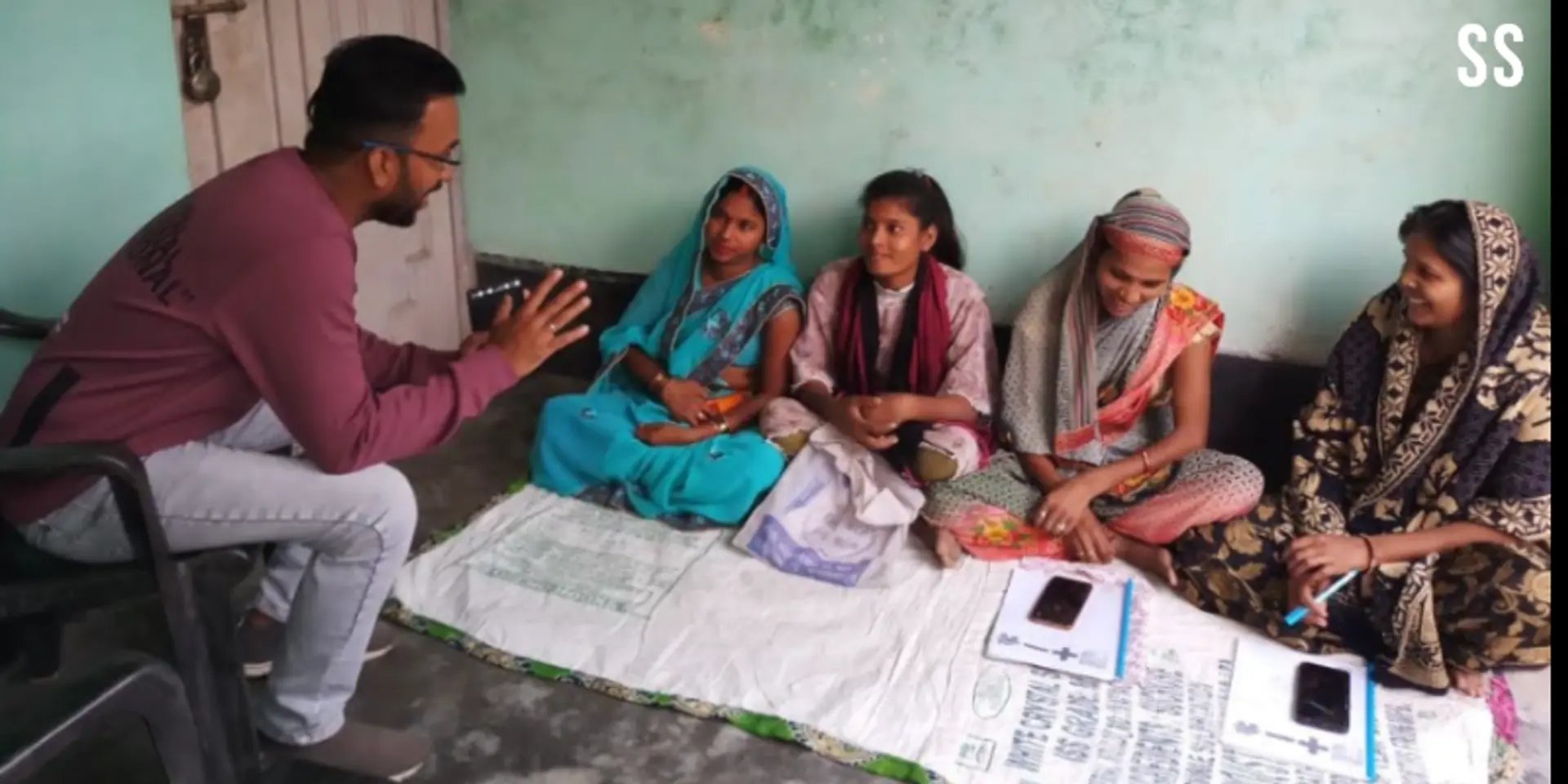

When team members from Leap 300—a grassroots programme started by Karan Bajaj who founded the edtech platform WhiteHat Jr—first met Chandra Kumari and her husband Ashok Kumar in March 2023, the couple was barely surviving.
Both were affected by polio, and the tiny shop they owned in their village in Chandauli, Uttar Pradesh had little to offer.
After being selected through Leap 300’s intensive identification and training process, the couple presented a business plan and received a grant. Kumar began selling vegetables on his special cycle. The shop slowly transformed into a reliable source of income. Today, Kumar and his wife earn around Rs 700 a day, and their children go to a private school.
Their journey is a testament to how trust, tools, and timely support can unlock resilience and entrepreneurial spirit, even in the most marginalised communities.
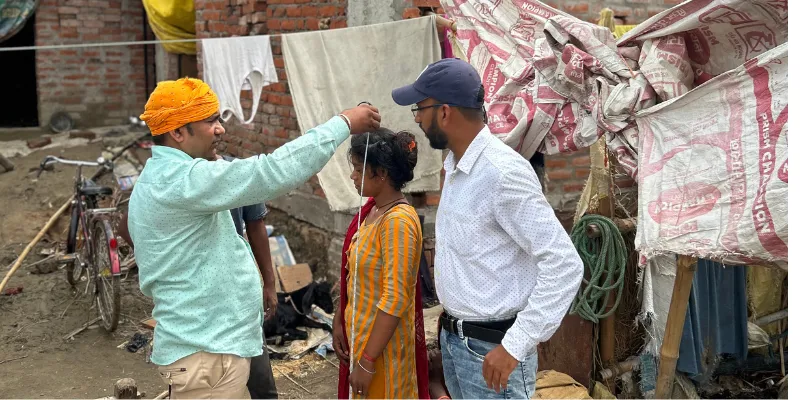
The Leap 300 team on ground
The birth of Leap 300
Founded by tech entrepreneur and bestselling author Karan Bajaj in 2023, the Leap 300 programme began with a simple but urgent idea to use technology to solve poverty in a fixed time-frame.
“Poverty has always been the most complex problem, and there has been no solution from a tech background that could address it with urgency,” says Vinod Raghuwanshi, Head of Product and Tech, Leap 300.
Goa-based Leap 300 aims to address this and create a plan that would work in a time-bound manner.
The team at Leap 300 experimented with different timelines, including 120 days and 250 days—before arriving at the sweet spot of 300 days. The beneficiaries of the programme embark on a journey of training and mentorship for 300 days.
The initiative was first piloted in Madhya Pradesh’s Dewas district, with grants offered for entrepreneurial activity.
“We wanted to make the outcome better and train people; so we started distributing content,” says Raghuwanshi.
Content for entrepreneurial training, business selection, and skill development was shared over WhatsApp.
By the end of 2023, Leap 300 had its own mobile app and a more refined process for selecting and training participants.
At the heart of Leap 300 lies a custom learning management system—a voice-assisted, Android-based app available to select beneficiaries.
The app includes a Yojana Shivir, a 7-lesson module where participants learn to create business plans. Those who attend a 4-day in-person training receive an Rs 10,000 grant to start a business or invest in a livelihood venture. Further, if the business idea gets approved, they get a milestone-based grant of Rs 50,000.
How the 300 days unfold
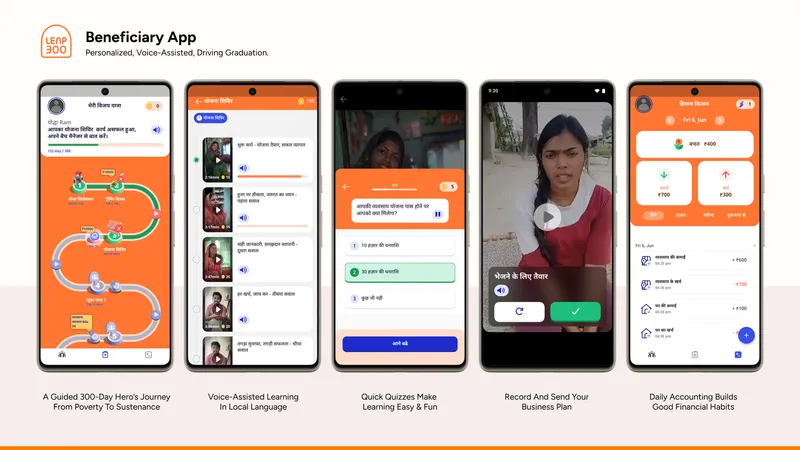
Screen grabs of the beneficiary app
Leap 300’s programme is currently being carried out in Madhya Pradesh and Uttar Pradesh.
The work begins in a selected block in a village with the setting up of a field office and an on-ground survey. Operations officers map the village and identify the most vulnerable people, using a 7-minute mobile phone-based form, which also includes psychometric validation. From there on, selected individuals attend training sessions, present business plans, and begin their journey.
The 300-day curriculum is divided into three phases: business setup, resilience (problem-solving), and connection to government schemes and financial inclusion. A recurring deposit is created to promote savings. Post the programme, the Leap 300 team follows up every month for one year, and every quarter, thereafter, for two years.
“Our success is measured by two criteria—efficacy and efficiency,” says Raghuwanshi.
The focus is sharply placed on selecting the right beneficiaries and ensuring they are matched with viable business ideas. The two main criteria are they should know how to use a smartphone, or be willing to learn how to use one, and have a bank account.
While the team initially encouraged livestock-based ventures, they discovered a low success rate in animal husbandry. “Currently, less than 1% of our beneficiaries are doing livestock business,” says Raghuwanshi.
Most beneficiaries are engaged in the business of grocery, fruits and vegetables.
Impact of the programme
According to an efficacy study led by Professor Mridula Goel of BITS Pilani, 91% of beneficiaries of Leap 300 graduate from extreme poverty within 300 days. The average income increases by 150%, and their productive assets grow by 62%.
These outcomes are not just short-term. The study shows that 87% of families sustain their income gains, and the programme has led to improved child school attendance and higher household nutrition levels.
“The biggest problem was to gain the trust of people, but results slowly made people believe,” Raghuwanshi notes.
Another challenge was working around the schedules of labourers.
“Most of our beneficiaries are daily wage workers; they return home in the evening, so finding time to engage with them was tough.”
In March last year, the Leap 300 team met Kashmira, a 35-year-old mother of three in Chandauli district in Uttar Pradesh. She and her husband were earning Rs 5,500 a month as farm labourers, most of which was spent on their son’s medical treatment. With mounting debts and no clear path forward, they were barely surviving.
With Leap 300’s support, Kashmira started a tailoring business, earning Rs 200–300 a day. Her husband, Vijay, inspired by her progress, opened a vegetable shop. Eventually, they bought a small carrier auto to transport vegetables and supply them to other shops. Now their household income has risen to Rs 30,000 per month.
Kashmira uses the Leap 300 app to track daily earnings and expenses. Her son is recovering, the debts are under control, and the family is stable. Vijay’s only complaint? He doesn’t have time for cricket anymore.
Tetari Devi, 33, lost her husband and father-in-law within a week. Left to raise three children alone, she earned Rs 100–150 a day as a farm labourer and relied on her parents for survival.
After joining Leap 300 in December last year, Tetari fulfilled her late husband’s dream by opening her own cosmetics shop. Through the app’s voice-based modules, she gained the skills to manage her business. She now earns Rs 300–400 a day.
In the last three months, Tetari has expanded her offerings to snacks and cold drinks. She has also bought a fridge to meet the rising summer demand for cold beverages. Her children attend school regularly, and she is proud of her growing independence.
Leap 300’s long-term vision goes far beyond Madhya Pradesh and Uttar Pradesh. According to the World Bank, nearly 700 million people live in extreme poverty around the world. So, the team at Leap 300 aims to scale the poverty eradication programme across the country and globally as well.
(Cover image credit: Leap 300's Facebook page.)
Edited by Swetha Kannan