



How DIKSHa is skilling rural India, one woman at a time
Backed by the Dalmia Bharat Foundation, the DIKSHa initiative is transforming the lives of thousands of women across rural and semi-urban India through job-ready training, confidence-building, and community support.

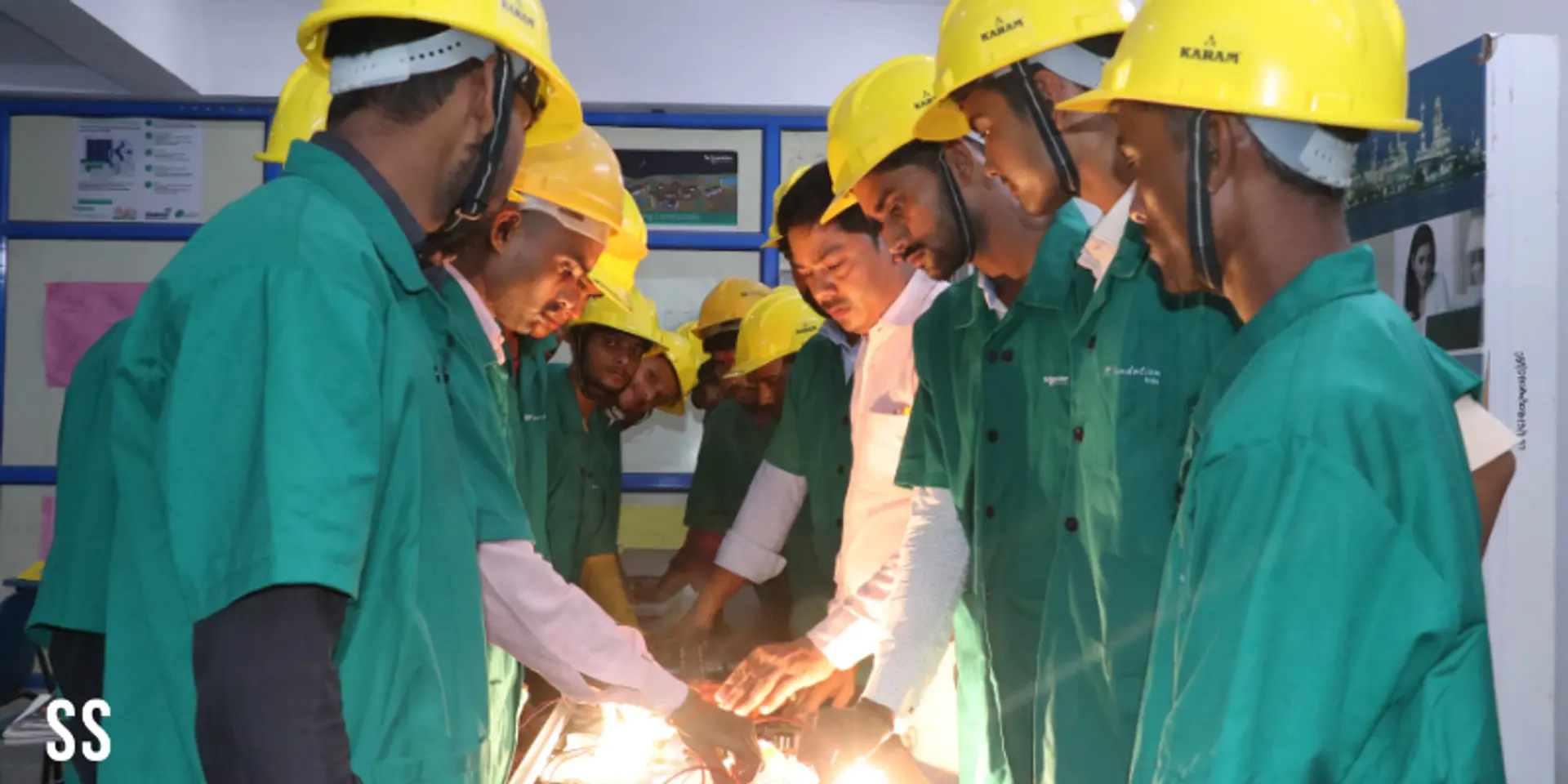

In 2016, the Dalmia Bharat Foundation launched its flagship CSR initiative, Dalmia Institute of Knowledge and Skill Harnessing (DIKSHa) driven by the core philosophy of “giving back to society”.
It began with a simple but urgent vision: bridging the growing skill gap among India’s youth, especially in communities near Dalmia Bharat’s cement and sugar plants, where local employment opportunities were scarce.
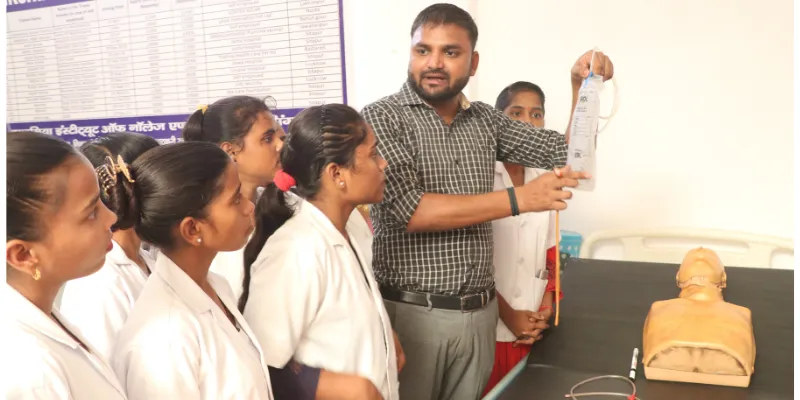
Training of women at DIKSHa centre
“The inspiration stemmed from two critical insights,” says Ashok Kumar Gupta, CEO of the Dalmia Bharat Foundation. “India’s growing youth population urgently needed access to skill development to become employable and economically independent. Second, communities around our plants often expected direct employment in factories, which wasn’t always feasible because the nature of these industries allows for limited local hiring.”
To address this, DIKSHa was launched as a community-centric initiative, offering free, certified training in a range of industry-relevant sectors. Today, DIKSHa runs 23 centres across 11 states, with an annual training capacity of 7,300. “DIKSHa reflects Dalmia Bharat’s long-term commitment to inclusive growth, aiming not just to train individuals but to build resilient, self-reliant communities,” Gupta adds.
Putting women at the centre of progress
Although DIKSHa initially saw mostly male enrollments, the foundation quickly realized that its true impact lay in empowering women. New gender-sensitive courses like Sewing Machine Operator, Assistant Beauty Therapist, and Home Health Aide were introduced, leading to a dramatic rise in female participation.
“This strategic shift led to a significant rise in female participation, which now consistently exceeds 50%,” Gupta says. “More importantly, it helped build confidence among women, foster trust in the program, and enhance community acceptance.”
According to a 2023 KPMG study, women reported increased financial independence, reduced reliance on spouses, and greater control over household decisions after completing the programme. Gupta explains, “By integrating gender sensitivity into its core design, DIKSHa is not just creating jobs, it’s empowering women to become key contributors to household income and community progress.”
Training that matches local aspirations
Every DIKSHa centre is rooted in local need. Before launching a centre, the foundation’s teams conduct a detailed regional assessment to identify the employment potential of nearby industries and match that with youth aspirations.
“Demand for job roles varies significantly across geographies, for instance, trades popular in the Northeast may find little traction in Tamil Nadu,” Gupta explains. “We prioritize customizing course offerings to local preferences and employment potential.”
Once courses are selected, each centre is built to standardised specifications, with uniform infrastructure, lab setups, and qualified trainers to ensure quality across locations. DIKSHa centres offer a diverse range of 21 certified, skill development courses tailored to the needs of rural and semi-urban youth. These include trades in healthcare, retail, textiles, construction, and beauty and wellness.
Industry-aligned and future-ready
All DIKSHa courses are certified under the National Skills Qualifications Framework (NSQF) and meet standards set by the National Skill Development Corporation (NSDC). But the curriculum doesn’t stop at the textbook. Industry leaders such as Schneider Electric, Bosch, Saint Gobain, Jubilant Bhartia Foundation, AkzoNobel, and Karur Vysya Bank contribute to curriculum updates and infrastructure support.
“These organizations share timely inputs on emerging technologies, evolving job roles, and practical skill requirements,” says Gupta. “This helps ensure our trainees are not only certified but genuinely job-ready.”
To stay future-ready, every DIKSHa programme includes modules on digital literacy, soft skills, and workplace readiness, making the training holistic and adaptive to the changing job market.
Beyond training: ensuring long-term sustainability
Graduates receive structured post-placement support for a full year, including counselling, mentoring, and help with workplace challenges. Active alumni WhatsApp groups function as peer networks, keeping graduates connected and supported.
“Our goal is not just to place candidates in jobs, but to empower them with the confidence, skills, and support systems they need to build a stable and dignified future,” said Gupta.
Transformative stories from the field
The most compelling evidence of DIKSHa’s success lies in its graduates. Women who once had limited options are now earning, saving, and making critical decisions for their families.
“Feedback from women who have completed DIKSHa has been both inspiring and deeply affirming,” says Gupta. “It not only imparts job-ready skills but also builds self-confidence, digital literacy, communication abilities, and financial awareness.”
91% of women surveyed in the KPMG report expressed satisfaction with their income and job roles. Many even became the primary earners in their families. Some are even working towards making a difference for other women in their communities.
Among the many inspiring success stories emerging from DIKSHa centres is that of Haripriya, who hails from a tribal family of six in Telenkachha Village, Jharsuguda, Odisha.
Determined to become financially independent, she enrolled in the Industrial Sewing Machine Operator course at the DIKSHa Jharsuguda centre. Upon completing her training, she secured a job with Kitex Garments in Tamil Nadu, earning a monthly income of Rs 12,744. “Challenges that I faced had always added to my courage and strength to move ahead. Training at DIKSHa has given me a push towards a successful journey,” Haripriya shares. Now, along with financially supporting her family, she has set her sights on a bigger goal: establishing a garment production unit in her village to employ others in need.
Similarly, Jyoti Gope, a graduate of the General Duty Assistant course, has become a beacon of hope for her community. After training at DIKSHa, she was shortlisted by Jana Kalyani Foundation and now works with their Bhubaneswar operations, earning an annual salary of Rs 1.32 lakh. “I am very happy that I can shoulder the responsibilities of my father and also support my siblings to pursue their education,” she says.
Jyoti has taken it upon herself to spread the word so others in her community can also avail the same opportunities. “I thank Dalmia Bharat Foundation and as a way of expressing my gratitude, I am ensuring that my friends and acquaintances get to know of DIKSHa so that they could also pick up a suitable course and become employable.”
Overcoming resistance, one household at a time
Even so, DIKSHa’s initiatives have met with their fair share of resistance from communities.
“Rolling out a program like DIKSHa in rural and semi-urban India hasn’t been without its challenges”, says Gupta. Families were initially sceptical about women stepping out to work, citing safety concerns, unfamiliar workspaces, and social stigma.
“Initially, many families were skeptical of whether short-term courses could lead to stable jobs, especially for women. There was a strong preference for government jobs or factory employment, and convincing youth to consider alternate careers required persistent community engagement,” Gupta shares.
The foundation countered this with extensive community mobilization sessions, involving parents in counselling sessions, and organising visits to training centers. They also ensured that the training environment was safe, inclusive, and respectful of cultural sensitivities.
“Mobilising women posed an even greater challenge due to prevailing societal norms, concerns around safety, and lack of exposure. We had to introduce gender-sensitive courses, build trust with families, and ensure a safe and supportive training environment to improve female participation,” he adds.
What’s next: Scaling up to reach more
Looking ahead, DIKSHa plans to scale up its annual training capacity fivefold over the next five years. The aim is to saturate current plant locations and expand into underserved regions, with the support of digital infrastructure and public–private partnerships.
“From our current annual training capacity of around 7,000 youth, we plan to scale up by nearly 5x over the next 5 years,” Gupta shares. “Ultimately, DIKSHa aims to become a national model for grassroots-led, industry-aligned skill development—contributing meaningfully to India’s vision of a Viksit Bharat by 2047.”
A digitized Management Information System (MIS) will also be introduced to enable real-time tracking, transparent reporting, and improved partner collaboration.
As DIKSHa continues to empower rural women across India, Gupta leaves us with a powerful message: “Every young person—regardless of where they come from—deserves a fair chance to build a better future through the power of skill. Programs like DIKSHa are not just about training; they are about transforming lives, restoring dignity, and unlocking the untapped potential of rural India.”
He adds, “Let this story be a reminder that change begins when opportunity meets preparation—and that with the right support, even the most modest beginnings can lead to extraordinary outcomes.”
Edited by Jyoti Narayan