



Nurturing digital proficiency to fuel an AI-era workforce
As artificial intelligence and automation reshape how industries operate, our real challenge lies in ensuring that India’s young population gains the multi-dimensional skills needed to remain relevant and thrive in this evolving landscape.

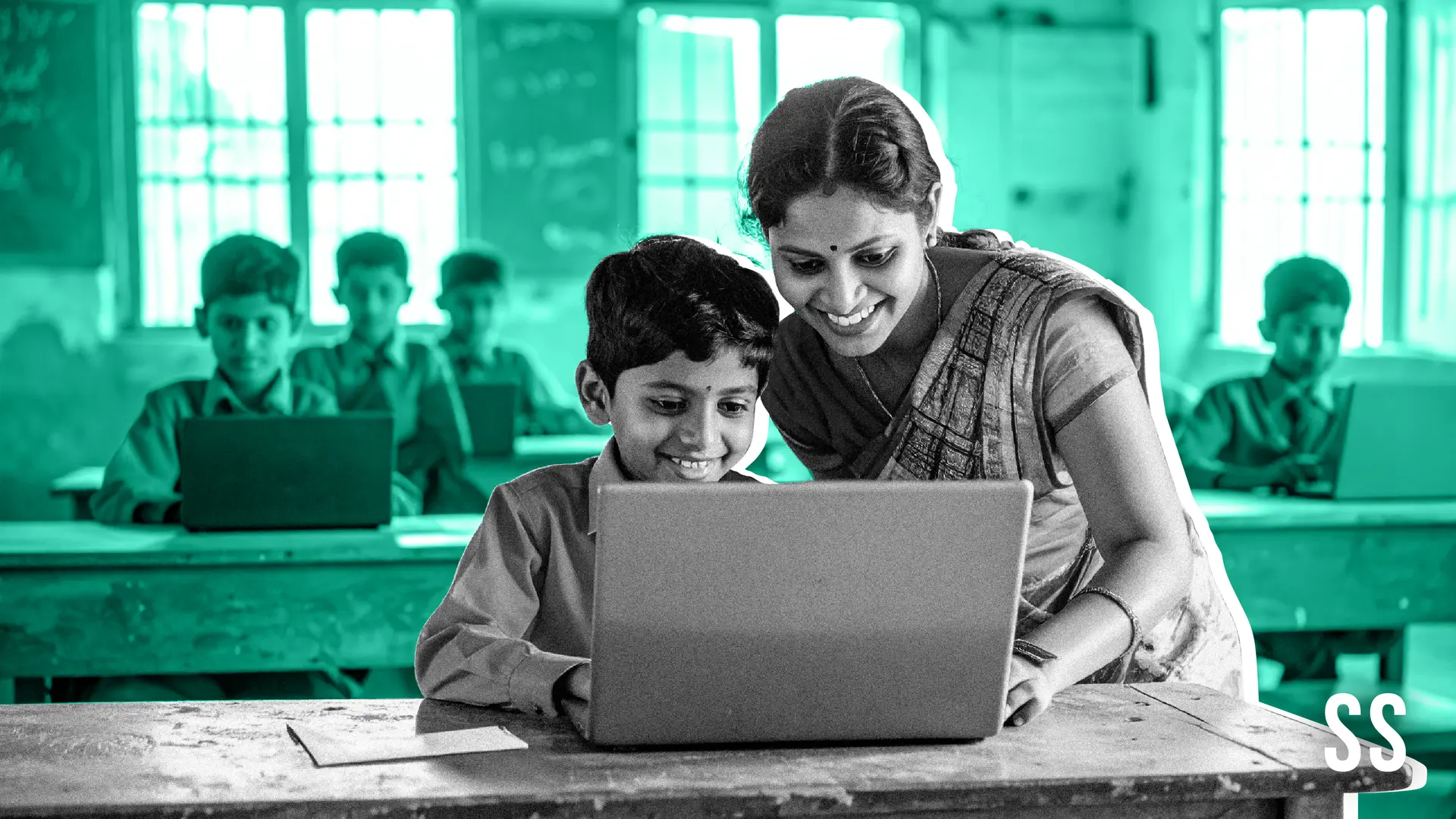

India is home to the world’s largest youth cohort, comprising 650 million citizens under the age of 25. This immense demographic potential positions the country to lead in the global AI and digital revolution. But digital access alone won’t deliver this promise.
As artificial intelligence and automation reshape how industries operate, our real challenge lies in ensuring that India’s young population gains the multi-dimensional skills needed to remain relevant and thrive in this evolving landscape.
A world of opportunity—but only for the skilled
The World Economic Forum’s Future of Jobs Report 2025 makes it clear: digital skills are no longer optional, they’re foundational. Emerging sectors such as AI, robotics, information processing, and energy transition are already fueling demand for digitally fluent talent. McKinsey estimates that India’s digital economy could generate 60–65 million jobs by 2025, while NASSCOM projects 9 million new roles in emerging technologies by 2030.
Despite this growth, the disconnect between education and employability is stark. Nearly 1.5 crore young Indians graduate each year, yet only 40% are considered employable. This signals a deeper structural issue: the systems preparing youth for work are fundamentally misaligned with the future of work.
The access conundrum: phones in hand, skills out of reach
According to the Comprehensive Modular Survey: Telecom, 2025, India’s digital infrastructure has grown rapidly: 76% of households have internet access, and 74% own smartphones. But access alone is not enough. The NSSO’s 79th round survey found that only 27.5% of youth aged 15–29 are digitally skilled, capable of basic tasks like using spreadsheets, making presentations, or managing email attachments. Over 70% cannot attach a file to an email, and nearly 60% struggle to move or copy files on a computer.
These gaps reflect deep inequities. Youth from rural areas, lower-income groups, and marginalised castes are three times less likely to be digitally skilled compared to their urban, privileged peers. Socio-economic and regional identities continue to shape who gets access to opportunity.
Rethinking education for a digital Future
Beyond access, the real bottleneck lies in the quality and relevance of our education system. Classrooms remain focused on rote memorization, with limited emphasis on critical thinking, creativity, or problem-solving.
The numbers speak for themselves. Only 6% of males and 3% of females aged 22–50 have received any form of technical education. Fewer than 20% of students pursue STEM subjects, despite predictions that 80% of future jobs will require them. Most enrollments are still in non-technical degrees, such as BA, BCom, and BSc. Structural barriers, including caste, gender, and geography, continue to influence subject choices and career paths.
This disconnect is not just academic. According to the India Skills Report 2024, despite having degrees, a majority of graduates are not workforce-ready. They lack digital fluency, practical exposure, and crucial soft skills like communication, teamwork, and resilience.
The stakes: growth hinges on inclusion
India’s demographic dividend could well turn into a missed opportunity if we fail to close the skills gap. McKinsey estimates that 40–45 million existing workers will require reskilling by 2030. Meanwhile, fast-growing sectors like IT-BPM, already employing 5.4 million, will demand higher digital competencies.
If underserved communities are left behind, economic growth risks becoming exclusionary. Without intentional interventions, the divide between the digitally equipped and the digitally excluded will only widen, undermining both productivity and equity.
Mindset, method, and measures
To unlock the potential of our youth, we must reimagine the education-to-employment journey. A piecemeal approach will not work. What’s needed is a unified, continuum-based strategy that focuses on three pillars: mindset, method, and measure.
This starts at the school level. Students need a strong academic foundation paired with digital fluency, not as an add-on, but as a core component across all subjects. Teachers, especially in government and rural schools, must be enabled to role-model meaningful use of technology, inspiring students to embrace it as a tool for learning and to take charge of their own educational journey.
For students transitioning out of school, bridge programs of 2–4 months can provide vital exposure to productivity tools (Excel, Google Workspace), communication skills, and workplace readiness. These should be supported through CSR and implemented widely, particularly for students who delay or skip college.
At the higher education level, industry-academia collaboration is key. Curricula should be co-designed with employers to ensure alignment with real-world needs. Skill-based electives must be available across disciplines, allowing arts or commerce students to explore coding, UI/UX, or data literacy.
Internships and apprenticeships should be mandatory and credit-bearing, ensuring students graduate with experience, not just degrees. For students who exit the system early, skill-building must continue through online platforms, regional skilling centres, and community networks.
Equally critical are non-technical skills. The WEF outlines five future-essential clusters: analytical thinking, digital skills, socio-emotional intelligence, self-management, and environmental awareness. These are not "soft" skills—they are survival skills.
Lastly, vernacular digital content and locally relevant infrastructure must be prioritised. The future of work cannot be built in English alone. Without regional language resources, millions will remain excluded from the opportunities digital transformation promises.
When we align mindset (adaptability and aspiration), method (experiential, contextual learning), and measure (data-driven tracking), we move from theory to action. We build a skilling ecosystem that prepares not just workers, but creators, problem-solvers, and leaders.
From potential to performance
India’s youth represent more than just numbers, they are possibilities in motion. But possibility alone is not progress. To turn our demographic dividend into a digital dividend, we must invest not just in infrastructure, but in intent, inclusion, and innovation.
This is India’s moment of truth. If we act with urgency and clarity, we can equip every young Indian not only to find a place in the AI economy but to shape its future.
(Shweta Gaur is the Engagement Manager (Education) at Sattva Knowledge Institute.)
(Disclaimer: The views and opinions expressed in this article are those of the author and do not necessarily reflect the views of YourStory.)