



Rethinking development beyond economics for tribal communities
Long before modern state formations, tribal communities shaped a rich cultural heritage rooted in nature. From grassroots movements, the tribal communities have fought to protect their heritage anchored in autonomy, dignity, and an enduring bond with nature.
Jyotsnika Tiwari
Thursday August 21, 2025 , 8 min Read

“We don’t make it, it's a taboo in our culture,” said a Soura tribe member when asked about brewing alcohol from cashew apples.
This single sentence—short, firm, and unambiguous—revealed a world of cultural codes and moral boundaries of the tribal communities. What seemed like an opportunity for value addition or entrepreneurship as an outsider was simply not an option for livelihood.
Long before modern state formations, tribal communities shaped a rich cultural heritage rooted in nature. From grassroots movements, the tribal communities have fought to protect their heritage anchored in autonomy, dignity, and an enduring bond with nature. Tribal communities are dependent largely on forest resources for their livelihoods, used and conserved with care across generations. Agriculture, although present, has typically remained small-scale due to uneven and marginal landholdings, and subsistence-oriented farming.
Tribal groups are known to follow animistic belief systems rooted in nature worship, cultural expressions vary widely, from the veneration of sacred trees in Jharkhand to reverence for celestial bodies like the sun and moon in Arunachal Pradesh. What is acceptable in one community may be avoided entirely in another.
To take a deeper reflection on what development means in such diverse and rooted beliefs and moral values in the tribal communities; and raises a crucial question: How can we engage in development in these communities without disrupting the cultural and moral frameworks for those who view development differently from our version?
In this context, we turn to three tribal regions—one in Odisha, where Cashew (Anacardium occidentale L.), a plantation crop, becomes a primary economic driver. On the other hand, in Chhattisgarh and Jharkhand, communities rely heavily on the forest tree Mahua (Madhuca longifolia), a traditional Non-Timber Forest Produce (NTFP), playing a central role in both livelihood and culture. Though both communities are deeply dependent on a single natural resource, their relationship with it—how they value, manage, and culturally interpret it—differs profoundly.
Cashew and its cultural morality in Odisha’s tribal heartland
Tribal communities of Odisha have been dependent on cashew for decades. By the 1990s, the Odisha State Cashew Development Corporation Ltd took over the plantation on forest lands and government wasteland. Forest lands were leased out to private parties, restricting communities from selling it. After continuous protests, the Odisha government has started giving back Individual Forest Rights to the community.
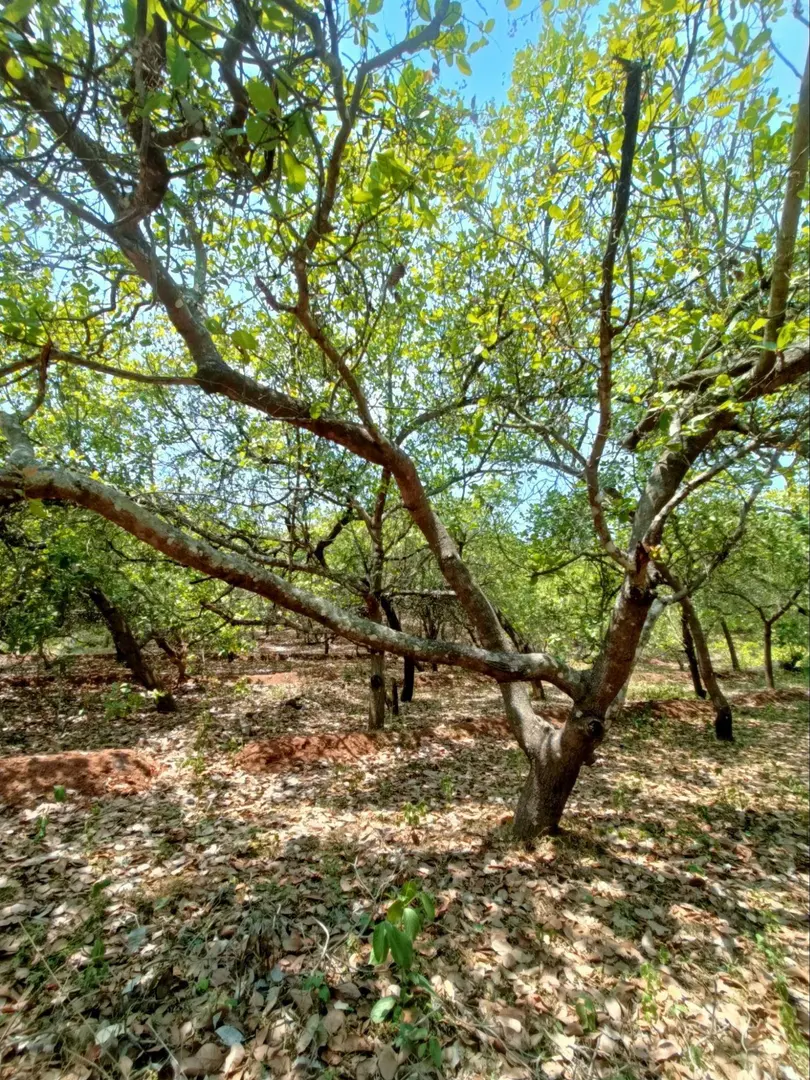
To understand Cashew’s relevance firsthand, we visited four villages—Tada and Gade in Gunupur block (Gajapati district), and Guleijung, Kudinguda-Sanamunisingi in Gumma block (Rayagada district)—where cashew cultivation is ubiquitous. As we ventured deeper into these villages, the extent of monocropping became increasingly evident; the foothills planted decades ago by the Forest Department were thick with cashew. Even the flatlands were now dominated by cashew plantations. The result was visibly diminished biodiversity, with rare sightings of native trees or fauna besides a few scattered jackfruit trees and anthills.
Despite all the matters in question, the cashew crop remains economically viable. With no need for irrigation, thanks to good rainfall, communities continue growing traditional cashew varieties. Cashew harvesting process begins in April, and continues until May, producing 6–8 quintals per acre, with an earning potential of Rs 45,000–Rs 47,000 per acre annually based on market prices. The communities separate cashew nut from the cashew apple, which is rich in minerals and nutrients like copper, calcium, magnesium, potassium, iron, and zinc is largely overlooked.
Local community members told us that the cashew apples are discarded because of their tangy taste and are not commonly eaten. Curious to experience the taste, we tried it ourselves and found the taste unusually tangy, sharp and oily—almost like drinking oil. It was an odd, unfamiliar sensation, and we struggled to finish even one cashew apple.
Some locals shared that cashew apples can be used to produce Feni—a traditional local alcohol just like it’s made in Goa and the Konkan region of Maharashtra. The process involves crushing ripe cashew apples to extract their juice, which is then fermented in large containers for 3–5 days before being distilled into a potent spirit. When we asked about the possibility of turning cashew apples into value-added products such as jellies, jams, syrups, juice, or even pickles, the communities shared that they were unaware of such uses.
Moving forward with our conversation about making alcohol, the Saura community members responded swiftly, “Neither is it allowed for us to consume nor can it be produced by any member of the community due to our cultural reasons.” The deeper we spoke with them, the more evident we became about their other cultural beliefs such community day on a sunday, strong connection to music and art; strong moral codes- governed by the gram panchayats and a sense of deep connection with spiritual ecology was also quite evident.
Mahua and the Many Meanings of Survival
When we travelled to Jharkhand and Chhattisgarh to understand the use of Mahua (Madhuca longifolia), we encountered a strikingly different reality. In these regions, Mahua trees are found in abundance, and the lives of tribal communities—primarily Munda, Santhal, Oraon, and Ho—are deeply intertwined with this flowering tree.
Most households have access to multiple Mahua trees due to surrounding forests. During the flowering season, families gather the fallen flowers, which are sold—often to government agencies—for medicinal and commercial products, leading to an average annual income of Rs 7,000–Rs 10,000 per household.
But Mahua’s significance goes beyond income. The fruit is traditionally fermented to make a local alcoholic beverage– widely consumed and culturally accepted across these villages, a stark contrast to the cashew-growing communities of Odisha. The locally brewed Mahua drink has a mildly tangy, sweet flavour and serves as both a customary refreshment and a marker of local identity. Sold at Rs 70-100/per litre, has become a source of additional or, at times, primary source of income for the communities.
During our visit to Chhattisgarh, we met Suraj, a 24-year-old driver who drove us to different villages. Over the course of the journey, Suraj shared several insights about local tribal communities and about his own life. Suraj told us that his father is addicted to Mahua, while his mother brews and sells it to sustain the household and he supports the family by driving a car. Suraj pointed out that, just like his father, several villagers are addicted to the Mahua drink, and this started getting more and more poignant as we frequented villages.
In the villages we visited, it was common to see men sitting around in the middle of the day, visibly groggy or disoriented, neither condemned nor concealed, but quietly accepted as part of the everyday.
Suraj pointed out something that stayed with us long after the conversation ended. In many impoverished tribal communities, he said, “Char bottlon mein shaadi ho jati hai.” Just four bottles of Mahua, and a girl is married off. It reminded us of a familiar saying heard across rural India - “Do jodi kapdon mein ladki ki shaadi ho gayi”—just two sets of clothes were enough to marry off a girl.
Suraj's version made us pause and reflect: Is the widespread consumption of Mahua simply a cultural norm, or does it point to deeper systemic issues—like chronic unemployment, low agricultural productivity, or limited access to education? Could it be that what appears as tradition is, in part, a coping mechanism to endure the harsh realities of multidimensional poverty? And more importantly, how do we begin to define or measure ‘development’ in communities whose aspirations and way of life don’t align with mainstream notions of progress?
Development needs to be “Dialogical” and “Not Directional”
As we understand development, better education, higher yields, access to government schemes, or increased availability of water may be the benchmarks for progress. But in many of these tribal villages, such pursuits do not constantly stir enthusiasm. Life here follows a slower rhythm, tuned to nature's cycles rather than ambition or productivity.
People often appear content, or perhaps complacent, with having just enough. At times, our development frameworks urge them toward aspirations that may not be their own. This fundamental difference between what “we” consider a good life and what “they” do and want—is perhaps the real challenge.
These stories of cashews in Odisha and Mahua in Jharkhand and Chhattisgarh reveal more than just differences in resource use; they reflect how deeply culture and tradition shape livelihoods. What one group uses to earn money, another might avoid because of their culture and traditions. An external push to incentivise the communities to break their cultural and traditional values would create a larger pushback.
The answer lies in recognising that development must be dialogical, not directional, and must begin with deep respect for communities’ values and lived realities. As we measure progress, our metrics must evolve, beyond income and productivity, to include well-being, dignity, autonomy, and the cultural integrity that binds communities together, or else our efforts may remain incomplete, or even misdirected, and our solutions partially relevant.
Faraz Rupani is an Economics Researcher at the WOTR Centre for Resilience Studies (W-CReS) and Jyotsnika Tiwari is a development professional and former fundraiser at WOTR
(Disclaimer: The views and opinions expressed in this article are those of the author and do not necessarily reflect the views of YourStory.)