



Landfills to launchpads: India’s trash can power its net-zero takeoff
The road to decarbonisation doesn’t only lie in futuristic tech or moonshot innovations. It often lies beneath our feet, which is buried in landfills, running through clogged drains, or piling up in the industrial margins of our cities.

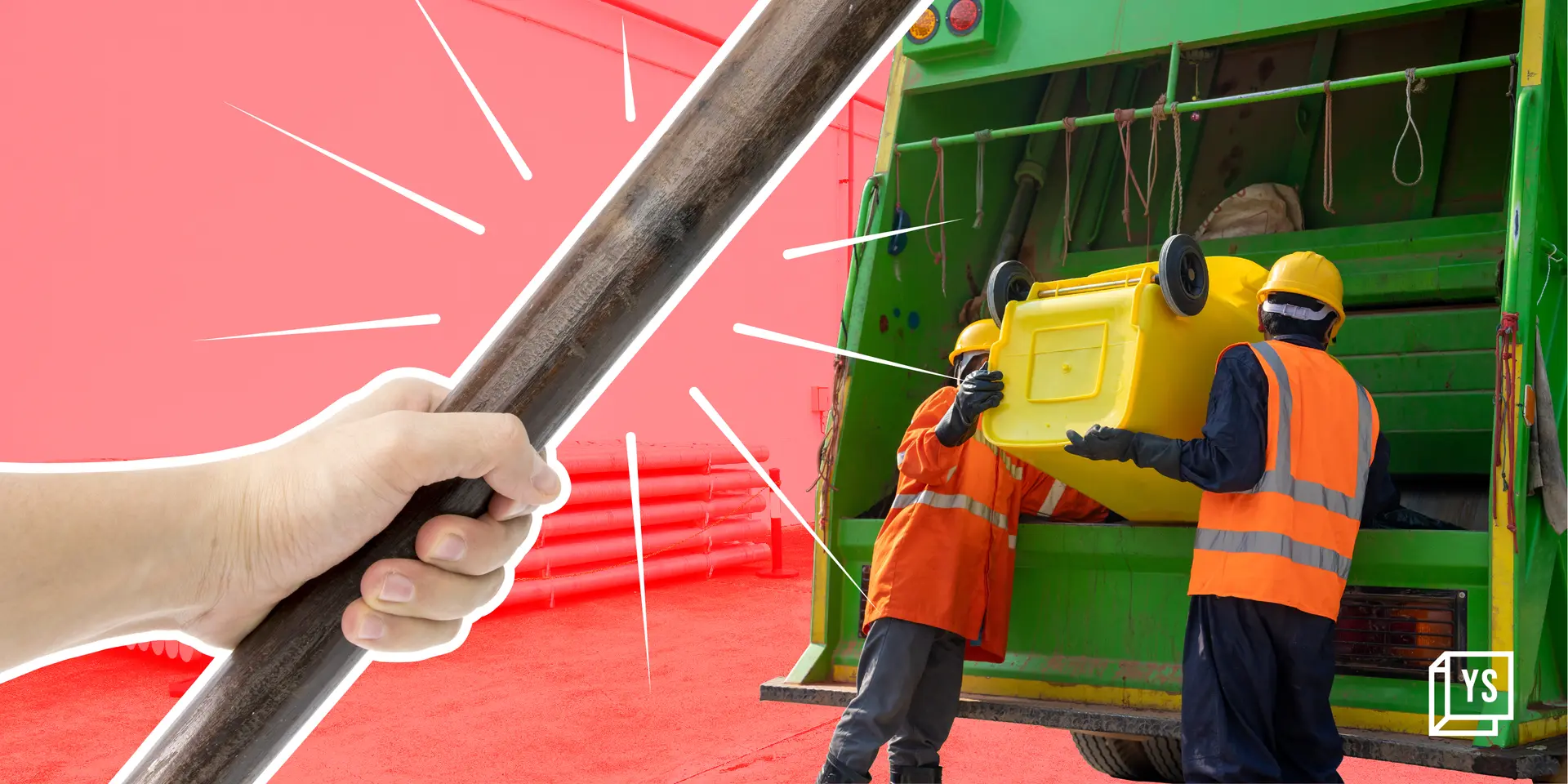

India stands at the crossroads of an escalating waste crisis. Each citizen is expected to generate nearly 0.7 kilograms of waste per day by 2025, adding up to over 62 million tonnes annually. It may not sound alarming until you realise it’s enough to fill over 3 million garbage trucks every year and enough to circle the Earth if lined up end to end. Yet, less than 20% of that waste is scientifically treated, and around 31 million tonnes end up in sprawling landfills, leaking methane. But behind those numbers lies a deeper truth that waste isn’t a problem to solve, but a powerful resource to reimagine.
Waste has been classified as an end-of-pipe problem for too long, and if we all look with a little optimism, the problem in itself may be the solution here. For now, we just have to look at it as something to build with, and not just to manage. Slowly, and in pockets, we’re starting to see waste not just as a civic issue, but as an untapped source of climate value.
The road to decarbonisation doesn’t only lie in futuristic tech or moonshot innovations. It often lies beneath our feet, which is buried in landfills, running through clogged drains, or piling up in the industrial margins of our cities.
The hidden cost of business-as-usual
Open dumping, unscientific disposal, and untreated wastewater are not just environmental hazards; they might just be considered as missed opportunities. Methane, released by decomposing organic waste, is over 80 times more potent than carbon dioxide in the short term. At the same time, industrial wastewater continues to contaminate water tables in our manufacturing hubs, affecting communities and ecosystems alike.
It doesn’t have to be this way. We now have proven models that can turn this waste into clean energy, reusable water, and even low-emission fuel. These are not distant ideas; they’re operational, scalable systems that exist today. They’re decentralised, tech-enabled, and in many ways, perfectly suited to the complexity of our industrial landscape.
There have been reports mentioning that landfill emissions account for over 14% of India’s methane emissions, and waste, which includes municipal and industrial sources, contributes around 3–4 % of India’s total greenhouse gas emissions.
These are not fringe environmental concerns. There are structural inefficiencies in how we handle energy, materials, and water. The costs are being paid not just in emissions, but in public health, lost productivity, and degraded ecosystems.

Representational image (Source: Pexels)
The circular economy is not just a theory
Take Refuse-Derived Fuel as an instance, which is created from processed industrial and municipal waste. It’s already being used as an alternative to coal in heavy industries like cement. It reduces emissions and diverts waste from landfills at the same time. Alternatively, consider ZLD (zero liquid discharge) systems, which enable wastewater reuse in textiles and chemicals, two industries that are particularly water-intensive. This is infrastructure that’s both climate-positive and business-aligned.
In some cases, the results speak for themselves: hundreds of thousands of tonnes of waste diverted from landfills, lakhs of kilolitres of wastewater recovered, and a meaningful dent in emissions. But the real opportunity lies in scale.
What’s missing? Policy that keeps up
Despite encouraging progress, waste infrastructure is still not treated as essential. It’s often bucketed under municipal reform or CSR, which we see as a rarely viewed climate strategy. This framing limits ambition and leaves circular solutions underfunded, poorly prioritised, and stuck competing for scraps in city budgets or corporate allocations.
If we’re serious about climate goals, whether emissions, water, or energy, we need to elevate waste to the status of climate infrastructure. That begins with a mindset shift: from seeing waste as a liability to recognising it as a long-term asset.
But mindset alone won’t move the needle. We need a fast, forward-looking policy. Clean fuels like RDF remain commercially unviable without targeted incentives. Regulatory approvals are slow and fragmented. ESG capital exists but lacks the frameworks to reach circular projects.
We also need robust public-private partnerships. And this may just be possible with clarity on land, offtake, and operating models. The solutions exist. What’s missing is the scaffolding to scale them.
Building the future underfoot
We should change our belief: climate action won’t always look like shiny new tech. Sometimes, it’ll look like a closed-loop pipe. A reclaimed landfill. A truck full of treated sludge turned into energy. It’s unglamorous work, but it’s also nation-building work.
If we get this right, waste won’t just be managed better. It will become a core input in our climate infrastructure, a material with which we can scale our infrastructure, and build it for the better. And for founders, builders, and policymakers alike, that’s a future worth investing in.
Edited by Kanishk Singh
(Disclaimer: The views and opinions expressed in this article are those of the author and do not necessarily reflect the views of YourStory.)