



Climate resilient crops, healthier women - A nutrition roadmap for rural India
Enabling women to connect farming with food and care, at home, habitat and local systems is the foundation to addressing nutrition challenges..
Bapi Gorai
Tuesday October 14, 2025 , 5 min Read

India is increasingly facing climate vulnerabilities with its rural heartland experiencing rising heat, erratic monsoons and floods. The nation also stands at a critical juncture in its fight against malnutrition.
Malnutrition is a complex manifestation of poverty, poor nutritional awareness, unhealthy behavioural practices, lack of affordability, low access to nutritional services and products as well as availability at doorstep. Not to mention geographical challenges and overall gender exclusion in nutrition decision-making and consumption is a critical issue. India is the world’s largest democracy and a fast-growing economy, but only a steady progress towards health and nutrition goals can help it realise the vision of ‘Viksit Bharat’.
While conscious efforts, including convergence, have led to wider synergy between different stakeholders, when it comes to addressing nutrition vulnerability the challenges remain. NFHS-5 data shows persistent undernutrition, micronutrient deficiencies, and rising obesity, reflecting India’s triple burden of malnutrition. Rising rates of non-communicable diseases further complicate the challenge.
Over the last few decades, the burden of malnutrition has drawn significant attention in India at the national and state levels. Given the multiple determinants of undernutrition, effective action requires a wide range of inputs across various sectors. Agriculture is a key sector as it is the primary source of food and essential nutrients as well as an important source of income for more than half of the Indian population. NFHS-5 data shows persistent undernutrition, micronutrient deficiencies, and rising obesity, reflecting India’s triple burden of malnutrition. Rising rates of non-communicable diseases further complicate the challenge.
A majority of India’s malnourished population belongs to the rural population that finds itself trapped in a cycle of low productivity agriculture, poor health, and poverty. The persistence of malnutrition is a public health crisis and cannot be solved merely via agriculture or health solutions alone. It requires a multidimensional approach.
Climate change has impacted agricultural production and has increased global food insecurity especially in low-income communities. It is also restricting the ability of humans to achieve food and nutrition security, leading to severe food crises and global hunger.
According to studies, India is likely to bear the greatest burden, with an estimated 50 million people becoming zinc deficient, 38 million becoming protein deficient, and 502 million women and children becoming vulnerable to diseases associated with iron deficiency. Additionally, a reduction amounting to 3-17% in protein, iron and zinc is seen in food crops grown under 550 ppm compared to the current conditions of 400 ppm (via research by Matthew R. Smith, 2018).
Shifting climate patterns, including increasing heat and unseasonal rainfall are impacting streams and minor rivers, disrupting food production systems and local economies. Women, central to both food production and care, face complex challenges, making the intersection of climate resilience, agriculture, and women’s empowerment critical to a transformative nutrition agenda.
A comprehensive and integrated solution designed with a ‘whole-of-society’ approach – addressing the dual risk of climate and nutrition challenges, is the need of the hour. Such a design would combine community, public system and market initiatives focusing on eco-system based intervention to make every locality flourish. Interventions focused on nutrition should be integrated with habitat improvement and landscape restoration efforts within the MGNREGA framework, as the health of soil and land are correlated with nutritional values of the agricultural products.
Creative innovation is the key to strengthening grassroots institutional capacities to unlock local resources including Panchayat funds and creating spaces for local communities to design and deliver local solutions. A ‘locality compact’ - an alliance of local bodies, women collectives, and local administration - can create shared purpose and vision, combined with decentralised planning processes such as VPRP and GPDP.
The Government of India’s new initiative ‘Swasth Nari, Sashakt Parivar Abhiyan’ in close convergence with POSHAN Maah recognised that health, nutrition and empowerment of women is central to the progress of our families, communities and the nation at the large and also provide an opportunity to renew the commitment to localising the Sustainable Development Goals and universal coverage of essential services through fostering convergence between collective visions of communities and policy makers.
This campaign can be used as a long-term strategy to address nutritional challenges considering agri-nutrition and climate challenges. Beyond services, women-farmers need to be supported to create assets and trained to access as well as manage micro-irrigation systems using surface water and clean energy to increase productivity of nutritional rich foods adopting natural farming techniques. This inter-linkages between agriculture, health, wellbeing and income generating activities creates a sustainable and replicable model.
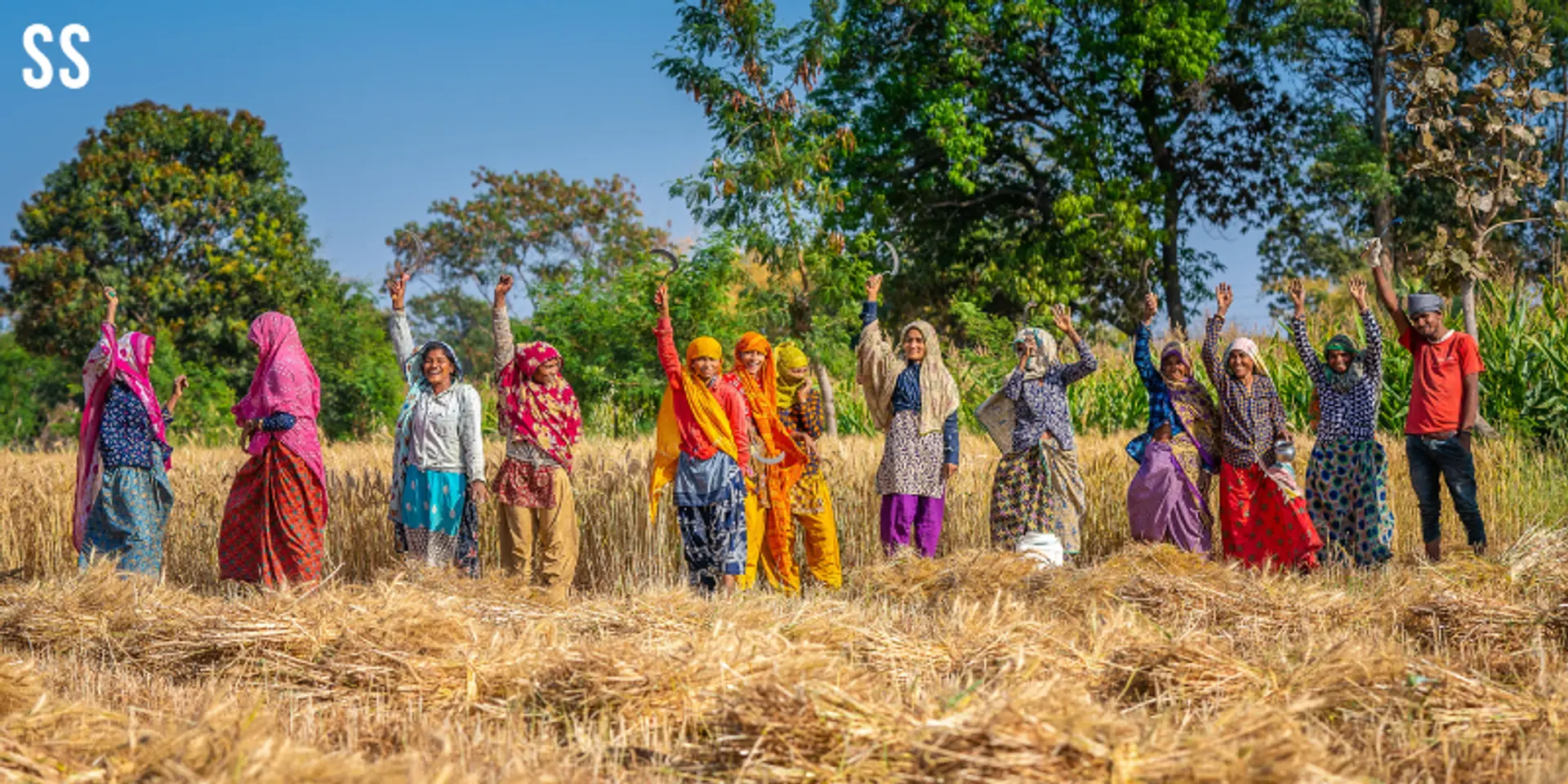
Women farmers hold the key to building climate resilience and nutrition security. Millets, pulses, and staple foods thrive in rainfed lands, withstand heat, restore soil health, and meet up to 80% of women’s daily iron requirement, vital for addressing anaemia. Enabling women to connect farming with food and care, at home, habitat and local systems is the foundation to addressing nutrition challenges.
This integration enables communities to navigate through complex issues of climate shocks, reduce malnutrition and create sustainable futures where women are at the forefront to nourish both families and farmlands integrating farming, food and care into everyday living to create neighbourhoods of care.
(Shyamal Santra is the Associate Director of Healthcare and Nutrition at Transform Rural India and
Bapi Gorai, Specialist - Farm Prosperity at Transform Rural India.)
(The views and opinions expressed in this article are those of the author and do not necessarily reflect the views of YourStory.)