



All India Cooperative Week spotlights how co-ops are empowering rural India
This Cooperative Week, stories from Karnataka to Maharashtra highlight how co-ops are supporting women, farmers and rural families to build more secure livelihoods.

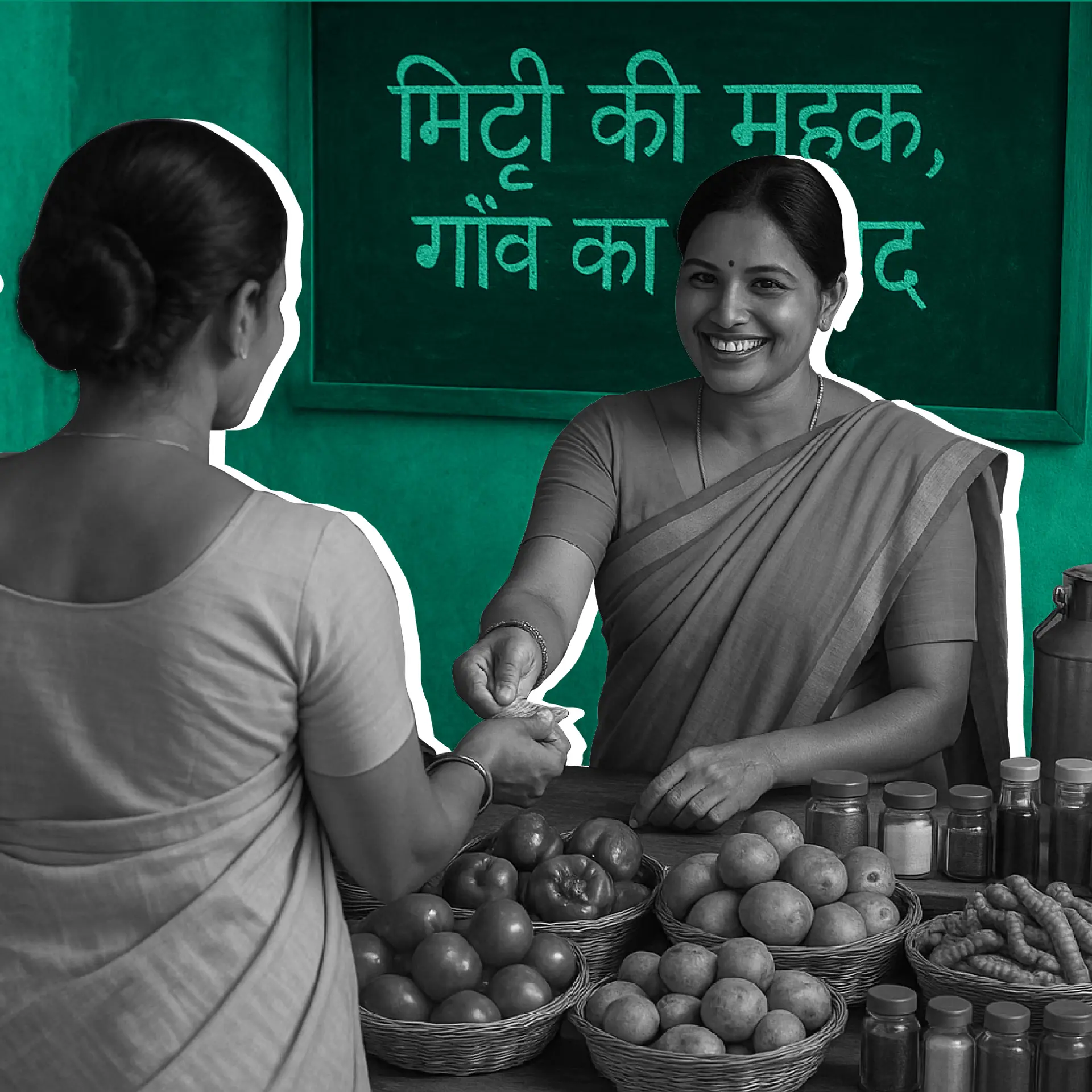

Every November, India’s vast cooperative network gets its moment in the spotlight during the All India Cooperative Week.
This year, it is being celebrated from November 14-20, bringing together farmer groups, women’s collectives, dairy unions and rural credit societies to showcase how co-ops are changing lives and livelihoods in rural India.
In a speech at Mangaluru on November 17, UT Khader Fareed, Speaker of the Karnataka Legislative Assembly, emphasised that “co-op societies empower rural communities and promote self-reliance.” He noted that women in coastal Karnataka were taking cooperative loans and running micro-businesses instead of solely working in cashew or beedi factories, illustrating how the cooperative model is creating pathways for rural livelihoods.
There are many reasons why this works. An August 2025 study by Singhania University, Rajasthan on primary agricultural cooperative societies found that cooperative societies are a key driver of rural development and women’s empowerment in the country. The study, which surveyed cooperative societies in Delhi-NCR, showed that women’s participation in cooperatives had led to gains in productivity, financial independence, and agency.
At the Cooperative Week event in Mangaluru, cooperative banks and societies were lauded for their role in rural empowerment, particularly towards women. One cooperative milk union launched two new health-focused dairy products, demonstrating how rural co-ops link production, value-addition, and market access.
In Madurai, Tamil Nadu, celebrations marking the week included the distribution of welfare aid worth approximately Rs 11 crore to 2,153 beneficiaries by P Moorthy, Tamil Nadu Minister for Commercial Taxes and Registration, as part of the state’s broader efforts to strengthen the cooperative sector in rural Tamil Nadu.
In Hingoli, Maharashtra, over 300 women farmers formed the state’s first women-led turmeric producers’ cooperative, branded ‘Turmex’, in July this year. It aims to directly export the produce by eliminating the middlemen. The women are members of SHGs under the Maharashtra State Rural Livelihoods Mission in Hingoli, where turmeric has been cultivated for years. Hingoli’s high-curcumin Vasmat Haldi accounts for about 10% of India’s turmeric economic value, yet farmers say middlemen have historically captured most of the profits.
The cooperative is being supported by local self-help groups (SHGs), the District Rural Development Agency, Hingoli Zilla Parishad under CEO Anjali Ramesh, and Balasaheb Thackeray Turmeric Research and Training Centre in Vasmat, which will guide processing, branding, export pathways, and quality control.
These cases show how capital access, market linkages, women’s ownership and leadership, and value addition can be effectively synergised at the rural level.
However, research and reporting also highlight critical challenges. The literature review, ‘Gender equality and women’s empowerment in co-operatives’, flags how the lack of disaggregated gender data within cooperatives makes it hard to track exactly how women are benefiting. Additionally, a February 2025 study done by Shri Vaishnav Vidyapeeth Vishwavidyalaya University (SVVV) in Indore concluded that while SHGs and co-ops are effective, the sustainability of such enterprises often depends on self-management, advocacy capacity, and external support.
Studies by the International Cooperative Alliance, SVVV University, and others offer key recommendations for cooperative initiatives to maximise their impact on small and marginal farmers, low-income communities, rural women and producers of perishable or price-volatile goods. Some key takeaways include:
- Ensuring women hold decision-making roles—not just membership—in cooperatives
- Strengthening linkages between rural producers and formal markets (as seen in Hingoli and Karnataka)
- Building data systems for sex-disaggregated tracking of outcomes
- Providing training and support around business management, branding and value-addition
In conclusion, cooperative societies can be trusted vehicles of rural self-reliance, especially for women in India’s countryside. However, while their reach is broad and the potential strong, to scale sustainably, the focus must shift not just to formation, but to leadership, data, markets and capacity across the value chain.
Edited by Kanishk Singh