


Why collaboration isn’t optional anymore in India’s education system
Collaboration is not simply about convening organisations. It requires mechanisms, incentives and mindsets that sustain shared thought and action across sectors and scales.

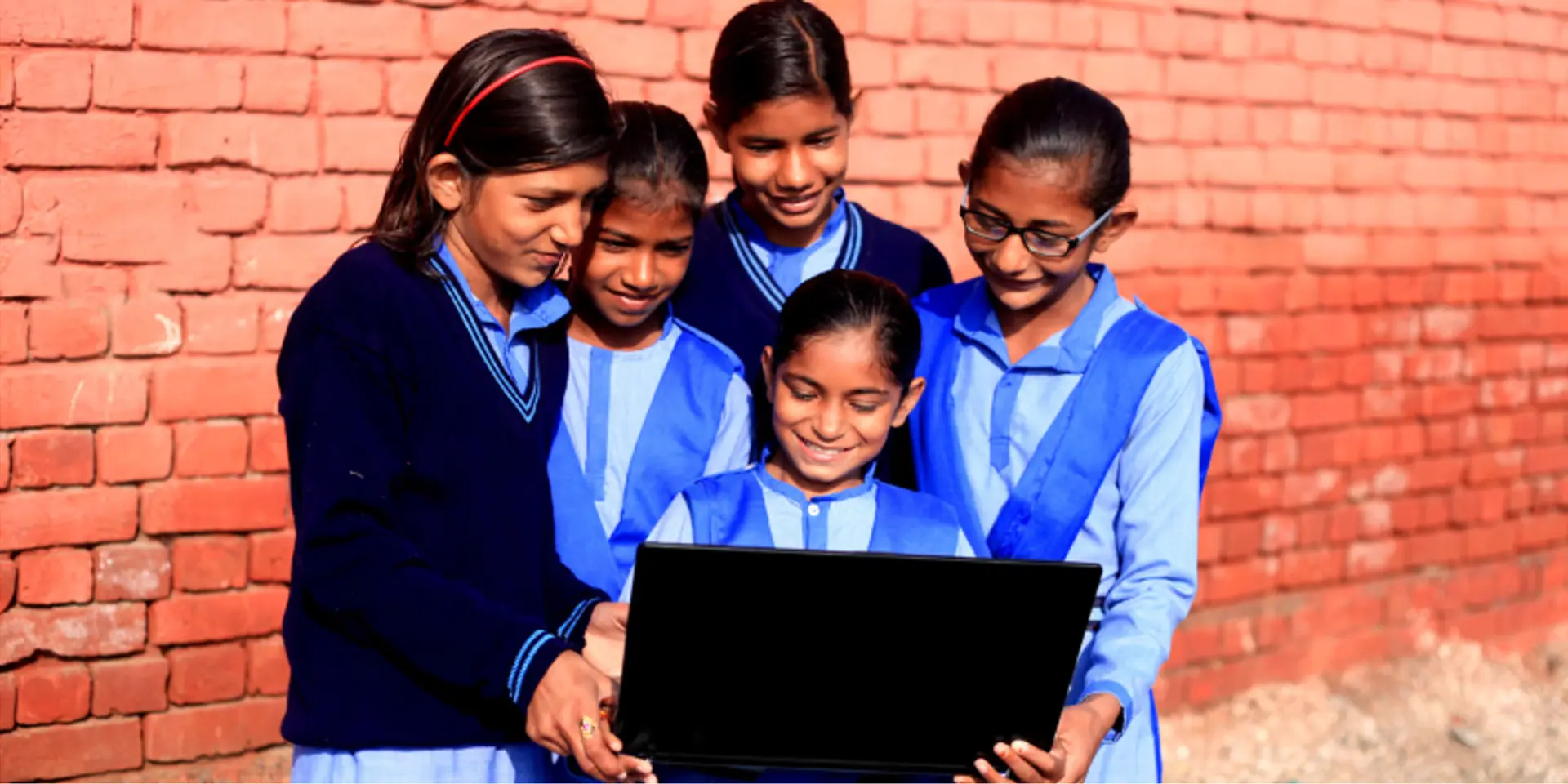

Despite nearly eight decades of independence and policy reforms, India's education narrative is paradoxical. While school enrollment has risen steadily and literacy has climbed to about 80.9 per cent, foundational learning outcomes remain worryingly low, especially in rural and low-income pockets of the country.
National surveys indicate that only approximately 23–24 per cent of Class 3 children in government schools can read a Class 2-level text, and fewer than one-third can solve basic division problems.
This isn't merely a statistical quirk; it is a structural challenge. Enrollment alone does not guarantee learning, and foundational literacy and numeracy (FLN) are central to future educational success. If a child cannot read, write with understanding or perform elementary arithmetic by the early primary years, their chances of continuing meaningful education sharply diminish.
What explains this persistent gap? The short answer: India needs collaboration — systemic, cross-sectoral and locally grounded. Yet the journey toward meaningful collaboratives has been uneven, episodic, and riddled with structural and cultural barriers.
The Annual Status of Education Report (ASER), India's largest citizen-led survey of learning outcomes, consistently highlights this paradox: enrollment rates are high, yet learning attainment lags significantly. In the 2023 ASER "Beyond Basics" cohort of 14–18-year-olds, about one in four youth still struggled to read a simple Grade 2-level text in their regional language.
This learning crisis is not confined to rural India, but is undeniably more acute in socio-economically marginalised regions. High-performing districts such as Ernakulam (Kerala) report Grade 3 proficiency rates exceeding 80 per cent, driven by stronger early-years foundations and effective community resources.
In contrast, districts like Araria (Bihar) or Pakur (Jharkhand) report proficiency levels below 25 per cent, shaped by teacher shortages, language barriers, and broader socio-economic stressors.
Encouragingly, ASER 2024 notes a gradual recovery in government schools following the pandemic. The proportion of Grade 3 children able to read Grade 2-level text rose from 16.3 per cent in 2022 to 23.4 per cent in 2024. Yet progress remains uneven, and mathematics learning continues to lag language skills by 5–7 percentage points across most districts.
Over the years, civil society organisations have pioneered initiatives that have shaped India's education discourse, but these efforts have been largely individual and isolated, not networked into a systemic ecosystem.
The first wave (1960s–1980s) was rights-driven. Organisations such as Mobile Creches, Seva Mandir, and Barefoot College championed access and community participation, influencing the National Policy on Education 1986.
The second generation (1990s–2000s) shifted toward outcomes: Pratham's large-scale community mobilisation influenced Sarva Shiksha Abhiyan; MV Foundation combated child labour; Azim Premji Foundation amplified teacher training.
The third generation, represented by organisations like Teach For India, marks a clearer shift toward collaboration, placing fellows in low-income schools and building lifelong networks of education leaders who prioritise systemic change. This generation views collaboration as essential to scale, in contrast to earlier efforts that largely remained standalone.
India's policies increasingly reflect this urgency. The National Education Policy 2020 places FLN at the centre of school education, and the NIPUN Bharat Mission aims to ensure every child achieves foundational skills by Grade 3 by 2026–27.
Yet policy intent has not always translated into consistent implementation. Tamil Nadu's Activity-Based Learning experiment in the mid-2000s was a promising pedagogical approach that nonetheless failed to influence neighbouring states. The Continuous and Comprehensive Evaluation reform, introduced nationally around 2010, was conceptually sound but faltered due to shallow implementation. Good ideas, in themselves, are not enough when isolated from a learning ecosystem that can adapt, share and scale them.
Why collaboration has been hard
If collaboration is so essential, why has it proved so difficult?
Institutional silos mean civil society organisations have historically worked within specific geographies without converging into broader collaboratives. Identity and recognition concerns lead organisations to worry that collaboration may dilute their reputation or credit for impact. Government structures are designed as vertical silos (health, education, nutrition), making cross-sectoral integration operationally difficult. And innovations are rarely institutionalised; lessons remain tacit rather than codified and shared.
Collaboration is not simply about convening organisations. It requires mechanisms, incentives and mindsets that sustain shared thought and action across sectors and scales.
What collaboration should look like
Consider how foundational learning is entangled with broader child well-being. In the early 2000s, in Delhi slums, Pratham observed that iron deficiency was a significant contributor to poor school attendance; providing iron supplements improved attendance and, in turn, learning outcomes. Learning outcomes are not an isolated sectoral product; they are influenced by health, nutrition, community engagement and infrastructure.
This requires collaboration not only within education but also across health, nutrition, livelihoods, community mobilisation, and governance.
There are glimmers of such orchestration. In Basti district, Uttar Pradesh, the district administration has engaged multiple Programme Management Units in a coordinated effort, each focusing on distinct challenges such as disability inclusion or foundational learning.
The government serves here as an orchestrator, not merely an implementer. In Jharkhand, community assessments and progress tracking are integrated into teaching practices under NIPUN Bharat, signalling a shift from top-down implementation toward localised accountability.
One emerging model is Shikshagraha, a platform where multiple NGOs come together while retaining their individual identities. Organisations like Shiksharth (Chhattisgarh) and Sanji Sikhya (Punjab) have sustained collaboration precisely because they did not have to subsume their identities within a larger entity. This balance between shared purpose and individual identity is the hallmark of collaboration that actually endures.
Towards a truly collaborative ecosystem
A strong, collaborative education system needs a few simple things: shared ways of working based on real data (like ASER) that everyone studies together; better connections between education, health, and jobs sectors; a government that brings people together instead of just giving directions; regular opportunities for states to learn from each other; and inclusive networks where everyone gets credit and takes responsibility.
India's quest for universal, quality education is both aspirational and pragmatic. FLN is a non-negotiable foundation, but achieving it requires a system that can listen, adapt, collaborate and scale.
Collaboration does not emerge spontaneously. It emerges from the understanding that a child is not a math score or a reading level, but a human being shaped by the interplay of community, health, opportunity and learning.
Only when we knit together government systems, civil society innovations, community aspirations and local accountability can India's education story move beyond enrolment figures and deliver deep, durable learning for every child, everywhere.
(Chetan Kapoor is Chief Executive Officer at Tech Mahindra Foundation)
(Disclaimer: The views and opinions expressed in this article are those of the author and do not necessarily reflect the views of YourStory.)