



All aboard: UK’s heritage railways take you back in time
With 150 heritage railways spanning 560 miles of track and 460 stations, taking the train is a great way to explore the UK.

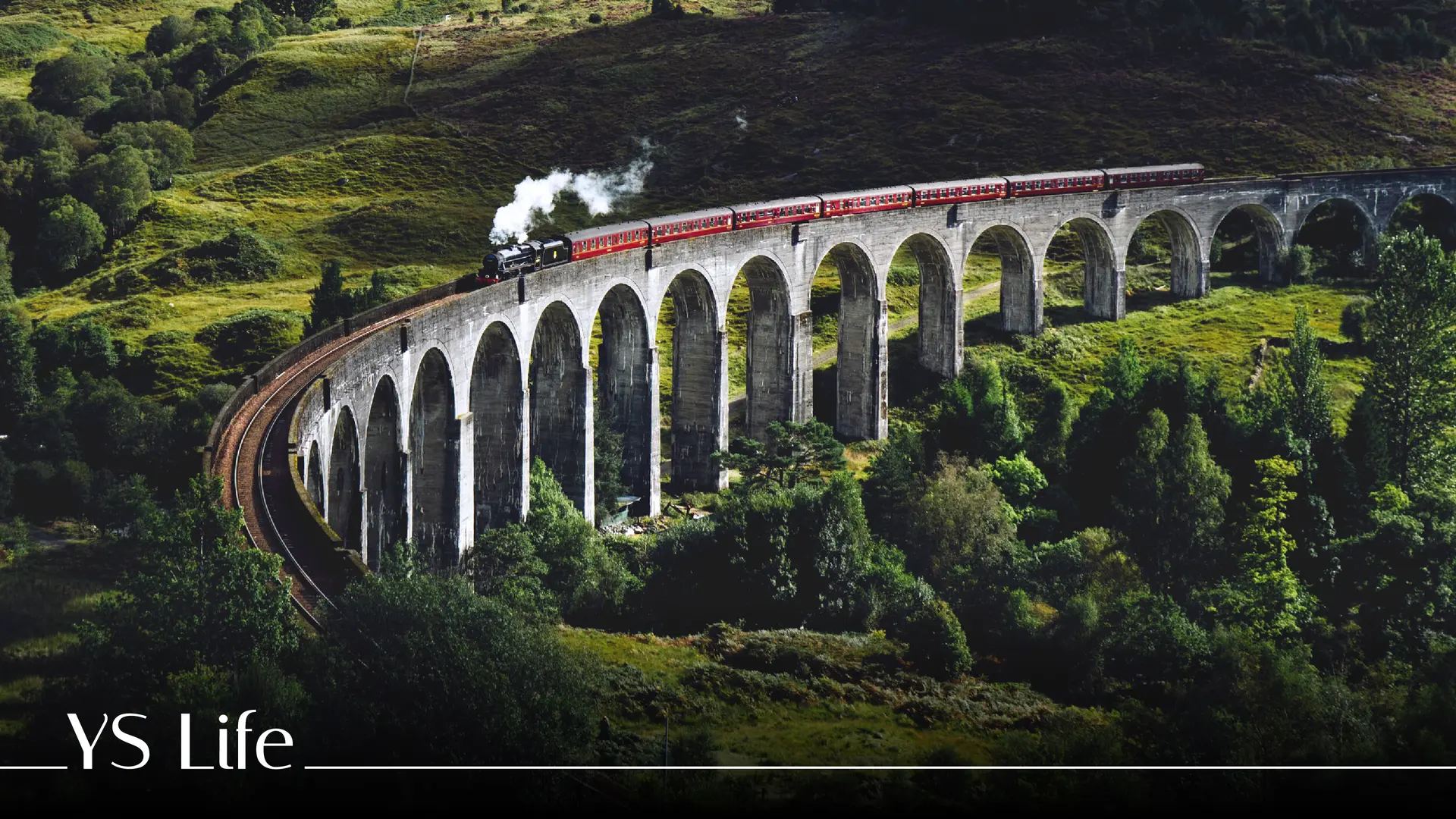

The countryside rolls by in a blur of green fields, stone walls, winding rivers, and tiny villages as the steam-powered locomotive hauls the heritage train on one of the world’s most scenic rail journeys.
The Jacobite Train, better known as the Hogwarts Express, seems to take me back in time, into another world, as it traverses the 84-mile stretch between Fort William and Mallaig in Scotland. The ride begins near Ben Nevis, the UK’s highest mountain; passing by Loch Morar, Britain’s deepest freshwater lake; and arriving at Loch Nevis, which cuts its way through Knoydart, “Britain’s last wilderness”.
Running since 1984, the two-hour journey crosses the Glenfinnan Viaduct, the longest concrete railway bridge in Scotland, which is considered a feat of Victorian engineering. Built in the 1890s by ‘Concrete Bob’ McAlpine, the viaduct’s 21 huge arches stand tall as the train chugs by, crossing a 1,000 ft span, 100 ft above the ground.
I have to admit there’s something special about steam railways, about the way they capture a deep sense of nostalgia, adventure, and craftsmanship that modern travel seems to have lost. They take me back to a time when journeys were savoured, not rushed; when the sound of a whistle echoing over hills and the rhythmic clatter of wheels on tracks created excitement.
Steam railways continue to operate across the world—be it vintage train rides in Brittany, France; Brienz Rothorn Railway in Switzerland; or India’s very own Nilgiri Mountain Railway. But the United Kingdom beats every other country with 150 heritage railways spanning 560 miles of track and 460 stations. The railways are ably supported by as many as 700 operational engines, 60 steam museum centres, 23,000 volunteers, and a plethora of well-preserved stations.
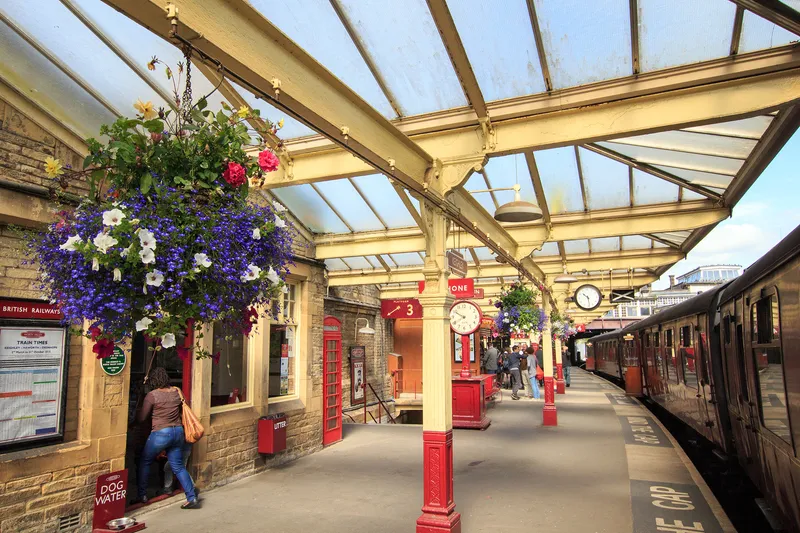
Beautiful heritage stations such as Keighley, on the Keighley & Worth Valley Railway line, abound across the UK.
“The rail revolution started with Richard Trevithick’s steam locomotive. This was used in 1804 on the tramway at Pen-y-darren Ironworks. By 1812, the Middleton Railway near Leeds was regularly running haulage by steam train,” says Carwyn Davies, a volunteer at Devil’s Bridge railway station, the end point of the narrow-gauge steam railway that starts from Aberystwyth in Wales.
On September 27, 1825, George Stephenson’s steam-powered Locomotion No. 1 trundled over the 26 miles that separate Shildon, Darlington, from Stockton, with hundreds of passengers on board.
The first railway journey set the world on track to unprecedented growth with a new way to travel and transport. An engineering achievement initially designed to transport coal in England’s industrial north has since then become the backbone of sustainable travel across the world.
The UK Heritage Railway Association states that heritage trains offer the chance to experience travel on “unique century-old cliff railways and rare electric or horse-drawn trams; and they can take a journey in original Victorian or pre-war carriages hauled by an historic narrow-gauge locomotive or a famous icon such as Flying Scotsman.”
In 2025, the UK is marking the 200th anniversary of its steam-powered passenger railway with a nine-month long festival—from March to November—celebrating the Stockton and Darlington Railway (S&DR).
The celebration features a re-enactment of the first journey along the 26-mile route, with a replica of the Locomotion No 1 locomotive, coal wagons, and the first passenger carriage. Others include Inspiration, a touring exhibition train that will run across Britain; and the Greatest Gathering in Derby by train builder Alstom in August.
Interestingly, the UK’s National Railway Museum also turns 50 this year. Numerous events are planned, including Railway Firsts, an exhibition at the National Railway Museum, York, and sister museum Locomotion in County Durham, from February 8.
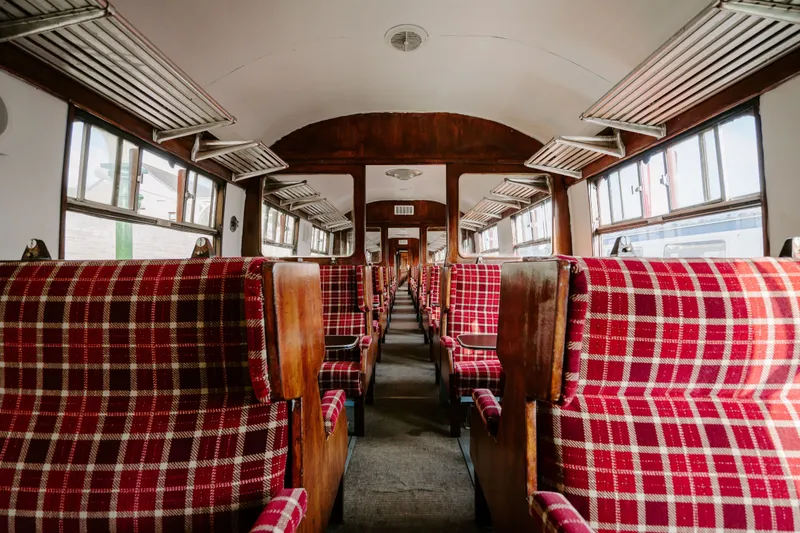
The interiors of steam trains often showcase art deco touches and vintage chairs.
Taking the train is the most environmentally-friendly way of travelling (aside from walking or biking). According to Riding the Rails to Sustainability, a report by Boston Consulting Group, trains are the “most sustainable mode of transport”.
“[Rail] is one of the most energy-efficient transport modes, responsible for 9% of global motorized passenger movement and 7% of freight shipping—but only 3% of transport energy use, according to the International Energy Agency,” the report says.
In a world where people are looking for sustainable travel options, trains seem to be the best way to go. And travelling on a steam-powered train offers a nostalgic journey through time.
“They are more than just transport; these heritage lines celebrate Britain’s rich railway history,” Davies says.
The UK has preserved most of its incredible steam railway experiences, which combine stunning landscapes, historic locomotives, and conserved stations. As the world celebrates 200 years of rail travel in 2025, here's a list of the top five steam railway experiences in the UK (in no particular order because each has its own charm).
The Jacobite Steam Train, Scotland
Route: Fort William to Mallaig
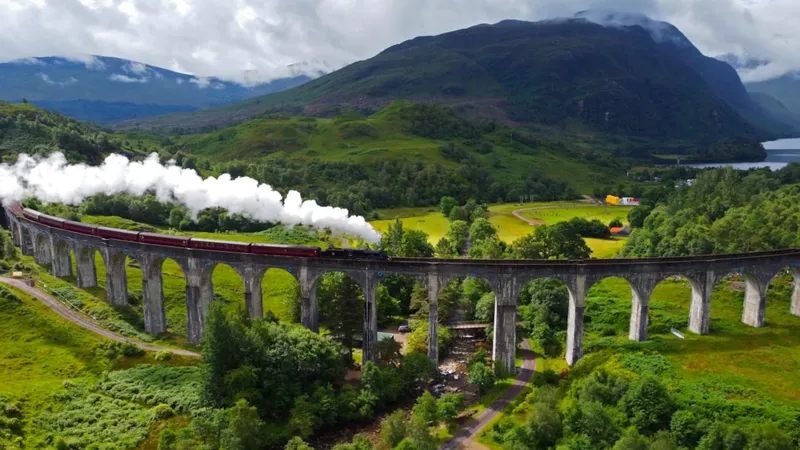
A ride on the Hogwarts Express is a dream come true for Harry Potter fans.
The 84-mile round trip through the Scottish Highlands crosses the iconic Glenfinnan Viaduct, and offers extraordinary views of Ben Nevis and Loch Shiel. The ‘Hogwarts Express’ stops at Glenfinnan village, beyond which are the small villages of Lochailort, Arisaig, Morar, and finally Mallaig. Alight at Arisaig on a clear day for views all the way up to the small islands of Rum, Muck, and Skye on a clear day.
Ticket: £69 (16+), £39 (child)
Gloucestershire Warwickshire Railway, England
Route: Broadway to Cheltenham Racecourse
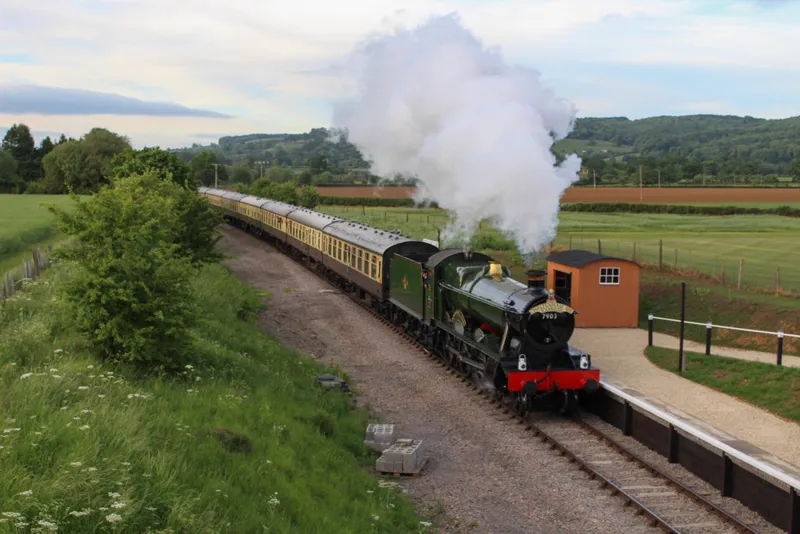
Gloucestershire Warwickshire Railway trains ply amid some of the most spectacular scenery in the Cotswolds.
This volunteer-operated heritage railway in Gloucestershire and Worcestershire offers a 28-mile round trip, between Broadway to Cheltenham and back. The steam and diesel trains run through the spectacular Cotswolds, the UK’s second largest protected landscape comprising beautiful scenery, chocolate box villages, vibrant market towns, and miles and miles of gorgeous countryside.
Ticket: £28 (16+), £13 (child)
North Yorkshire Moors Railway, England
Route: Pickering to Whitby
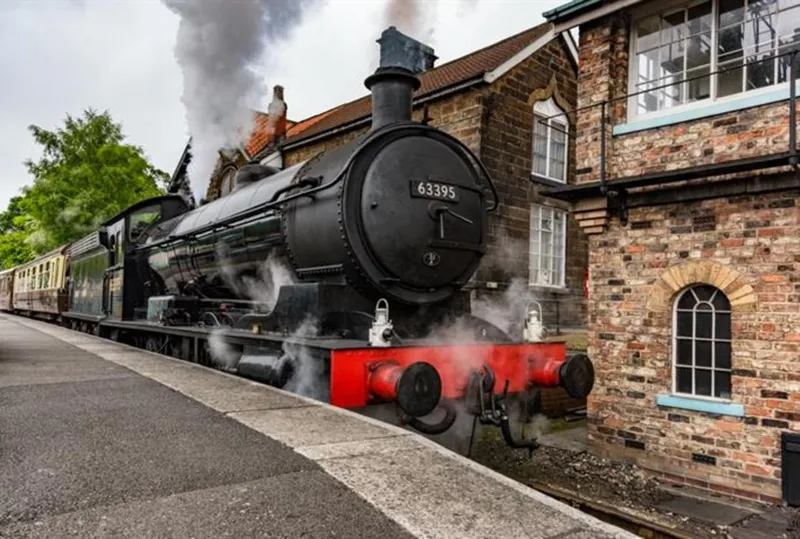
The route from Pickering to Whitby showcases 24 miles of Yorkshire's most scenic beauty.
The 24-mile journey begins from a 1930s themed station and traverses the North York Moors National Park, taking in gorgeous heather-clad moorlands and historic villages. Not to be missed is Goathland station, which was used as Hogsmeade Station in the first Harry Potter film.
Ticket: £49.50 (16+ years), £12.15 (children)
Ffestiniog & Welsh Highland Railways, Wales
Route: Porthmadog to Blaenau Ffestiniog
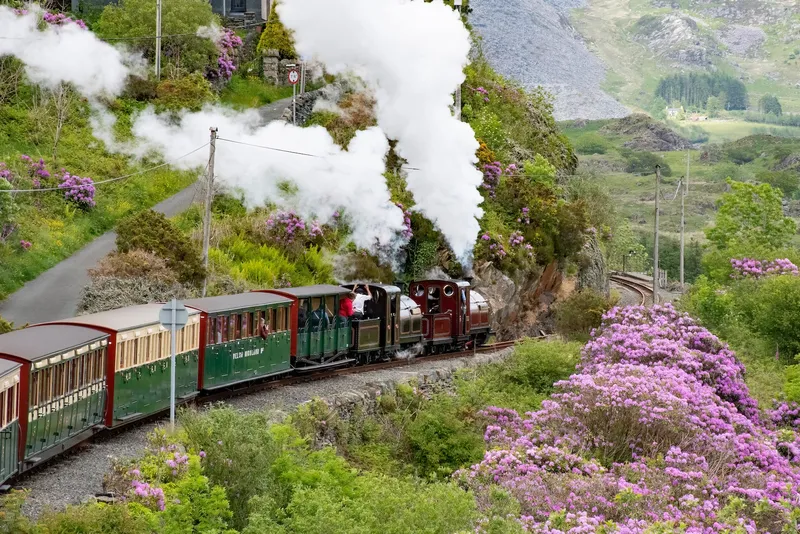
Ffestiniog & Welsh Highland Railways showcases one of the best rail routes in Wales.
The world’s oldest narrow-gauge railway goes back almost 200 years and encompasses a 13.5-mile journey from Porthmadog harbour to Blaenau Ffestiniog, a slate-quarrying town in Wales. The train offers scenic views of Snowdonia National Park as it chugs past serene pastures, verdant forests, jewel-like lakes, and small waterfalls.
Ticket: £49.50 (16+), £5 (child)
Bluebell Railway, England
Route: Sheffield Park-East Grinstead
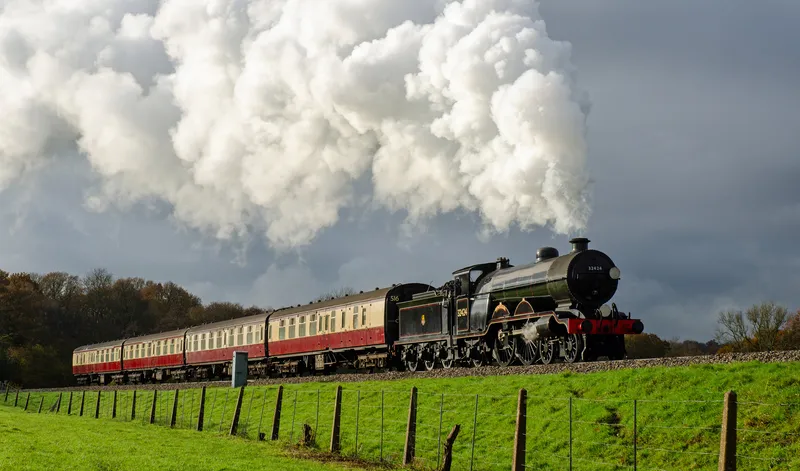
One of Sussex's most popular tourist draws, Bluebell Railway passes through meadows of bluebells in spring.
The 11-mile Bluebell Railway journey starts from Sheffield Park, stops at Horsted Keynes and Kingscote, and ends at East Grinstead, travelling through the rolling hills and charming villages in the glorious Sussex countryside. The museum at Sheffield Park has a large collection of vintage steam locomotives and carriages.
Ticket: £30 (16+), £13.50 (child)
(Photos courtesy: Keighley & Worth Valley Railway, Visit Britain, Jacobite Steam Train, Gloucestershire Warwickshire Railway, North Yorkshire Moors Railway, Ffestiniog & Welsh Highland Railways, Bluebell Railway)
Edited by Megha Reddy