



“Calm is not a luxury, it's a biological necessity”: Luke Coutinho
In his new book, The Calm Prescription, lifestyle coach Luke Coutinho makes a compelling case for nervous system healing as the foundation of true well-being.

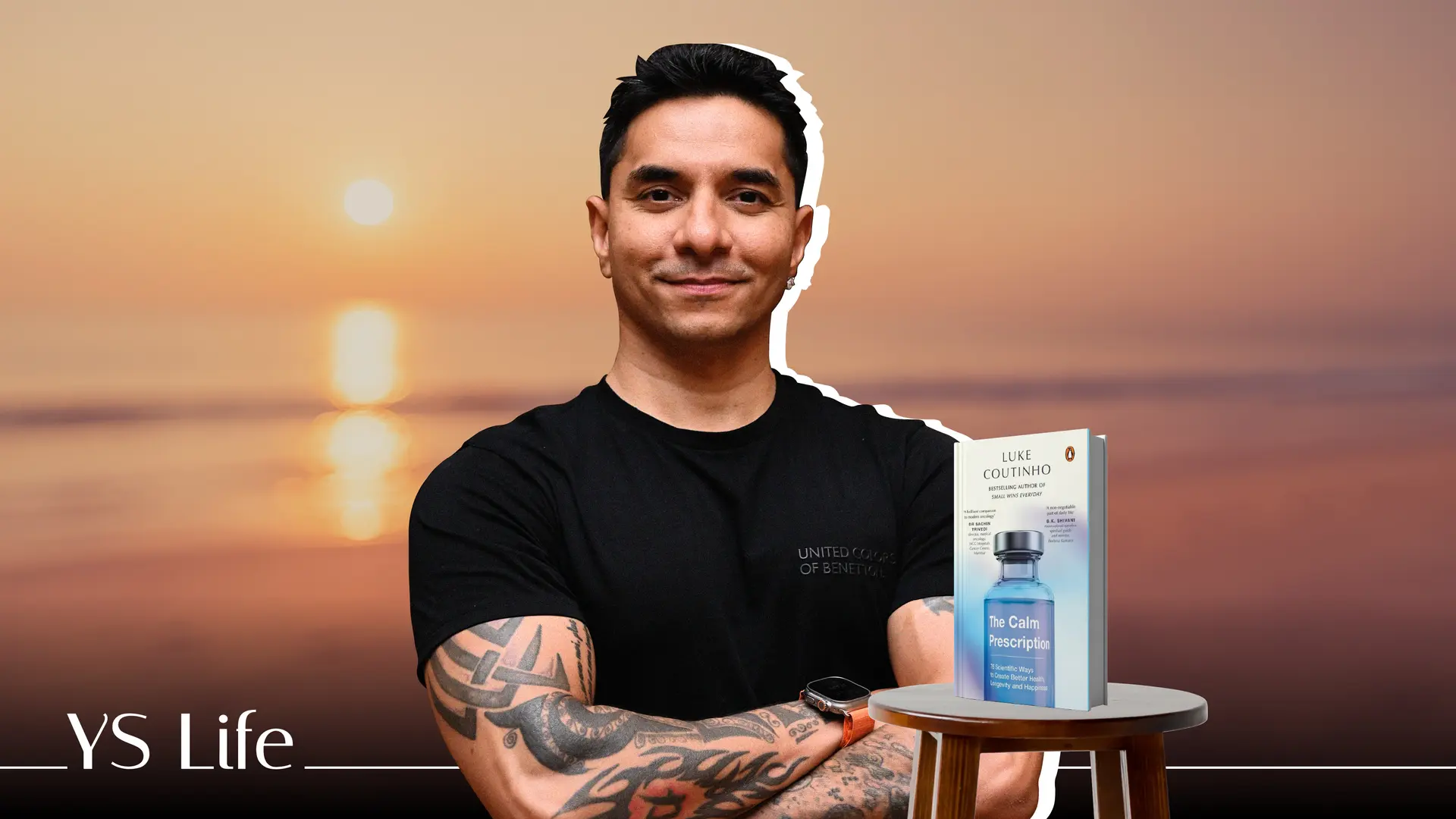

On most days, calm feels like a distant dream. We’re plugged in, logged on and constantly stimulated by screens, urgency or the gnawing pressure to keep up. We optimise our sleep, biohack our mornings, and track our steps. And yet, more people than ever are anxious, fatigued and unwell.
Lifestyle expert and author Luke Coutinho has spent over a decade working with thousands of patients across age groups and diagnoses–from children with gut issues to cancer patients navigating complex treatment. Yet, he noticed a common thread across nearly every case.
“Every individual who walked through our doors came in with something on paper—a diagnosis, a symptom or a lab report. But beneath that, almost always, there was something deeper: emotional exhaustion, poor diet, lack of sleep, inactivity, unresolved grief, chronic stress, or fear,” says Coutinho. “That’s the truth we kept returning to, again and again. Healing doesn’t happen in chaos. It begins in calmness.”
This crucial insight forms the core of The Calm Prescription, Coutinho’s new book that reframes calm as a biological state—not a mood or mindset. Backed by science and patient stories, the book introduces calm as a physiological foundation for healing, not a passive luxury.
When nutrition isn't enough
Coutinho began his career focused on food, calculating macros and tailoring nutrition plans. “One of my earliest clients followed the perfect protocol,” he recalls. “But nothing shifted.”
That prompted him to dig deeper. What he found wasn’t about food at all; it was about trauma, grief, and chronic emotional stress that was keeping the body in survival mode.
“I began to realise that food is just one part of healing. If the gut is inflamed from unprocessed stress, if sleep is broken from worry, if the nervous system is in constant alert mode–then no amount of superfoods or supplements can work the way they’re meant to,” he explains. “They just won’t land in the body the same way.”
From that point on, his practice began to evolve. Food was no longer the foundation–it became one of several levers alongside sleep, breath, movement, emotional work, spiritual anchoring, and most importantly, nervous system regulation.
“The body can’t recover if it’s too busy trying to survive,” says Coutinho. “We started looking at healing systemically, not just symptomatically.”
Calm as measurable medicine
In the book, calm is not just described–it’s measured. “When your body feels safe, it shifts into what we call the parasympathetic mode, also known as rest and repair,” he adds.
In this state, digestion becomes efficient, hormones balance, inflammation reduces, immunity strengthens, and tissue repair begins. It’s the body’s most intelligent healing zone.
Coutinho shares the story of a cancer patient who struggled with pain, sleep, and appetite issues. By introducing calming rituals like sensory grounding, breathwork, and simple emotional release techniques, the patient's energy returned plus there was improvement in appetite. “This wasn’t magic. It was biology. Her body finally felt safe enough to begin repairing.”
Similar results came through with autoimmune clients who suddenly began tolerating previously reactive foods, and chronic fatigue patients whose cortisol patterns improved with breath-led nervous system resets.
What made the biggest difference? Often, the simplest tools.
Tools you can use
With The Calm Prescription, Coutinho didn’t want to write a lifestyle manifesto filled with impossible routines. The book includes 75 accessible, science-backed tools that readers can use regardless of age or health status.
“Sometimes, the smallest shifts make the biggest difference. Take something as simple as grounding–walking barefoot on natural surfaces. We had clients report reduced anxiety and better sleep just from that one change,” he shares. “Or listening to wind chimes–something so subtle, but powerful in anchoring the nervous system.”
It’s also a choose-your-own-adventure style book. “You can flip to any page and try a tool. Some will resonate more than others. That’s the point–it’s a toolbox, not a textbook.”
And if you’re feeling burnt out and don’t know where to begin? Coutinho suggests starting with just one full, conscious breath. “That’s all. One breath is enough to begin. From there, maybe a better bedtime. A slower meal. Calm isn’t about doing more. It’s about doing less, more intentionally.”
Rethinking hustle, reclaiming wisdom
One of the book’s most compelling provocations is its critique of stress as a badge of honour.
“We’ve confused stress with success,” says Coutinho. “But chronic stress destroys clarity. It disconnects you from your intuition. It damages your digestion, weakens your immune system, impacts your fertility, and inflames your relationships.”
The best performers? They don’t glorify stress. They manage energy, not just time. They pause. They sleep. They recover. They build in silence so their decisions come from clarity, not compulsion.
He calls this shift from performance-at-all-costs to nervous-system-first leadership. “It’s not about endurance anymore. It’s about awareness. Can you listen to your body before it screams? Can you step back before you break? Can you regulate, so you can lead?.”
In many ways, this is a return to wisdom we already had. “India already has the blueprint, we just forgot how to read it. Our traditions have always honoured balance–whether through yoga, pranayama, Ayurveda, or simple living. But in chasing Western models of hustle, we’ve lost touch with those roots,” he says.
The Calm Prescription is a return to our wisdom, to our breath, and to our inner pace.
What comes next?
For Coutinho, calm isn’t just a personal practice; it’s a public health project. He’s currently scaling The Bharat Nutrition & Lifestyle Classroom, an initiative that takes holistic health education to schoolchildren across India.
He’s also working on training programmes for coaches, deeper collaborations in oncology, and an upcoming series for men’s mental health. “But mostly, I’m excited about deepening what we’ve already built. The work doesn’t need to get louder, it needs to get deeper.”
And in his own life, what’s non-negotiable? “Silence,” he says without missing a beat. “Even ten minutes a day of silent reflection without noise. It resets everything. Other anchors are breathwork, sunlight, and mindful movement. But silence is where I come back to myself,” concludes Coutinho.
In a world that celebrates the hustle and applauds burnout, The Calm Prescription feels like a bold, almost radical invitation to slow down, to tune in and to breathe with intention. As Coutinho reminds us, healing doesn’t begin when the symptoms stop. It begins the moment your body feels safe enough to start.